
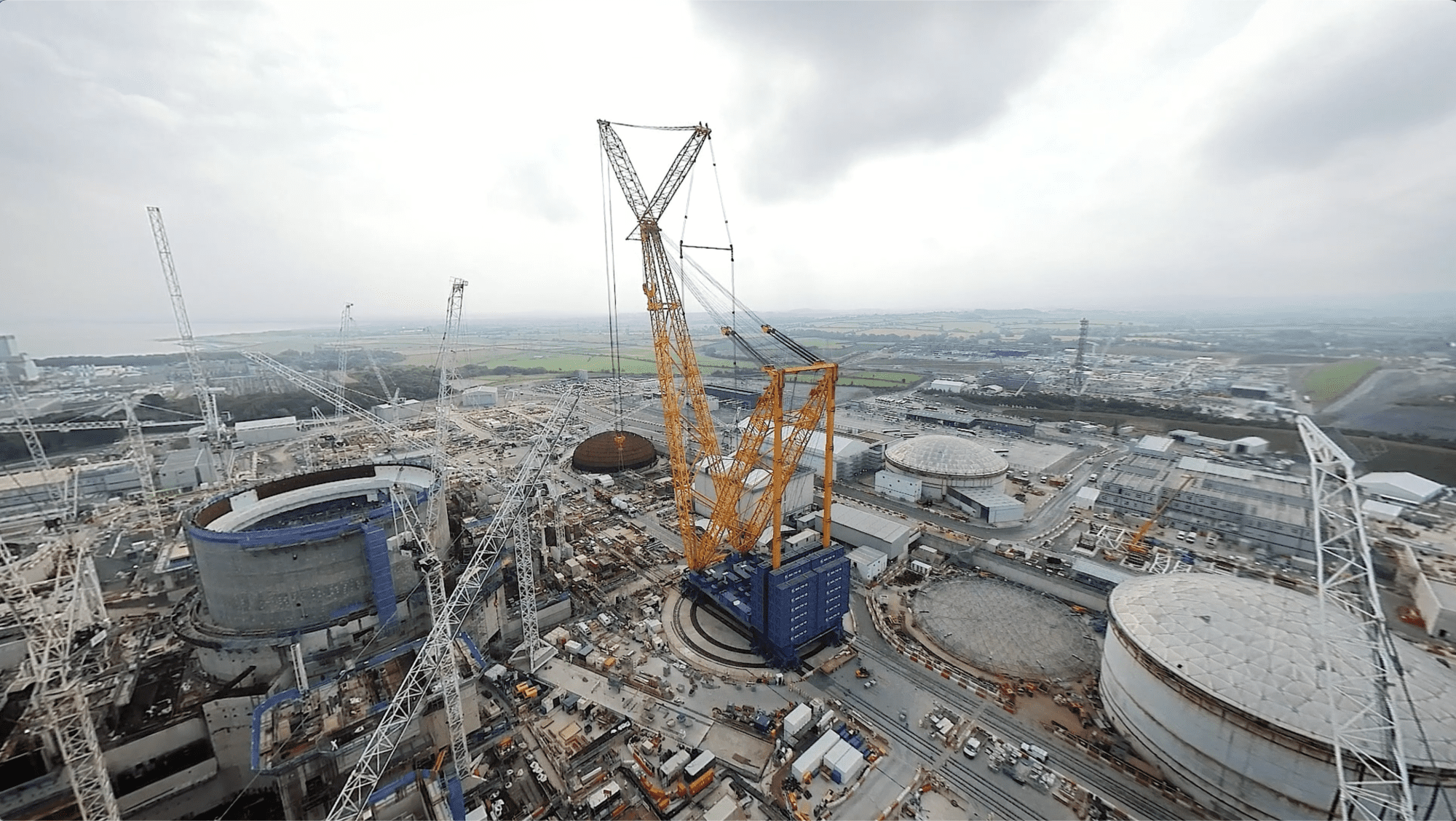
An improvement notice has been served to the Nuclear New Build Generation Company (NNB GenCo) regarding the safety of a damaged tower crane at Hinkley Point C
The enforcement was issued by the Office for Nuclear Regulation after a crane was found to have evidence of cracking in one of the mast sections, and a pin connecting two mast sections was found to have failed.
The issues were discovered by an operator during pre-use checks on site in February. They were subsequently reported to HSE under Reporting of Injuries, Diseases and Dangerous Occurrences Regulations (RIDDOR).
A failure by NBB to plan, manage and monitor
NNB GenCo are the site licensee and principal contractor for the Hinkley Point C project, and as such is responsible for the faults. The enforcement determines a failure by NNB to plan, manage, and monitor the construction phase as well as health and safety requirements in relation to the maintenance and condition of the tower cranes.
This violates Construction (Design and Management) Regulations 2015, Regulation 13 (1).
Due to the early detection of the issue, no major incidents occurred, and no injuries were caused.
“Served to ensure that action is taken”
Principal inspector at the Office for Nuclear Regulation John McKenniff said: “While the observed damage did not result in any crane failure or collapse, this improvement notice was served to ensure that action is taken to prevent any similar occurrences in the future.
“We will monitor the actions of NNB GenCo and will consider taking further action if additional shortfalls are identified.”
It has been a busy year for HSE so far, having served fines and warnings for Network Rail as well, among various other health and safety concerns.
Hinkley Point domestic environmental information law trial begins today
A case has been opened against NNB GenCo by Fish Legal, due to NNB changing the plans for fish deterrents on site. The plans originally featured an acoustic fish deterrent, but switched to a saltmarsh in the plan.
The plans have since been reverted to an acoustic deterrent due to a new “safe and effective” method of implementation, but the case is still going ahead due to Fish Legal believing that foreign-owned companies who construct and operate a nuclear power plant in the UK must comply with domestic environmental information laws, providing details on environmental plans when asked – something that NNB has failed to do to date when Fish Legal have asked for details.