

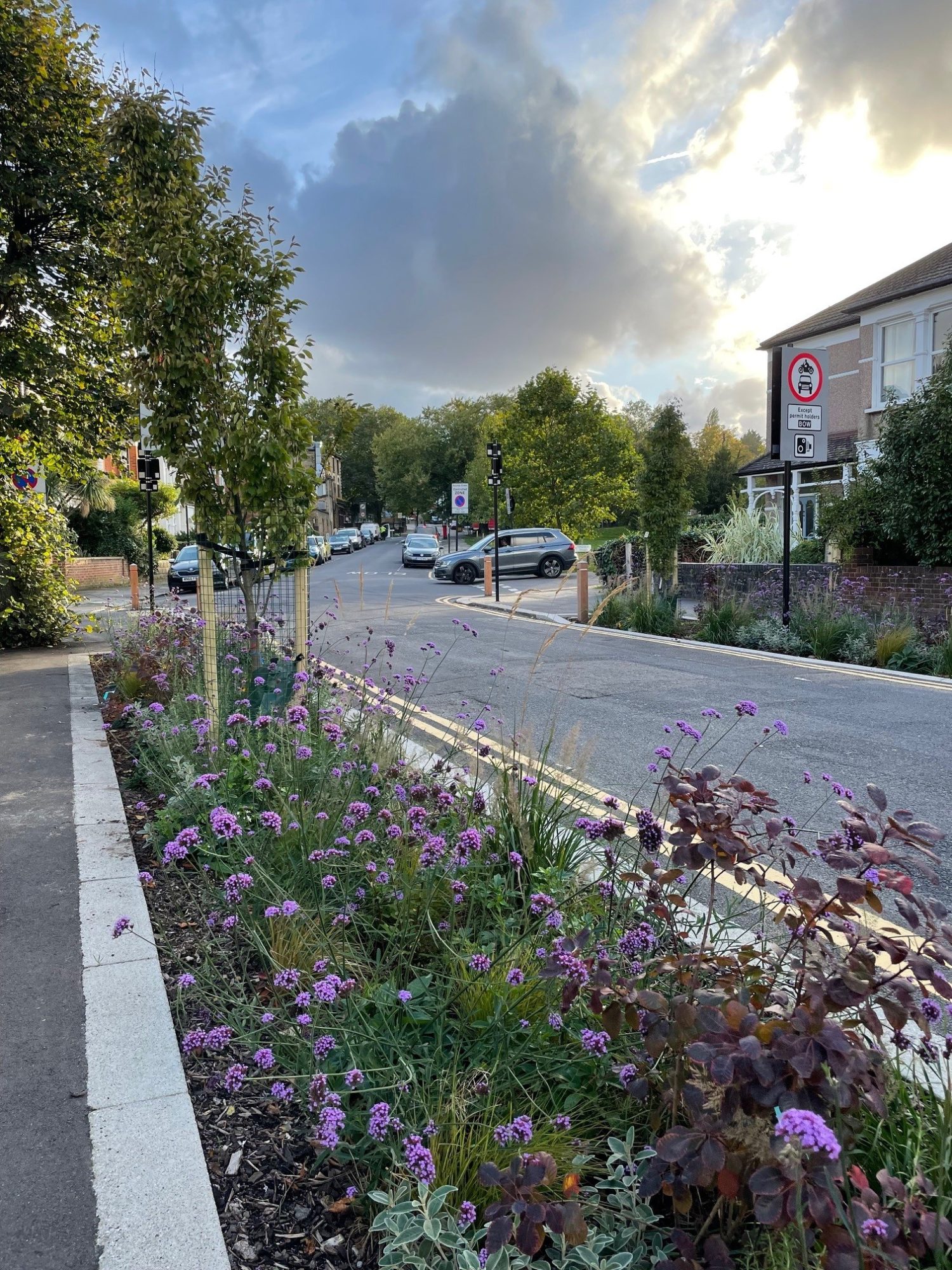
Alastair Chisholm, director of policy at the Chartered Institution of Water & Environmental Management (CIWEM) welcomes the government’s newly published National Standards for Sustainable Drainage Systems. While they are a significant improvement on the previous ones, he argues that they may fall short if not backed by a rules-based mandate
Sustainable drainage systems (SuDS) have been crucial for building climate resilience into our built environments for decades. As climate change has progressed, their value (and limitations) have become more widely recognised. To the initiated, they’re a no-brainer.
SuDS absorb water near to where it falls, like a sponge, reducing surface water flood risk. They can reduce the elevated heat stored and emitted by hard surfaces like concrete and tarmac, helping reduce the urban heat island effect. They also keep rainwater out of networks, reducing the frequency of storm overflow discharges to the environment.
The list goes on. SuDS can filter and treat microplastics and carcinogenic toxins that flow from roads into streams and rivers, poisoning them. They support increased pollinator, invertebrate, amphibian and plant species populations, and promote wellbeing among local human populations.
SuDS only achieve benefits when well-designed
This has been known for years. Detailed design standards were created under Schedule 3 of the 2010 flood management law, only to be reduced to two pages in 2015.
Ten years of infuriating drift ensued, wasting the potential of SuDS and preventing them from becoming mainstream “drainage” rather than “sustainable drainage” to developers, planners and others.
SuDS are delivered in new developments, yes, but they’re often shoehorned into sites after they’re laid out. They are most effective and efficient when mapped out first to harness natural drainage flows. They’re often “value engineered” to deliver the minimum technical requirements, resulting in duds rather than SuDS.
The new standards go some way to resurrect the 2010 design standards developed under the last Labour government. While some may miss fine detail, for others like developers and planners, they clearly set out design and performance characteristics to unlock SuDS’ multifunctional armoury.
They cover requirements relating to everyday rainfall drainage and storage, flood risk, water quality, amenity and biodiversity, alongside long-term maintenance and drainage destinations. In other words, the specifications necessary to unlock the drainage equivalent of a Swiss army knife.
Delivery still not guaranteed
The statutory approach set out by Schedule 3 was regarded as too rigid and prescriptive, leading to developer lobbying that killed it in 2014.
A government review in 2022 recommended a mandatory approach to address escalating pressures on builders to deliver necessary performance. Despite supporting it in opposition, the government seems unable to reconcile this with its housing delivery red tape-trimming ambitions.
Schedule 3 is not universally liked, and faces opposition. Its implementation in Wales provided valuable lessons. Change will require adjustments within the developer community and capacity building in local authorities, with an appropriate glide path. However, Schedule 3 is robust.
The government appears keen to use the National Planning Policy Framework (NPPF) as a driver as it prescribes multifunctional SuDS. However, there’s a problem with this approach. The NPPF is not mandatory; it’s guidance, and its terminology suggests “should” rather than “must” or “shall”.
This distinction is crucial. Planners must judge whether SuDS are appropriate or technically fit for purpose in a development. This is open to interpretation, too often leading to an adversarial climate between planners, lead local flood authorities and developers over what
gets taken forward.
Planning conditions requiring good drainage due to surface water flood risk are often challenged and appealed by developers. If defended by cash-strapped authorities this wastes time, public money and often results in new developments with unnecessarily high flood risk.
Aspirations over wider benefits are often unrealised. This ultimately benefits lawyers’ and developers’ bottom lines, not the government’s housing ambitions, due to potential disputes and delays. The new standards will be largely cosmetic unless this issue is resolved. Adoption and maintenance are also concerns. NPPF guidance recommends maintenance arrangements for the development’s lifetime, but this rarely happens.
The new standards assign single-property SuDS to owners and multiple-property SuDS to an “appropriate authority,” but the authority is not specified. A rules-based approach is necessary for clarity, consistency, and translating design into outcome delivery. It should also clarify the adopting authority.
The current choice is between Schedule 3 and planning-led mechanisms. Could there be a third way? We believe there could: one that mirrors existing infrastructure approval, adoption and maintenance arrangements familiar to developers.
This could unlock the same multifunctional outcomes from SuDS as Schedule 3, but in a more streamlined way. There would be rules similar to Schedule 3, but there are now too,
with the new standards.
Instead of creating a new approving body, consolidating local authority responsibilities for highway, land drainage and public realm management around SuDS at the upper tier or unitary level for SuDS management makes sense. Nesting adoption within local authorities keeps it close to local planning.
As far as funding maintenance goes, the existing surface water drainage charge in water bills is the obvious source. With minor legislative adjustments, this funding could support SuDS maintenance.
The planning approach hasn’t worked and new standards won’t eliminate ambiguity or scope for challenge that attracts less-invested developers. It will remain a battleground and a mess as climate change and sewage infrastructure pressure intensify.