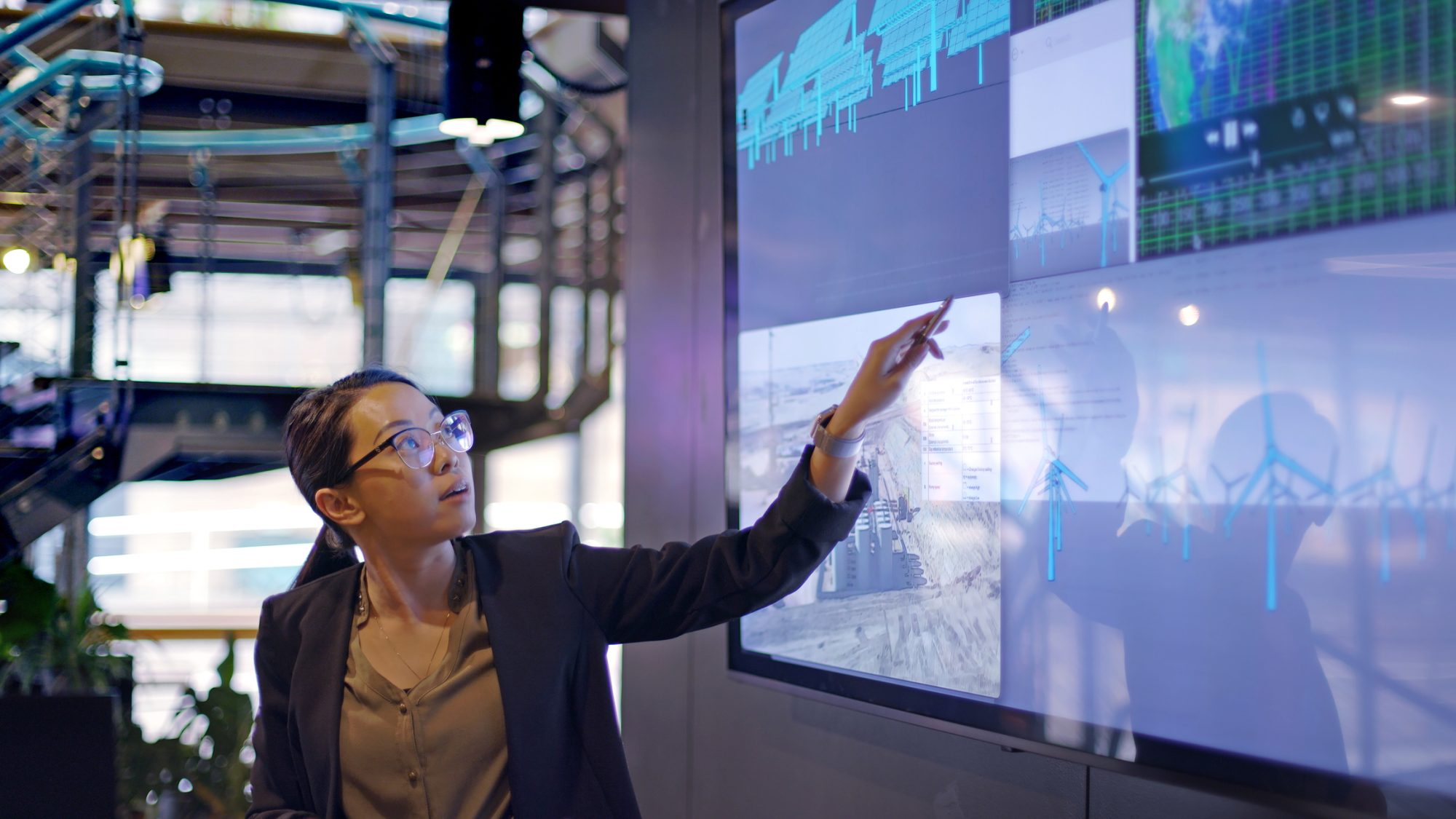
Researchers from the University of Bari in Italy and the University of Sharjah in the UAE have conducted a review of digital twin technology for renewable energy infrastructure, highlighting its current benefits and identifying untapped opportunities for future exploration
The review, titled “Harnessing the future: Exploring digital twin applications and implications in renewable energy,” found that the technology is being utilised across wind, solar, hydropower, geothermal, and biomass technologies for different purposes, including:
- Digital twins are effective at monitoring the condition of wind turbines, predicting damage and making recommendations to improve turbine performance.
- Analysing solar photovoltaic systems is simplified, and digital twins can be used to simulate the output of solar panels as well as detect faults.
- Hydropower systems use digital twins to forecast system behaviours and maintain a watch for structural issues within the renewable energy infrastructure.
- Digital twins are useful for modelling drilling in geothermal technologies and heat pump systems.
- In biomass technologies, digital twins can simulate boiler operations and use data to improve plant performance, boosting manufacturing.
The research also analysed when digital twins are usually employed, finding that the design phase is a popular time for them, as they can model the system virtually to identify potential issues that can be remedied before physical implementation.
During the production and service phases, they are used to monitor real-time performance of renewable energy infrastructure, and simulate behaviour to help guide decision-making.
There are still some issues in using digital twin technology
However, despite the myriad uses for digital twins in this sector, the research found that there is a lack of standardised architectures across energy systems, potentially causing delays as each digital twin is built from the ground up to have the same basic architecture: the physical layer (real world system and sensors), the network later (communication systems to transmit data), and the digital later (virtual model for simulation, AI, analytical tools, etc.).
There is also a limited amount of research and literature on the topic, especially regarding tidal, ocean thermal, wave energy, small-, and micro-hydro, as DT technologies for these systems are relatively new. Furthermore, the integration of digital twins with renewable energy infrastructure can often be difficult due to the sheer diversity of function, and a lack of a stable reference point, coupled with the need for large amounts of historical and current data.
The report states: “Few studies have been published on incorporating digital twin technology throughout all stages of a physical asset’s lifecycle. To fully utilise the capabilities of digital twin technology in the future, collaboration between stakeholders and decision-makers is necessary to explore its potential in the production phase. This will allow for a comprehensive, real-time simulation of processes to meet the necessary requirements.”