Indoor mapping is playing a central role in the modernisation of Manchester University NHS Foundation Trust’s estates and facilities department by providing situational awareness of the entire site. Making RAAC and asbestos management more efficient and optimising the use of existing buildings are the first of many benefits
Manchester University NHS Foundation Trust (MFT) has gone live with a digital twin of six hospitals as part of its strategy to create a smart estate. Designed to provide a single source of estates data to support new workflows and better decision making, the 3D model is a major milestone in MFT’s digital transformation to improve operational efficiency and patient safety.
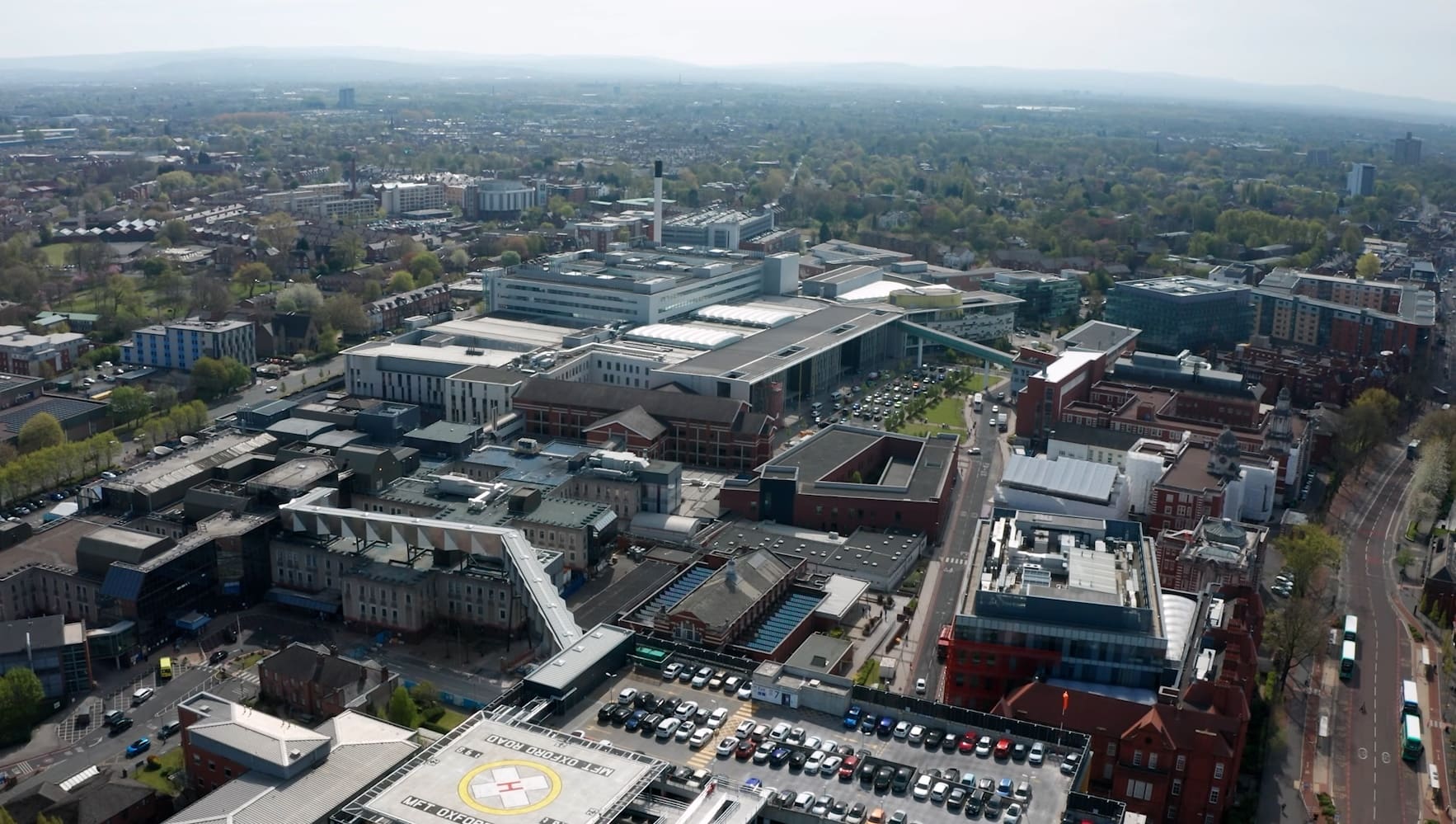
Spanning 274,000 square metres of internal floorspace, the 3D model includes Manchester Royal Infirmary, Royal Manchester Children’s Hospital, Manchester Royal Eye Hospital and Saint Mary’s Hospital on the Oxford Road campus, plus Altrincham Hospital and Withington Community Hospital.
RAAC and asbestos management
Replacing disparate systems and paper-based processes, the digital twin visualises floors, rooms and spaces with associated data and is already being used to understand space optimisation and support the management of RAAC and asbestos.
New applications for RAAC and asbestos management involve performing digital surveys on mobile devices, which feed directly into the 3D model and visualise the different risk levels. By providing more accurate and timely data, the new system is driving more effective maintenance regimes to improve safety. Digitising asbestos management has cut the time needed to prepare information by up to 10 days per month at one hospital site alone.
Created using Esri UK’s GIS (Geographic Information System) platform, which includes indoor mapping, spatial analysis, navigation and asset tracking, the digital twin went live in October. BIS Consult, MFT’s strategic data partner, led the development of the underlying data strategy and the integration of the multiple information sources needed.
Optimising space
The digital twin is being used in a trial to better understand the use of space by quickly showing where room usage is not being optimised. Full roll-out will provide all staff with a
real-time view of occupancy levels and space requests, while clinicians will be able to examine existing facilities more easily and plan new services.
The project overcame a major data integration challenge, which involved combining MFT data from multiple systems, including CAFM (Computer-Aided Facility Management) and CAD (Computer-Aided Design) floorplans and improving the overall data quality. Establishing new data governance so information connected to the 3D model was accurate and up to date was also achieved.
Maintenance backlog
The next phase will map the remaining four hospitals in MFT’s estate and digitise building condition surveys to help tackle the maintenance backlog. This will involve mobile data capture feeding into the digital twin, providing a clearer picture of requirements and helping to prioritise resources.
Replacing a manual spreadsheet approach, data and reports will be shared more easily among project teams. Energy usage data will also be added to the digital twin to help analyse and reduce energy costs.
Future plans
Plans for the future include using Esri’s GIS platform to create applications for indoor navigation for patients and staff to reduce missed appointments, contact tracing of patients to help stop the spread of pathogens inside the hospital and digital asset tracking, enabling equipment such as beds, scanners or wheelchairs to be located more quickly.
Integrating its existing data into one 3D model has created the foundation for building a digital twin at MFT and is driving new opportunities for efficiency gains. Moving from analogue to digital achieves a better understanding of its buildings which helps improve their management and maintenance, as well as improving patient safety.
Kay Mulcahy, associate director of national estates operations, NHS England, said: “The deployment of the digital twin at Manchester Foundation Trust marks a pivotal shift from fragmented, paper-based systems to a unified digital platform. It’s not just a technological upgrade; it’s a transformation in how NHS estates are managed and a true demonstration of moving from analogue to digital.
“By digitising the estate data, MFT is unlocking smarter decision-making, streamlining maintenance and ultimately creating safer, more efficient environments for patients
and staff.”