

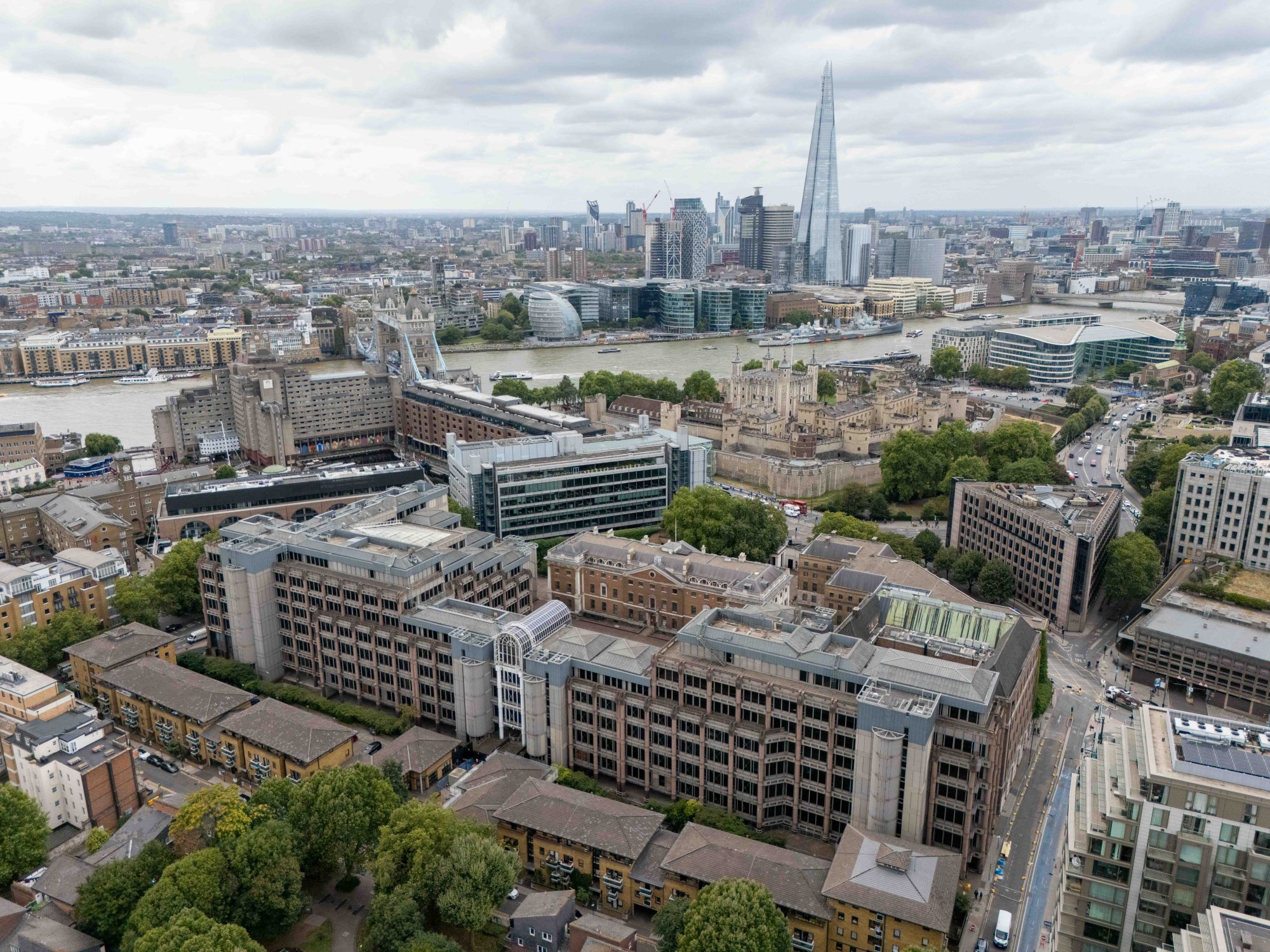
The UK government has approved controversial plans for the new Chinese embassy complex on the Royal Mint Court site near Tower Bridge
Plans to construct an embassy and £750m Cultural Exchange Building on the site were first made public in 2018, with formal plans submitted in August 2025 to Tower Hamlets Council with several rooms such as the basement “redacted for security reasons”.
Concerns were raised over the new Chinese embassy’s proximity to the UK’s financial systems, as several fibre optic cables carrying data for City of London financial firms run through the area.
Activists and campaigners also registered their concerns over the premises being used to harass or arrest political opponents.
Royal Mint Court residents are planning a legal challenge
The site has been occupied since the 14th century and served as the Royal Mint for over 150 years, before operations moved to Wales. The site has largely served as an office and residential complex since, with 100 homes. These buildings will become property of the Chinese embassy and many residents fear being forced out of their homes as a result of the redevelopment planned.
MPs of all colours have opposed the plans as potentially compromising British security, leading to a reciprocal blocking of the redevelopment of the UK’s embassy in Beijing by the Chinese government, who have been very focused on gaining approval of the site.
With prime minister Keir Starmer due to visit China at the end of the month, many expect this gesture is aimed to soothe UK-Chinese relations.
A government spokesperson said:
“This planning decision has been taken independently by the secretary of state for housing. This follows a process that began in 2018 when the then foreign secretary (Boris Johnson) provided formal diplomatic consent for the site.
“More broadly, countries establishing embassies in other countries’ capitals is a normal part of international relations.
“National security is our first duty. Intelligence agencies have been involved throughout the process and an extensive range of measures have been developed to manage any risks.
“Following extensive negotiations in recent months, the Chinese government has agreed to consolidate its seven current sites in London into one site, bringing clear security advantages.”
The ISC has accepted the decision, although remains doubtful about the way it was made
Lord Beamish spoke on behalf of Parliament’s intelligence and security committee (ISC), stating: “Overall, we recognise that there were a number of factors at play, and that either way the decision would give rise to concerns for some. However, our concern was solely from a national security perspective. Turning to the evidence that we have finally received, on balance we are content that the UK intelligence community had sufficient opportunity to feed in any security concerns and that ministers had the necessary information on which to base their decision.
“Nevertheless, the process within government was not effectively coordinated, nor was it as robust as we would have expected for a matter of such consequence. We were surprised both at the lack of clarity as to the role that national security considerations play in planning decisions, and that advice was prepared without some of the key facts at hand. Key reports lacked the detail necessary, were dealt with piecemeal, and appeared not to have been kept up to date. We will be writing to the prime minister with our concerns.
“On the basis of the evidence we have received, and having carefully reviewed the nuanced national security considerations, the committee has concluded that, taken as a whole, the national security concerns that arise can be satisfactorily mitigated.”