

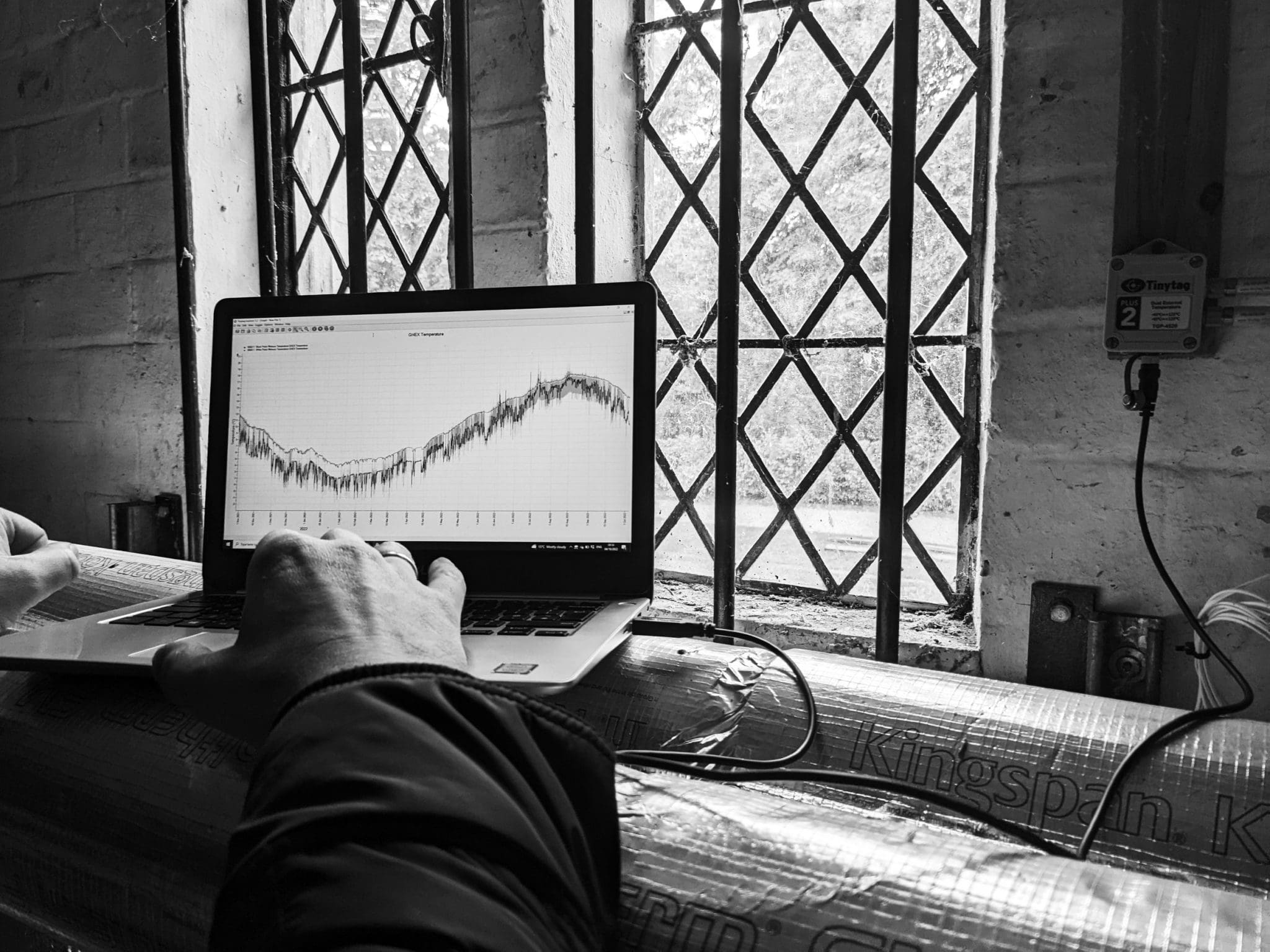
Heat pumps don’t succeed because of one clever component. They succeed—or fail—because of a series of key choices made during design, installation, and operation
1. Prudence
(Design, design, design)
Virtue: Prudence is knowing before acting.
In heat pumps, this means heat loss calculations, understanding your source temperatures, emitter sizing, equipment selection and understanding how a building actually behaves.
Sin: Presumption
Skipping design, copying past installs, or assuming “one size fits all”, like the good old combi boiler that deleted so much knowledge from heating system installers.
Most heat pump failures are decided before the unit is even selected.
2. Temperance
(Load-side temperature)
Virtue: Temperance is restraint.
Lower flow temperatures are not a compromise—they are the operating condition that unlocks efficiency, comfort, and longevity.
Sin: Excess
Designing around unnecessarily high temperatures to preserve old assumptions from the fossil fuel era.
High temperatures feel safe. They are anything but.
3. Wisdom
(The source & distribution system)
Virtue: Wisdom is choosing the right tool for the context.
Air, ground, water, and distribution systems must be selected together—not independently.
Sin: Folly
Forcing a technology onto a site it doesn’t suit or ignoring the distribution system entirely.
A heat source cannot compensate for a distribution system that was never meant to deliver low-temperature heat.
4. Foresight
(DHW temperature)
Virtue: Foresight is thinking beyond steady-state operation.
Domestic hot water is about peaks, hygiene, storage, and timing—not just setpoints.
Sin: Short-sightedness
Chasing high DHW temperatures “just in case,” sacrificing system efficiency year-round.
The hottest water in the system often dictates the performance of the entire system.
5. Harmony
(Integration)
Virtue: Harmony is making systems work together.
Backup heat, PV, batteries, grid flexibility, and legacy systems should cooperate—not compete.
Sin: Fragmentation
Layering systems without logic results in fighting controls and confused outcomes.
A system that isn’t integrated will eventually choose its own priorities—and they won’t be yours.
6. Respect
(Location)
Virtue: Respect accepts physical reality.
In a ground source heat pump system, location is destiny. The ground is not a backdrop or a convenience — it is the heat source. Geology, land availability, access, and future use define performance long before equipment is selected.
Ground source systems tolerate no casual decisions. Once the collector is buried, mistakes are locked in for decades. What is ignored at the design stage cannot be corrected later.
Sin: Neglect
Neglect is treating the ground as uniform, infinite, or expendable — squeezing collectors into leftover spaces, ignoring soil conditions, or burying problems out of sight. These are not compromises. They are failures of design.
You can judge the seriousness of a ground source system by where the energy is taken from — and how deliberately that place was chosen.
7. Humility
(Controls & monitoring)
Virtue: Humility accepts that no design is perfect.
Controls, commissioning, and monitoring allow systems to be tuned, learned from, and improved.
Sin: Pride
“Set and forget.” No feedback. No learning. No accountability. All too common in the world of design and build contracting.
Monitoring isn’t about mistrust—it’s about listening.

The Seven Virtues in Practice: Lessons from Baddesley Clinton and a real World SCOP in excess of 4.
It is easy to talk about virtues in theory. It is much harder to practice them when the building is a Grade I listed moated manor house, the fabric cannot be altered freely, and failure risks damaging irreplaceable heritage.
Baddesley Clinton, a National Trust property in Warwickshire, is precisely the kind of project where heat pumps are often dismissed as “unsuitable.” And yet, it is here that the Seven Virtues of a good heat pump system are most clearly demonstrated — not as ideals, but as necessities.
1. Prudence: Design Before Decision
At Baddesley Clinton, the most important choice was made long before any equipment was selected: to design first.
Replacing LPG boilers as part of the National Trust’s Renewable Energy Investment programme required a system that could decarbonise heat without compromising conservation. That meant detailed technical design at RIBA Stage 4, with careful consideration of building fabric, usage patterns, and conservation requirements.
This was not a project that could rely on rules of thumb. Prudence demanded restraint — resisting oversizing, resisting simplification, and accepting that success would be determined on paper long before installation began.
2. Temperance: Low Temperatures as a Discipline
Historic buildings are often assumed to require high flow temperatures. At Baddesley Clinton, the opposite approach was taken.
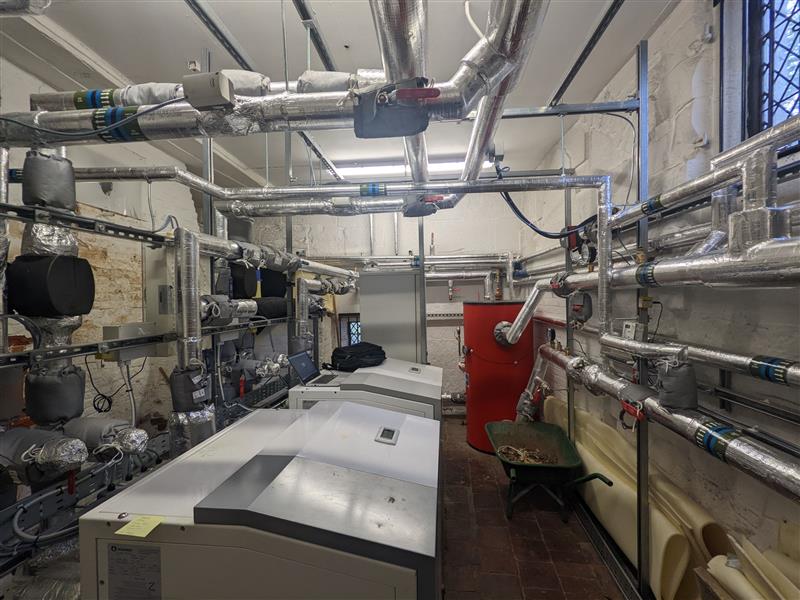
The ground source heat pump system operates with weather-compensated flow temperatures between 35–45°C, supplying existing radiators rather than replacing them wholesale. This required discipline: designing the system around what the heat pump does best, not what fossil boilers made habitual.
Temperance here is not a compromise. It is the deliberate avoidance of excess — recognising that comfort and conservation depend on stability, not heat intensity.
3. Wisdom: Matching Source and Distribution
The choice of a ground source heat pump with a horizontal ground collector was not ideological. It was contextual.
An expansive park and gardens, yet with restrictions on the size of collector area required the installation of six-pipe two layer horizontal collector, providing a stable, low-carbon heat source without visual intrusion. Just as importantly, the distribution system — radiators and circulation — was designed in concert with the source, not treated as an afterthought.
Wisdom lies in coherence. The heat source and the distribution system must be chosen together, or neither will perform as intended.
4. Foresight: Domestic Hot Water Without Penalty
In many heat pump systems, domestic hot water quietly undermines overall performance. At Baddesley Clinton, this risk was anticipated early.
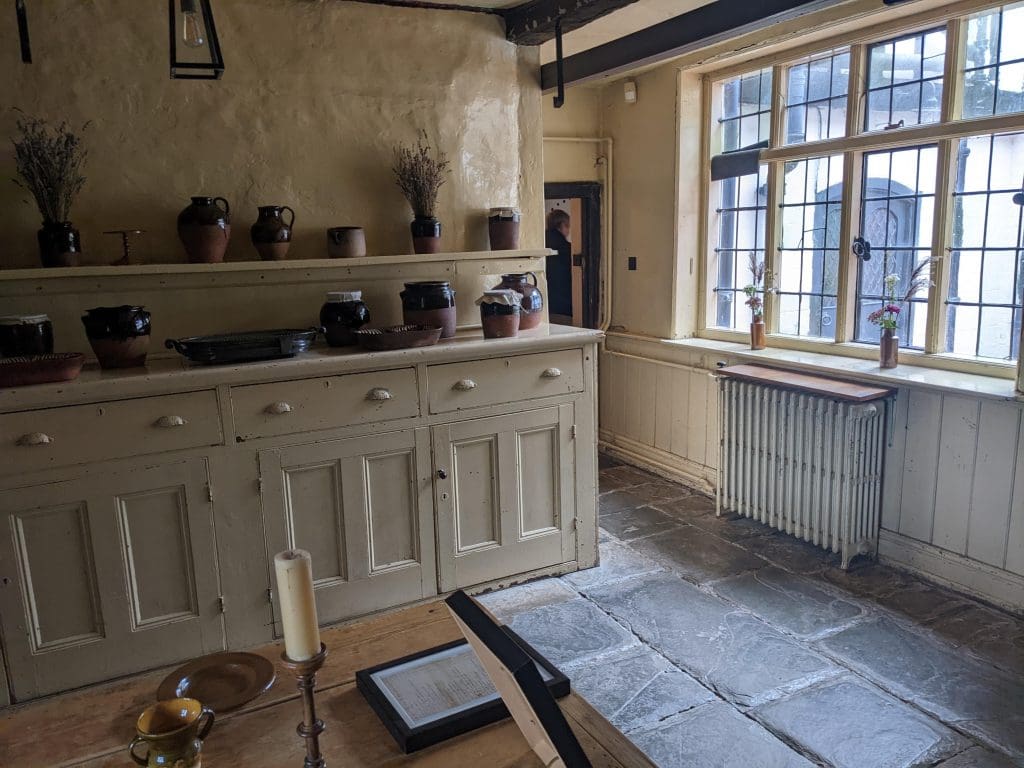
Rather than driving the entire system toward unnecessarily high temperatures, hot water provision was treated as a distinct design challenge, balancing hygiene requirements with system efficiency. By separating peak demand from space heating strategy, the project avoided the short-sighted temptation to “turn everything up.”
Foresight here protects not just efficiency, but longevity.
5. Harmony: Integration as a System, not a Stack
Baddesley Clinton’s heating system is not a collection of components — it is an integrated whole.
The heat pumps, variable-speed circulation pumps, weather compensation, and supervisory controls operate as a single system. Backup strategies, control logic, and conservation requirements are aligned rather than layered on top of one another.
This harmony matters most in historic buildings, where conflicting systems can quickly lead to instability, inefficiency, or damage. Integration is not about adding intelligence; it is about avoiding contradiction.
6. Respect: Location and the Physical World
In sensitive sites, location is never neutral.
At Baddesley Clinton, respect began with the collector, reviewing the geology, hydrogeology of the moat and air. The horizontal ground collector was designed around the available landscape, using the surrounding listed parkland to extract heat without disturbing the historic fabric of the building itself. Geology, access, and long-term land use shaped the system as much as any mechanical specification.
For ground source systems, respect means understanding that the heat pump is not defined by the unit in the plant room, but by the land it depends on. The ground loop is a permanent infrastructure, embedded in place and time.
In this context, respect is the acceptance that a heat pump system is not just a machine — it is a physical intervention in a real landscape, with historical, environmental, and practical consequences that cannot be ignored.
7. Humility: Monitoring, Learning, Improving
Perhaps the most important virtue on display at Baddesley Clinton is humility.
The system is continuously monitored, with performance data logged and reviewed seasonally. Heating and humidity levels are carefully tracked, recognising that conservation heating is not static and cannot be perfected at commissioning alone.
Humidity control is particularly critical in winter, where underheating can cause damp, mould, and damage to historic artefacts. Monitoring allows the system to respond, adapt, and improve over time — acknowledging that no model fully captures reality.
Monitoring, in this case, is not about control. It is about listening.
A Virtuous System, Not a Perfect One
Baddesley Clinton does not succeed because it uses exceptional technology. It succeeds because the project consistently chose virtue over convenience: design over assumption, restraint over excess, integration over accumulation.
The lesson is not that heat pumps are universally easy, particularly in historic buildings. The lesson is that when the Seven Virtues are applied deliberately, even the most challenging contexts become possible.
Heat pumps fail when they are treated as products.
They succeed when they are treated as systems — and when the people designing them accept the moral responsibility that systems demand.