

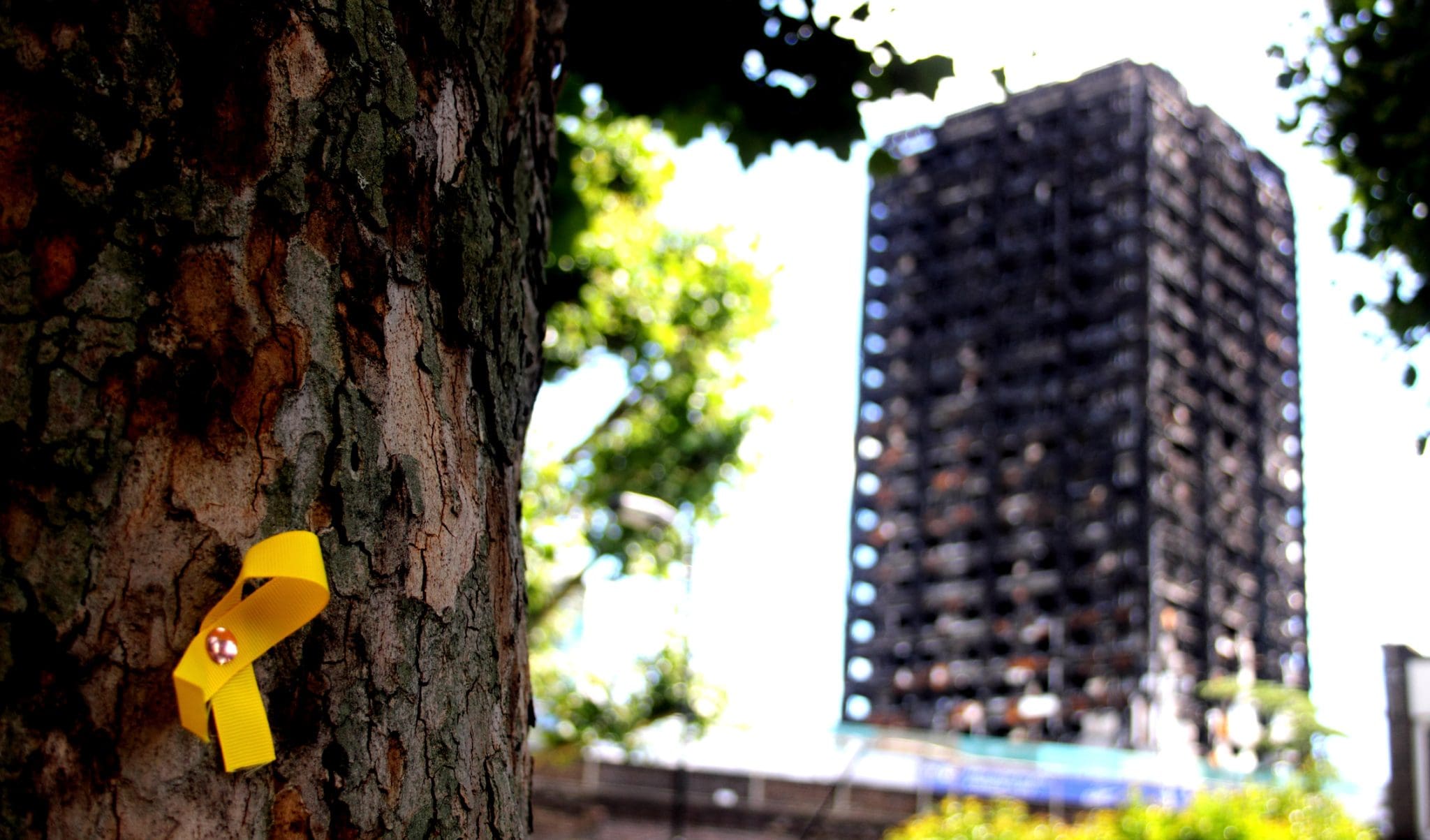
The final report from interim chief construction adviser Thouria Istephan and the latest Grenfell Inquiry Progress Report have both been published, offering an update on the UK’s ongoing work to strengthen fire and building safety
Together, the reports highlight progress against the Grenfell Inquiry’s recommendations and set out the government’s wider work to improve fire safety and building standards across the sector.
A lot of work done, but a lot more yet to be done
Istephan, whose 12-month term as interim chief construction adviser will come to an end this month, writes about the progress that has been made under her leadership in four key priority areas:
- Reforming construction product regulation
- Improving building and professional standards
- Learning from safety risks and near misses
- Establishing the permanent Chief Construction and Scientific Adviser (CCSA) role
On product regulation, she writes that she has advised the government on its Construction Products White Paper after the Grenfell Inquiry identified systematic dishonesty by many product manufacturers and sellers, particularly when it comes to combustible cladding and insulation. Further work is needed in product testing and certification, product information, and standards.
In terms of standards, Thouria says that the government is making good steps via initiatives such as the Single Construction Regulator, and building a strategy for built environment professions, trades, and occupations. However, much work is still needed in changing the industry’s safety culture, and clients, funders, and professionals alike must take more responsibility for their decisions.
Thouria also advised the Ministry for Housing, Communities, and Local Government (MHCLG) and the Building Regulator on learning from risks and near misses, specifically on managing and escalating risks, after the inquiry found that there were opportunities to identify the risks posed at Grenfell by the cladding and insulation, but these failed to be acted upon. Thouria encourages professionals to report fire and structural safety concerns via CROSS-UK, and for risk assessments to start considering more than building height.
As for the permanent CCSA role, Thouria highlights her role in establishing independent technical and expert advice within the MHCLG, and that establishing a permanent CCSA would be essential to giving ministers practical construction industry expertise.
The full final report can be read here.
Half of government recommendations completed
Meanwhile, the sixth progress report on the Grenfell Inquiry Phase 2 recommendations shows that they have completed nine more recommendations since the last report in May, bringing the total of completed recommendations to 30, leaving 31 recommendations in progress, three of which are leftover recommendations from Phase 1.
In terms of timeline, it is expected that all recommendations will be implemented by the end of 2029, as some of the recommendations require new legislation to be introduced in Parliament.
The report also covers remediation progress of residential buildings over 11 metres tall, with work having begun on 54% of these monitored buildings and completed on 39%.
Further information is given on work to do with social housing reforms, transparency and oversight, the Single Construction Regulator, construction products reform, approved documents, fire risk assessors, fire engineers, the College of Fire and Rescue, national guidance, training and support, and response and recovery.
The full update can be read here.