
Barry Beavis, head of sales & marketing at Golden Thread Fire Delay Ltd, shares his thoughts on the state of fire safety 10 years post-Grenfell
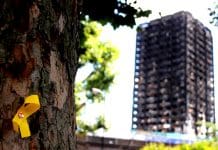
As we approach the 10th year since the Grenfell disaster, many in the construction industry are reflecting on what went wrong, and what progress has been made in a post-Grenfell fire safety world.
Guidance to create a more accountable system for building safety was published by the government in May, and several measures taken including a Call for Evidence to create a new Building Professions Strategy to be published next year, creating a new college of fire and rescue, and the establishment of the Remediation Bill.
Two separate reports, one being the final report from the interim chief construction adviser, Thouria Istephan, and the latest Grenfell Inquiry Progress Report were also both published earlier this month which create a pulse-reading of the government’s view on fire safety changes. Most of Istephan’s report reads as having done a lot of work, but there is still much more work to be done, which is supported by the Inquiry report, highlighting that 30 of the Inquiry’s recommendations have been completed, but a further 31 are in progress, three of which are leftover from the initial phase of the Inquiry.
Below, Barry Beavis of Golden Thread Fire Delay Ltd, shares his thoughts on the topic.
In less than a year, the UK will mark the tenth anniversary of the Grenfell Tower fire
Ten years since 72 people lost their lives in a tragedy that should never have happened. Ten years since the construction industry, housing sector, regulators, manufacturers, and fire safety professionals were forced to confront an uncomfortable truth: the systems we trusted to keep people safe had failed.
As we approach that milestone, a question hangs over the entire built environment: Have we really learned the lessons of Grenfell?
Recent comments from Andy Roe, chair of the Building Safety Regulator (BSR) and former London Fire Brigade Commissioner, make clear this is not a question we can answer complacently. Speaking to BBC London in July 2026, Roe described Grenfell as a “total system failure.” He said “everyone failed”: private, public, state, local government, the management organisation, the manufacturers who lied, and his own organisation, the London Fire Brigade. There was “unbelievable heroism from rank-and-file firefighters,” he added, “but the institution itself let the community down… So, I’m not involved in heroes and villains — this was total system failure.”
These are powerful words. Not because they place blame, but because they acknowledge something many of us working in fire safety have known for years. Grenfell was never simply about cladding. It was never simply about one manufacturer, one contractor, one consultant or one decision. It was the consequence of a culture that let assumptions replace accountability.
The most important lesson from Grenfell
For many outside the fire safety industry, Grenfell is remembered primarily as a cladding disaster. For those of us who work every day with passive fire protection, compartmentation and fire door safety, the lesson is far broader.
The real failure was systemic. Designers assumed others were checking. Contractors assumed specifications were correct. Building owners assumed installations had been inspected. Regulators assumed compliance processes were working. At every stage, critical responsibilities slipped between organisations.
The Grenfell Inquiry reached the same conclusion. Its final report identified decades of failures across government, regulators, manufacturers, certification bodies, and construction professionals. There was no single cause, but a combination of failures that collectively created the conditions for disaster — including “systematic dishonesty” by some manufacturers and an “unedifying merry-go-round of buck-passing.” Every death was avoidable.
What Andy Roe said in his interview this Summer, merely reinforces that reality. This was not one failure. This was a systemic failure.
So what has changed?
The honest answer is: a lot. Anyone claiming nothing has changed since Grenfell is simply wrong.
The Building Safety Act has transformed the regulatory landscape. The Building Safety Regulator now oversees higher-risk buildings. New Gateway approval processes require evidence of competence and a golden thread of information from the earliest stages. Duty holder responsibilities have been strengthened. Accountable Persons and Principal Accountable Persons have clear legal duties. The concept of the Golden Thread as providing accurate, accessible, up-to-date information about a building’s fire safety systems throughout its life has moved from an industry aspiration to a legal expectation.
Government has accepted all 58 recommendations from the Grenfell Inquiry’s final report and committed to major reform of regulation, construction products, resident protection, and industry oversight. Remediation acceleration plans, including London’s Local Remediation Acceleration Plan, are driving coordinated action between City Hall, Councils, the LFB, and the BSR. The London Fire Brigade has completed all recommendations directed at it from Phase 1 of the Inquiry, introducing new operational procedures, enhanced high-rise training, improved equipment, and a dedicated remediation team to support enforcement and data tracking.
Without question, the regulatory environment of 2026 is vastly different from that of 2017.
But here is the uncomfortable follow-up question: If so much has changed, why are serious passive fire protection defects still being discovered?
The warning signs are still there
This is where the work of CROSS (Collaborative Reporting for Safer Structures) becomes so important. Expanded following Dame Judith Hackitt’s post-Grenfell review, CROSS provides a confidential route for professionals to report structural and fire safety concerns so lessons can be shared before tragedy occurs. It now operates as the official Voluntary Occurrence Reporting System under the Building Safety Act.
Almost ten years after Grenfell, the reports continue:
- Compartmentation failures
- Fire resistance misunderstandings
- Construction quality concerns in higher-risk buildings
- Governance gaps on temporary works
- Information management problems
- Competence shortfalls
- Poor communication across disciplines
Particularly telling is a 2025 CROSS report (ID 1197) on incorrect firestopping by a third-party certificated contractor. The installer held the necessary certification, yet executed the work incompetently. The Expert Panel noted that poor installation of firestopping is “not uncommon” and expressed concern that certification alone does not guarantee competent delivery on site. Other recent reports highlight cavity barrier installation errors, rapid concealed fire spread in modular buildings due to missing cavity barriers and inadequate fire resistance, and widespread issues with fire doors, smoke shafts, and penetrations.
Over the last few years, I have walked into countless buildings where the paperwork suggested one picture, only for intrusive inspection to reveal something very different. In many cases, the defects were not the result of one major failure, but the accumulation of dozens of small issues that had gone unnoticed within the project supply chain.
For those of us involved in passive fire protection, these findings are not shocking. Concerning? Absolutely. Surprising? Not at all. Time and time again, when intrusive surveys are undertaken, defects are discovered — some historic, some recent, some from refurbishment or maintenance, some because no one checked, and some because someone assumed somebody else had already checked.
The hidden fire safety system nobody sees
One of the greatest challenges facing building safety is that the most important fire protection measures are often invisible.
Residents can see a fire alarm. They can identify an extinguisher. They know whether emergency lighting is working. They cannot see inside wall cavities, inspect service penetrations, verify compartment lines, or assess the integrity of fire stopping above a ceiling.
Yet these hidden elements form the backbone of a building’s fire protection strategy. Compartmentation contains fire and smoke, protects escape routes, slows fire spread and buys time. Most importantly, it protects lives. But it only works if it was installed correctly and then remains intact.
Every contractor intervention, cable installation, plumbing alteration, refurbishment, or maintenance activity can compromise it. Without inspection and verification, buildings can be signed off in a state of non-compliance and slowly drift further away from their original fire strategy while outwardly appearing perfectly safe. Compartmentation is therefore not a one-time consideration. It is a continuous responsibility.
Dame Judith Hackitt’s challenge still stands
If one individual continues to shape modern building safety thinking, it is Dame Judith Hackitt. Her 2018 report Building a Safer Future laid the foundations for today’s regime, but her most important contribution was cultural.
Hackitt argued that new rules alone would not solve the industry’s problems. The system required a fundamental shift in behaviours, accountability, and competence. In recent comments, she has continued to press this point, warning that too many still want to be “told exactly what to do” — a mindset incompatible with genuine responsibility. She has described Gateway One as profoundly important and observed that culture change and competence progress have been slower than hoped.
In response to the Inquiry’s final report, she described its findings as a “final call” for construction to step up. That challenge remains as relevant today as it was then.
Is third-party accreditation enough?
This is perhaps the most important question facing our industry today.
At Golden Thread Fire Delay, we believe third-party accreditation is essential. Clients should demand it. Procurement teams should insist upon it. Responsible Persons should seek it. Robust schemes such as FIRAS and BRE/LPCB (LPS 1197 for fire door inspection and remediation, LPS 1271 for installations) provide independent scrutiny and a quality management framework that is far better than none.
The Association for Specialist Fire Protection (ASFP) and the Fire Protection Association (FPA) both strongly support third-party accreditation and competence frameworks. The ASFP’s Competency Pathway and Framework give the industry practical tools to define, measure and evidence passive fire protection competence. The FPA has long argued that specialist work should be third-party approved under UKAS-accredited schemes and that true competence rests on pillars that include trustworthiness, continuous development, and independent verification.
But is accreditation alone enough?
The recent CROSS Report illustrates the point. It raised concerns about incorrect firestopping installed by a third-party certificated contractor. Importantly, CROSS did not identify either the contractor or the certification body involved, consistent with its confidential reporting approach. However, the report is significant because the Expert Panel went beyond criticising the installer. It questioned whether the certification body’s oversight and audit arrangements were sufficiently rigorous, noted that poor firestopping installation is “not uncommon”, and highlighted previous instances where work carried out by accredited contractors was later challenged.
The lesson is not that third-party accreditation lacks value. Quite the opposite. Accreditation remains one of the most effective tools available for demonstrating competence and quality management.
The uncomfortable question for the industry is whether some certification models still place too much emphasis on organisational compliance and not enough on the competence of the individuals doing the work. A building is not made safe by a certificate hanging on an office wall. It is made safe by the person installing the firestopping, inspecting the fire door or signing off the remediation works. If the industry is serious about learning the lessons of Grenfell, every assurance mechanism—including certification schemes themselves—must be prepared to demonstrate how it verifies competence where it matters most: on site.
However, the Building Safety Act defines competence as a combination of skills, knowledge, experience, and behaviours. Behaviour cannot be certified. You cannot audit integrity. You cannot accredit accountability. You cannot issue a certificate that guarantees someone will challenge unsafe practice when commercial pressure is mounting.
Those things are cultural, and culture is where real safety lives.
What needs to change in practice?
- Accreditation schemes must increase the frequency and depth of on-site surveillance, not just office audits.
- Clients and Principal Contractors should demand evidence of competence at three levels: the organisation, the individual and the installed work itself. A company certificate provides assurance that systems exist. Competency records demonstrate that operatives have the necessary skills and training. Independent inspection and verification provide assurance that the completed installation performs as intended. All three are needed if we are to move from compliance to genuine assurance.
- The industry should make fuller use of existing tools such as the ASFP Competency Pathway and FPA guidance, treating them as living frameworks rather than optional extras.
- Certification schemes have an important role to play, but they should not be immune from challenge. The Building Safety Act has raised the bar for what competence means in practice. If competence is defined by skills, knowledge, experience, and behaviour, then certification frameworks must show how those attributes are assessed not only at company level, but also among the individuals carrying out work on site and in the quality of the installations they leave behind.
Accreditation remains necessary. It is simply not sufficient on its own.
From compliance to assurance
Perhaps the biggest change since Grenfell is not regulatory. It is philosophical.
Historically, organisations sought compliance. Today they need assurance.
Compliance asks: Was the work completed?
Assurance asks: Can you prove the work was installed correctly?
That difference changes everything. It requires evidence, inspectability, traceability, quality assurance, photographic records, maintenance history, and a living Golden Thread of information. It requires understanding buildings rather than assuming aspects about them.
This evolution is exactly what the Building Safety Act and Building Safety Regulator are trying to achieve. Safety can no longer rest on trust alone. It must be demonstrable.
Why this matters
As someone who spends every day speaking with contractors, housing providers, facilities managers, building owners, and responsible persons, I see first-hand the increasing pressure to prove compliance rather than simply claim it. The conversation has changed. Clients are no longer asking only what work was completed; they are asking how that work can be evidenced, maintained, and defended under scrutiny.
People sometimes ask why we are so passionate about compartmentation, fire doors, fire stopping, and compliance documentation. The answer is simple. These are not just products and services. They are life safety systems.
When we undertake a compartmentation survey, we help clients understand risk. When we remediate fire stopping, we restore the integrity of a building’s fire strategy. When we inspect and remediate fire doors under accredited schemes, we verify that a critical line of defence will perform when people need it most. By providing detailed reporting and evidence, we help create the Golden Thread that future building safety depends on.
Ultimately, we help building owners answer the questions regulators, residents and Responsible Persons are increasingly asking: Is the building safe? Can safety be demonstrated? Is there evidence? Can occupants be protected?
Those are not paperwork questions. They are human questions.
The next ten years
As we approach the tenth anniversary of Grenfell, we should recognise the progress made. The industry has changed. The regulations have changed. The scrutiny has changed. The accountability has changed.
But the journey is not complete. The continuing warnings from CROSS, the ongoing emphasis from Dame Judith Hackitt, the practical challenges still facing the BSR and LFB, and Andy Roe’s recent comments all point to the same conclusion.
The next decade must be about more than assumed compliance. It must be about proven compliance and competence. More than that, it must also be about culture and integrity.
Safe buildings are not created by legislation, certificates, or audits alone. They are created by people who understand the responsibility they carry and are prepared to act on it.
Nearly ten years after Grenfell, that remains the most important lesson.
At Golden Thread Fire Delay, it is one we will never forget. Because behind every fire door, every compartment wall, every piece of fire stopping and every compliance report, there is something more important than a building regulation.
Behind every fire door is a resident trusting that it will perform.
Behind every compartment wall is a family trusting they have time to escape.
What can readers do now?
Demand more than certificates in procurement. Require evidence that the Golden Thread is being robustly created and maintained, not merely claimed. Support continuous verification of compartmentation and fire doors. And when concerns arise, report them rather than assume someone else will.
Because if the Grenfell Inquiry, Andy Roe, Dame Judith Hackitt and the reports emerging through CROSS have taught us anything, it is that major failures rarely begin with a single catastrophic decision. They begin with small compromises. Small assumptions. Small decisions to look the other way.
- Someone assumes somebody else checked.
- Someone accepts an answer they know should be challenged.
- Someone prioritises programme over quality.
- Someone signs off work they haven’t scrutinised closely enough.
- Someone secures the order, meets the deadline, and moves on.
And over time, those small decisions accumulate into systemic failure.
Nearly ten years after Grenfell, we know far more about competence, regulation, and compliance than we did in 2017. But perhaps the most important lesson is not about knowledge.
It is about integrity.
The industry does not simply need more competent people. It needs more people willing to ask difficult questions. More people willing to challenge poor practice. More people willing to stop work when something isn’t right. More people willing to put safety ahead of convenience, programme, profit, or commercial pressure.
The systems have improved.
The regulations have improved.
The scrutiny has improved.
Now the culture must catch up.
Because the next Grenfell will not be prevented by a certificate hanging on an office wall. It will be prevented by individuals who have the competence to recognise a problem, the integrity to speak up about it, and the courage to do something about it.
That responsibility belongs to every one of us. And that is why it matters.