

Construction has completed on the Liverpool Accelerate Laboratory at the Liverpool School of Tropical Medicine (LSTM)
Developed by Tilbury Douglas, the Liverpool Accelerate Laboratory is the UK’s first high-security, automated category three infection research laboratory.
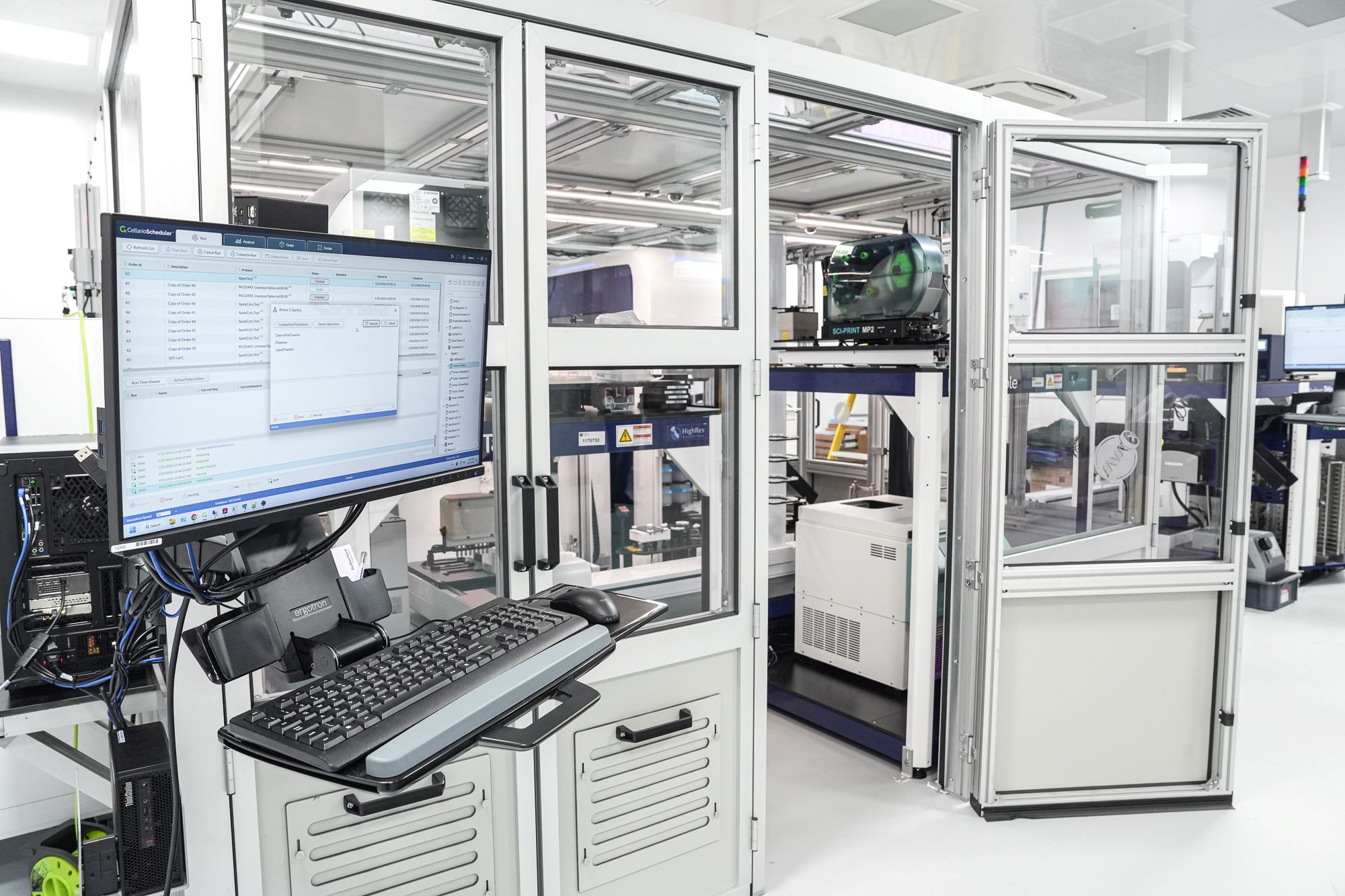
It combines high-containment infrastructure with artificial intelligence, robotics and human organoid technology to accelerate the development of drugs, vaccines and diagnostics for high-risk infectious diseases.
It has been developed for LSTM and the LSTM-led Infection Innovation Consortium: iiCON.
Construction worked around protecting ongoing projects
Delivered over a nine-month programme within LSTM’s live laboratory environment, the scheme was carefully planned to protect ongoing research and avoid disruption to surrounding facilities.
The Liverpool Accelerate Laboratory has been constructed as a fully sealed and self-contained environment, effectively creating a “box within a box”.
Its prefabricated modular structure incorporates security-rated steel panels, specialist ventilation systems, autoclaves, sealed service pendants and gas-tight dampers. The environment operates at up to 30 air changes per hour and was validated through positive- and negative-pressure testing.
Kabir Salihi, regional director – North West at Tilbury Douglas, commented: “We are proud to have completed this pioneering facility for LSTM and iiCON. Its combination of high-containment infrastructure, complex building services, robotics and AI demanded exceptional technical expertise and close collaboration throughout.
“Delivered within a live laboratory environment, the project is a testament to the dedication of our team and partners. It is rewarding to know that the facility will support vital research, helping to accelerate new treatments for infectious diseases and strengthen the UK’s biosecurity capabilities.”
The Liverpool Accelerate Laboratory has been constructed for its expert purpose
Tilbury Douglas’ engineering team played a key role during preconstruction, leading the mechanical and electrical design management and advising on buildability, value engineering, programming and specialist procurement.
They worked closely with LSTM, iiCON, architect Ellis Williams, engineer Steven Hunt Associates, iiCON’s robotics specialists and its specialist supply chain to coordinate and deliver the technically complex facility.
The Liverpool Accelerate Laboratory forms a central part of the Liverpool City Region Life Sciences Innovation Zone. It has received £10m from the Liverpool City Region Combined Authority, alongside funding from Research England’s Expanding Excellence in England fund and the Wolfson Foundation. The wider £20m facility is forecast to attract a further £40m of investment during its first three years.
Professor Janet Hemingway, founding director of iiCON, concluded: “A central pillar of the Liverpool City Region’s Life Sciences Innovation Zone, this facility strengthens the region’s position as a global hub for infection and reinforces iiCON and LSTM’s commitment to fostering impactful collaborations, supporting industry, and creating high-value jobs – ensuring this facility delivers real-world impact for patients, communities, and the wider economy.”