

Joanne Hardwicke, associate director at EDGE, reflects on what’s to come for the New Hospital Programme following the opening of its first facility
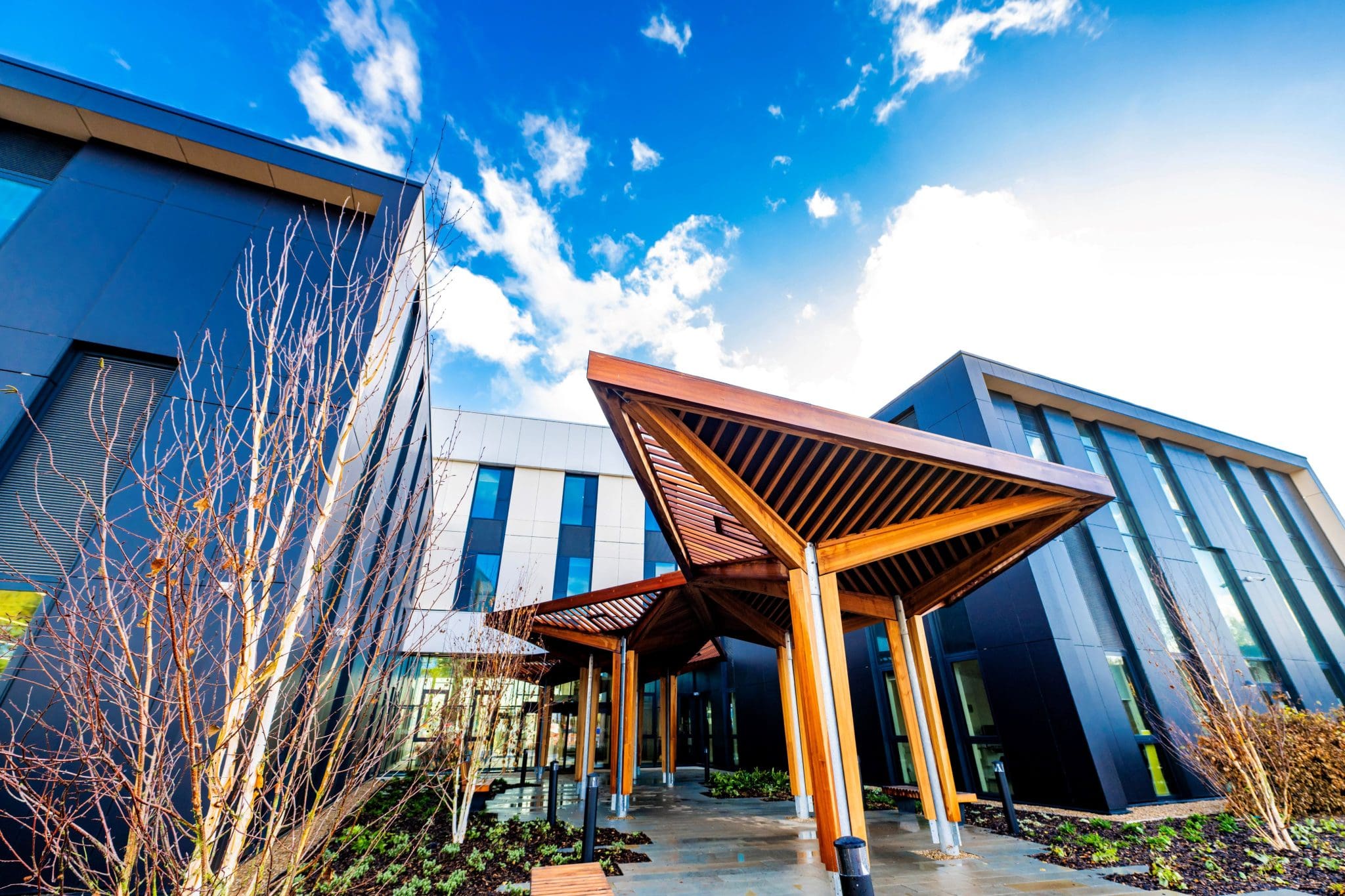
In early September, the National Rehabilitation Centre (NRC) welcomed its first patients. It is a 70-bed, £107m facility at the Stanford Hall Rehabilitation Estate in Nottinghamshire, operated by Nottingham University Hospitals NHS Trust. As one of the first schemes in the government’s New Hospital Programme (NHP) to progress, it is also one of the first to open.
Having supported the successful delivery of this state-of-the-art centre, the EDGE team is proud to see it open. We provided project management, NEC supervision, programme support and drone surveys during construction.
A project like this teaches you a great deal. Some lessons are significant and shape how you approach upcoming projects, while others are more subtle. This project was fascinating because of its national significance, and because it was the first in the New Hospital Programme (NHP).
With that in mind, our experience across this project and other healthcare schemes has highlighted several common themes and practical considerations. For consultants looking to bring forward similar projects, here are some of our key considerations and practical advice.
Allow additional resource
It cannot be overstated how much resource a high-profile, high-intensity project like those on the NHP will require. As consultants, we coordinate clinical, estates, digital and sustainability workstreams at the same time, on top of the reporting and monitoring that a programme like this requires.
In a market where fees can become a race to the bottom, that is an uncomfortable truth. Consultants must enter these projects with their eyes open about what the role will demand. Clients, in turn, should have a clear view of the resources needed.
A team that is stretched thin delivers less value than one that is properly resourced, however competitive the fee may look at the tender stage.
Allow time to review contracts
The Hospital 2.0 form of contract is relatively new, and many of the people who will work with it are unfamiliar with it. Before work starts, every party needs to understand the risk balance it sets out.
For consultants, the job goes beyond reading the contract. We need to think through the eventualities it could produce and explain them clearly to the client, so they know what issues may lie ahead and can plan for them.
Time spent on this at the outset is cheap compared with the cost of discovering a risk allocation halfway through construction.
Collaboration is key
It may sound obvious, but on large healthcare projects collaboration decides how things turn out. Complex schemes are almost always likely to face challenges along the way, and those are solved far more easily when all parties approach them with openness, curiosity, and empathy, and from a position of mutual trust and respect.
We have seen what strong relationships do for delivery, but we have also seen the damage that poor buy-in can cause. By engaging stakeholders early and building trust throughout the process, projects are far more likely to succeed.
Keep up with innovation
Large hospital projects have changed considerably in recent years. Smart hospital technology and New Zero Carbon requirements now carry as much weight as the clinical brief, and consultants must keep up.
That means knowing which digital technologies are available and how mechanical and engineering (M&E) systems are changing. It also means understanding how each affects a project’s risk profile, cost, and operation.
Innovation in practice
The NRC project kept innovation and sustainability at its heart. The building is described as the NHS’s first operationally carbon-neutral building, supporting the organisation’s 2045 Net Zero target through rooftop solar panels and air source heat pumps.
Reflecting the scheme’s sustainability, which we supported, the NRC won the Constructing Excellence Midlands Net Zero Award and was Highly Commended at the European Healthcare Design Awards.
Alongside sustainability, technology was equally prominent. Over several months, we took part in a series of ‘art of the possible’ workshops, where the latest solutions were presented, from patient absconding software to ‘silent’ nurse call systems.
Being embedded in that process gave our team at EDGE a working understanding of these technologies. That understanding is what allowed us to manage their implementation rather than simply react to it.
Together, we ensured technology was implemented effectively and delivered real operational benefits for staff, patients and the wider healthcare system.
Looking ahead
Our work on the NRC project shows how healthcare development is changing and becoming more complex. Clinical models are evolving, digital and sustainability expectations keep rising, and the pressure on budgets and programmes shows no sign of easing. The NRC is one example of how those pressures converge on a single scheme, but the themes it highlighted are not unique to it or to the New Hospital Programme.
Whether the project is a new hospital, a major refurbishment, or a specialist unit, the fundamentals hold, and the key learnings remain important: allow additional resources, understand and review the contract, keep learning, and always collaborate and build trust early. These learnings aren’t necessarily glamorous, but together they help develop a scheme from being managed to being delivered well.
For those of us involved in this development, and working in the sector more broadly, the lasting reward is knowing the buildings we help deliver will support patients, staff, and communities for years to come. As more NHP schemes and other healthcare projects move forward, we hope these considerations help project teams, consultants and clients alike to approach them with their eyes open.