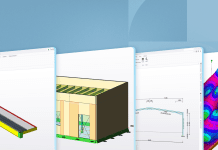

Linking a model to time and cost makes construction choices easier to evaluate. The result is only as credible as the scope, production assumptions and evidence behind it, particularly when design changes or progress falls behind
A construction animation shows a floor completing on Friday. A linked cost report displays the value of the components scheduled for installation. Both can be internally consistent and still describe a plan that cannot be delivered: the crane is committed elsewhere, a design release is outstanding, or the crew cannot reach the assumed production rate.
The value of 4D and 5D BIM lies in exposing those relationships early enough to change a decision. In common industry usage, 4D links model information with time, while 5D adds a cost relationship. Those labels do not specify the quality of the underlying programme or the completeness of the estimate. A compelling visualisation can communicate an unreliable assumption very effectively.
Clients and contractors therefore need to examine the connections behind the display. Which model elements relate to which work packages? What has been measured? Which activities remain outside the model? And what evidence supports the claim that work is complete? These questions turn a presentation into a tool for controlling delivery.
A measured quantity is only part of an estimate
The RICS New Rules of Measurement provide measurement rules and guidance for construction cost management and maintenance work. The suite distinguishes order-of-cost estimating and cost planning from detailed measurement and maintenance cost planning. The distinction remains relevant when quantities come from a model: extracting a number does not determine the measurement convention or its suitability.
A modelled wall area may describe gross geometry, net finished area or a particular material layer. The priced item might include openings, waste, access or associated work on a different basis. Unless the mapping is explicit, the software can multiply a precise quantity by an incompatible rate and produce a precise-looking error.
The estimator also needs to account for work that the design model does not represent. Temporary works, logistics, testing and site management can carry substantial cost without appearing as permanent objects. Record model coverage against the estimate scope so unmodelled work remains visible rather than silently disappearing from the total.
Keep design development separate from price movement
When a cost forecast changes, the commercial team needs to know why. More material, a different specification, a revised production method and an updated market rate are different causes. Combining them into one automatically refreshed figure makes it harder to decide which response is available and who needs to act.
An illustrative façade change shows the problem. The model may report less panel area, while the revised geometry requires more unique units and a more difficult installation sequence. The quantity reduction does not prove that the package is cheaper. Manufacturing complexity, access and programme effects need to be assessed alongside the extracted measurement.
A useful update preserves the earlier basis and records the source of each material change. The team can then distinguish an authorised scope decision from a corrected quantity or a supplier price movement. That history supports a meaningful discussion of options before the new total is accepted as the project’s inevitable out-turn.
The programme needs logic as well as dates
The US Government Accountability Office’s Schedule Assessment Guide connects a reliable schedule with understanding the cost consequences of delay. It presents practices for developing and maintaining schedules, including using schedule information to evaluate change. It is a US government guide, not a UK contractual requirement, but its connection between time assumptions and cost credibility is directly relevant to model-linked controls.
A construction sequence should explain dependencies. Installing an item may require a completed design, available material, access, a preceding trade and inspection of concealed work. Assigning an item a start and finish date without those links creates an animation, but it leaves the programme unable to reliably show what happens when a predecessor moves.
Resources introduce another constraint. Two activities may be spatially compatible but require the same specialist crew or lifting equipment. Conversely, nearby activities may compete for access even if separate crews are available. A 4D review can make those conflicts easier to see, provided the relevant temporary arrangements and resource assumptions are included.
Model detail should serve the planning decision
A single object can cover work performed in several stages, while one installation activity can involve many objects. The relationship is rarely a simple one-to-one connection. A floor might be divided by pour sequence, trade package or work zone, each useful for a different decision. Maintaining that mapping requires a clear planning structure.
Overly coarse models can hide constraints; unnecessarily detailed ones can absorb time that would be better spent testing the plan. A logistics discussion may need realistic work zones, delivery routes and crane envelopes rather than every minor component. The relevant test is whether the model can expose the decision’s constraints when the team needs to act.
The business case should also include the update burden. If each design revision requires extensive manual relinking, the simulation may fall behind the working programme. Stable object references, consistent package structures and an agreed update process help, but the team must still allocate time to checking that links remain correct after change.
Progress needs a shared definition of done
A component visible in a site photograph may be installed but not inspected, tested or accepted. A delivery record establishes arrival, not incorporation into the works. Different evidence answers different questions, and a model’s colour change should not conceal that distinction. The progress rule needs to match the management decision being made.
For example, installation progress can inform labour planning, while tested and accepted completion may govern release of the next activity. Commercial valuation may follow separate contractual provisions. Treating all three as the same percentage risks misleading the programme, the payment assessment or both. A shared source of information does not eliminate those different purposes.
The reporting date matters as well. A cost report based on this week’s model and last month’s progress evidence mixes periods. The apparent variance may partly reflect that mismatch. Each update should make its cut-off date and evidence basis clear enough for the planner and quantity surveyor to reconcile the position together.
Show uncertainty instead of hiding it in a single number
The Infrastructure and Projects Authority’s Cost Estimating Guidance states that an estimate evolves with scope and schedule and should be expressed as a range reflecting risk and uncertainty. Its focus is capital cost estimates for government infrastructure projects and programmes. The wider lesson for model-linked estimates is that increasing the number of measured objects does not remove uncertainties elsewhere in delivery.
Some uncertainty comes from incomplete design; some comes from uncertain events or market conditions. A model can improve the first by clarifying scope, but it cannot guarantee future supplier prices or ground conditions. The estimate should distinguish what is measured, what is assumed and what requires an allowance or further investigation.
Scenario comparisons are particularly useful when they preserve those distinctions. Bringing work forward may reduce exposure to one risk while increasing congestion or requiring overtime. A cheaper component may extend lead time. The comparison needs a consistent scope and an explanation of changed assumptions, rather than a pair of headline totals that imply more certainty than the evidence supports.
Use the review to make a decision
The practical output of a 4D or 5D review should be an action that can be followed: revise an access arrangement, obtain a missing design release, test an alternative sequence or investigate a cost allowance. Assigning that action and checking its effect connects the model with delivery. Otherwise, the team can repeatedly visualise the same unresolved constraint.
A mature digital control process also preserves the approved baseline while maintaining a current forecast. The first records what was agreed; the second reflects what the team now expects. Their difference is useful evidence. Replacing the baseline each time the model changes would remove the very comparison needed to understand whether the project is improving or drifting.