

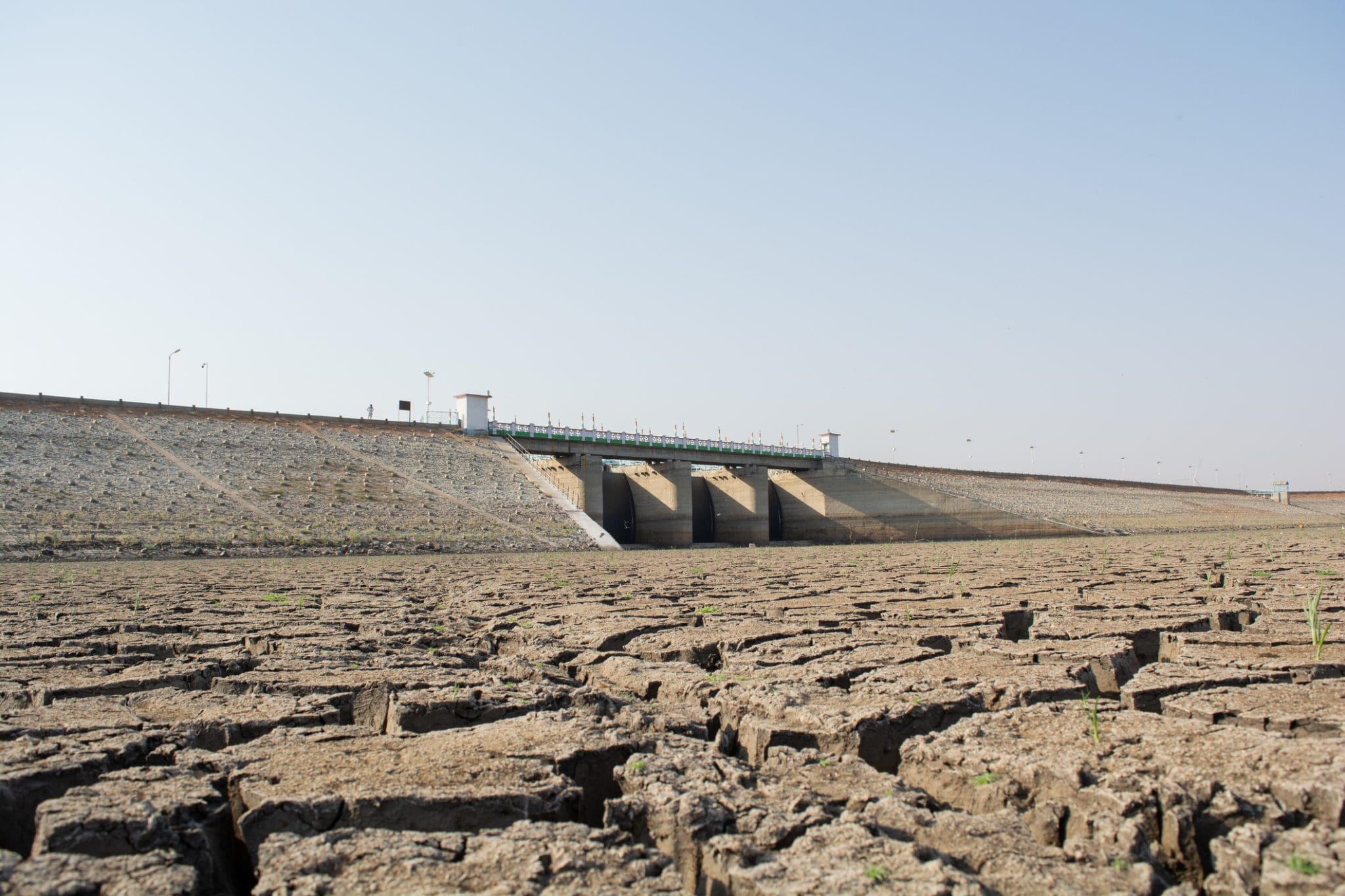
Jon Fawcett, head of technical at Keyline Civils Specialist, asks why flooding and drought are treated as separate issues when they stem from the same fundamental problem
This has been something of a whiplash year when it comes to the weather; from the driest July on record in England and Wales, to roughly three-quarters of England in drought and all English counties meeting the drought or prolonged dry weather threshold by mid-August.
The issue
While scarcity and overabundance of water are diametric issues, they stem from the same fundamental cause: that the national drainage network was built for the purpose of conveying water from one place to another as quickly as possible.
Historically the system served its purpose, transporting rainwater away from urban settings back to streams and rivers, or wastewater treatment plants.
But the population has grown significantly, and the climate is now very different to how it was even relatively recently, all of which puts more pressure on the national water supply.
Over time, two distinct points of failure have developed: firstly, sewers are built as conveyance systems and not designed for retention. Much of our older urban sewer network is a combined system, so surface water joins the foul sewer from peoples’ homes, and everything is sent to a treatment plant. This means that surface water is treated as wastewater rather than a reusable asset.
Secondly, dry soil is far less absorbent. When the weather breaks after a prolonged hot and dry period we tend to see heavier, concentrated downpours which the ground can’t absorb. This can lead to sewers being overwhelmed, resulting in surface flooding.
The overarching issue is that these two problems – a lack of water when dry, and flooding when the weather finally breaks – are seen as distinct and unconnected, with different regulators, funding schemes, and mechanisms which creates siloed thinking between flood resilience and water resources.
However, there are designers and senior figures in the industry who are starting to feel that we should be addressing these issues holistically. Although it’s not what we could consider to be accepted thinking, I believe that practically it’s possible to exercise both and have a dual benefit from that design.
There are already some moves being made in this area, such as through the government’s 2025 National Standards for Sustainable Drainage (NSSD).
Discharge hierarchy
The government outlined a tiered discharge hierarchy for new SuDS schemes in standards published in June 2025 and updated in July 2025 as part of the NSSD.
The highest priority is collecting water for non-potable use, including rainwater harvesting or greywater systems; then infiltration to the ground via soakaways or permeable paving; discharge to an above-ground surface water body such as a pond or lake; discharge to a surface water sewer; and finally discharge to a combined sewer.
While this guidance is clear, there remains a gap between the standards and their practical application.
The main issue is adoption. Unlike sewers, rainwater harvesting, and greywater systems lack a clear owner, so are dropped when maintenance is questioned. Developers fund storage while water companies and customers benefit, making minimum-compliance drainage the rational choice.
Taking a bitesize approach to water retention
An often repeated point is that no new reservoir has been completed in England since the early 1990s. While there are multiple reasons for this, including local opposition, developments at this scale take a long time to put together and get through the planning system.
But what if rather than one large reservoir, we looked at a series of smaller more local retention solutions? This could be particularly helpful for agriculture, where during droughts farms and agricultural users can face restrictions on the amount of water they can remove via abstraction from local rivers and streams, to safeguard the local ecology.
The good news, though, is that the government has announced it will fund on-farm reservoirs, ease planning guidance and review permitted development rights with the National Farmers Union (NFU). In doing so, it has effectively decided that storing water where it falls is worth funding, but only outside the urban area.”
One issue that’s preventing this, however, is the question of accountability for the asset’s maintenance and repair.
Ownership and management
Within urban environments there are a range of different options for water storage, from highways to industrial estates. Some water companies have already been placing stormwater storage tanks below car parks, although that comes with its own logistical challenges not least when it comes to finding alternative parking for businesses that may be impacted.
New sewers in general are adopted relatively quickly, but rainwater harvesting or greywater systems aren’t really sewers, so unlike a sewer (where responsibility generally rests with the local wastewater company) the question is who should be responsible for their maintenance.
The main issue is one of practicality, particularly when it comes to the question of who would own and therefore be responsible for the maintenance and any liability stemming from these assets.
Flooding often results from a lack of asset maintenance, which can include something as simple as making sure that roadside gullies are free of litter, leaves and sediment. This is an additional responsibility that landowners may not be prepared to undertake.
This could instead fall to either a specialist management company, or the landowner themselves, potentially placing additional costs on already stretched finances.
What do we need to make it happen?
First and foremost, any practical solution will need to start with a change of mindset: we need to see the issues of water resources and flood management as one problem rather than two.
Practically, though, there are three issues that need to be addressed.
The first is an adoption pathway for non-potable reuse assets. Currently, rainwater harvesting, or greywater systems have no natural owner, making them a target for removal from drainage strategies, leading to the top tier of the hierarchy existing on paper but not being delivered.
A standardised adoption framework would give these assets the same clarity as sewers and would only require updates to existing guidance rather than new legislation.
Secondly, we need a dual-function specification on AMP8-funded disconnection schemes. Water companies are already spending significant sums removing surface water from combined sewers, but that water is typically redirected to a watercourse and lost.
These assets could be specified to retain water for reuse before controlled discharge, with separated volumes or forecast-led drawdown used to ensure attenuation capacity is available when storms arrive.
Finally, the discharge hierarchy should be evidenced tier-by-tier. Currently, reuse can be dismissed in a single line of a drainage strategy, and the scheme moves down the hierarchy unchallenged. Local planning authorities and lead local flood authorities should require developers to show why non-potable reuse is technically unfeasible before accepting a lower tier.
There’s no panacea or one-size-fits-all solution to any of this; it’s a multi-tiered and layered issue. With a growing population and a changing climate, a measure of success shouldn’t be how quickly we can get rid of surface water, but what we do with it.