
As winter looms, experts from Travis Perkins have shared tips on how developers and workers can prepare for working on a cold site
Just like working in a heat wave, cold-weather construction activities bring their own unique risks, including ice, snow, and health risks associated with the cold.
As such, construction workers and site managers should be prepared to make precautions and action to prevent issue or injury.
Guidance formed from the HSE, NHBC, and the Concrete Society
Lauren Hickling, HSE director at Travis Perkins, said: “When freezing temperatures are forecast, site teams should review the next day’s programme and identify which working areas, materials and tasks could be affected.
“Checking product guidance, protecting stored materials and preparing access routes in advance can help teams decide what can continue as planned, what may require additional measures and what should be rescheduled.”
Below are Lauren’s full thoughts on how sites can prepare for the winter:
Review the planned programme of work
The first step should be to review the work planned for the following day and identify any tasks that could be affected by freezing temperatures.
For bricklayers, the forecast should prompt checks of bricks, blocks, mortar and unfinished masonry. The current NHBC Standards state that suitable precautions should be taken when masonry work is carried out in cold weather.
Bricks and blocks should be checked for frost, snow or saturation, while mortar specifications and plans for protecting newly completed work should be reviewed before work starts.
Concrete teams should consider both the conditions at the time of the pour and those expected while the concrete gains its early strength. Young concrete can be seriously damaged if the water within it freezes, while low temperatures can also slow strength development.
Painters, renderers and anyone applying adhesives or sealants should check the product’s permitted application conditions and the surface itself. Even if the air has begun to warm, a surface may remain frozen, damp or outside the recommended temperature range.
There is no single temperature limit that applies to every product or task. Site teams should follow the relevant technical data sheets, project specifications and method statements.
Prepare pedestrian, vehicle and delivery routes
Site entrances, pedestrian walkways, parking areas, haul roads and loading points should be inspected before workers and deliveries arrive.
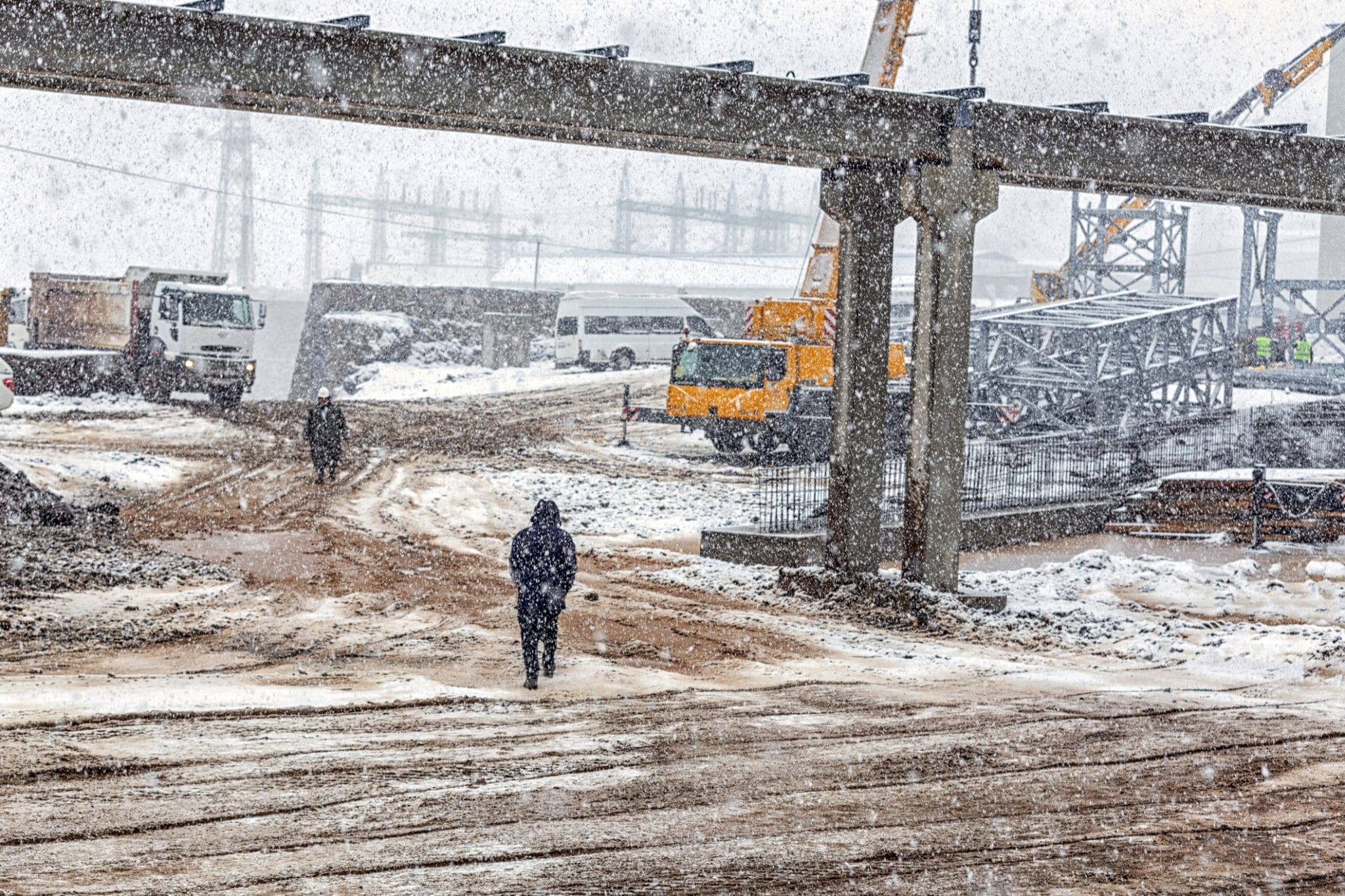
Slopes and areas that remain shaded or collect water may be more likely to become slippery. Snow can also conceal kerbs, potholes, cables and changes in ground level, so a route should not be considered safe based on its appearance alone.
Guidance says employers should assess the risks presented by ice, frost and snow and put a system in place to manage them. Gritting should take place when freezing conditions are forecast, allowing sufficient time for the treatment to work.
Site teams should also establish whether delivery vehicles can enter, turn and unload safely. If an entrance or unloading area cannot be made suitable, deliveries may need to be rearranged or directed elsewhere.
Check how materials have been stored
Materials stored outside or in unheated areas should be inspected before use, particularly following a freezing night.
Bricklayers should check whether bricks, blocks and bagged materials have remained suitably covered and protected from moisture. Newly completed masonry may also require protection from overnight frost in line with the project specification.
Painters, renderers and flooring contractors should check whether temperature-sensitive products have been stored within the manufacturer’s recommended range. Materials that have frozen should not automatically be warmed and used without first consulting the product instructions or supplier.
Covers and protective sheeting should also be inspected to ensure they remain secure and have not collected water or been moved by the wind.
Hickling says: “A material may look unaffected but still have been stored outside the manufacturer’s recommended conditions.
“Teams should avoid applying one general rule to every product. If there is uncertainty about whether a material remains suitable, advice should be sought before it is used.”
Inspect access equipment and working surfaces
Scaffold boards, ladders, steps, platforms, roofs and unfinished floors can become slippery when exposed to frost, ice or moisture.
Roofers should check the full route to the work area, including ladders, scaffold access, platforms and the roof surface itself. Snow may conceal fragile materials, changes in level or ice underneath, so removing visible snow does not automatically make the roof safe to access.
Edge protection and other fall-prevention measures should also be inspected before work begins. If the roof or access route cannot be made safe, the job should be postponed until conditions improve.
Employers and self-employed contractors must assess risks from work at height and ensure the work is properly planned and organised.
Conditions may also need to be reassessed throughout the shift, particularly following further snowfall, melting or refreezing.
Complete equipment and plant checks
Normal pre-use inspections should still be completed, even if poor weather has delayed the start of the working day.
Plant operators should clear and inspect steps, handholds, mirrors, cameras, lights and controls before use. They should also check whether compacted snow or ice has affected traction, visibility or the suitability of designated site routes.
The HSE advises employers to plan and manage work-related journeys during poor weather, including ensuring vehicles are properly equipped for the conditions.
Anyone using powered tools should inspect cables, plugs, batteries and connections for visible moisture or damage. Equipment stored in freezing conditions should be inspected before use, with any cold-weather operating or storage instructions provided by the manufacturer followed.
Tools or machinery that appear damaged or fail to operate as expected should be isolated and checked rather than forced into use.
Monitor workers, lighting and changing conditions
Cold-weather preparation should continue after the initial inspection. Someone should be responsible for monitoring the forecast and site conditions, while workers should know how to report an unsafe route, surface, material or piece of equipment.
Outdoor weather can affect workers’ health and their ability to work safely, including when machinery is being handled. Employers should consider suitable protective clothing, access to warm and dry welfare facilities and appropriate breaks.
Poor weather and shorter winter days can also reduce visibility. Suitable lighting should be provided around pedestrian routes, work areas and locations used for loading and unloading.
Hickling adds: “Conditions can change throughout the working day, particularly as snow melts or standing water refreezes.
“Site teams should continue monitoring access routes, working surfaces and stored materials, and reassess any task where the conditions no longer meet the relevant product or project requirements.”