

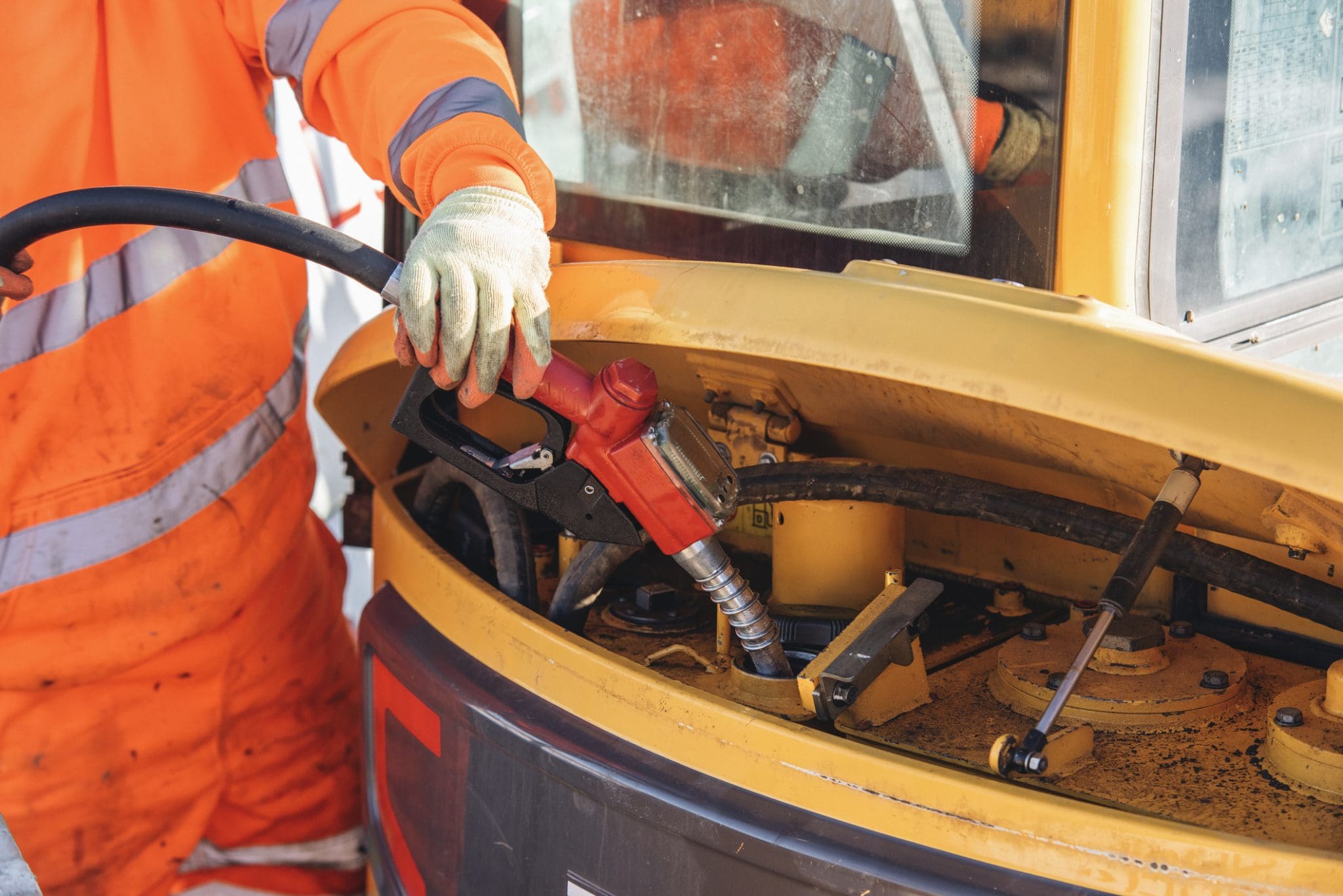
Connor Grisdale, senior consultant at Positive Planet, explores how smaller construction businesses can begin reducing their reliance on diesel
The construction industry is making meaningful progress in reducing its reliance on diesel, with major infrastructure projects adopting alternative fuels and power sources, and clients paying closer attention to the environmental impact of the work they commission.
For smaller contractors, however, the question is how to make that progress achievable in practice. New equipment and alternative technologies can come with costs and site requirements that are difficult to accommodate on tighter budgets or smaller sites.
The starting point doesn’t need to be a completely diesel-free site. Understanding current emissions, identifying opportunities to reduce them, and making informed decisions about the alternatives available are solid steps in the transition.
What smaller contractors can learn from larger projects
The Construction Leadership Council’s Zero Diesel Sites Route Map sets an industry ambition to cut diesel use by 78% by 2035; it combines greater efficiency, cleaner fuels, electrification, and broader industry support.
The Lower Thames Crossing provides a recent example of that ambition being put into practice. In September 2026, National Highways reported more than 30 zero-emission machines operating across the project, with around 150 expected by peak construction in 2028. The project also uses HVO as an alternative to conventional diesel, alongside electric- and hydrogen-powered equipment.
This is encouraging, although a major infrastructure project has resources and purchasing power that not every smaller contractor will have.
What can be carried across is the principle of planning the transition rather than treating it as a single equipment purchase. Understanding what power a site needs, considering the alternatives available, and looking for ways to reduce consumption are all relevant, regardless of business size.
Start with the information you already have
One of the most practical places to start is measuring what you already record. A useful first step is to establish a baseline carbon footprint. Even when a business can only gather limited information initially, the aim is to understand the current position before deciding what improvement should look like. This baseline measurement also lets you track and celebrate future emissions reductions.
For contractors considering diesel reduction, that means reviewing existing fuel and site energy information and identifying the biggest sources of consumption. It also means recognising that one site may have very different requirements from another, including power needs, space constraints, and location, each of which can affect the feasibility of different alternatives.
Getting a clearer picture helps businesses decide which opportunities are worth exploring. Without that starting point, it is much harder to assess whether a proposed change has actually reduced emissions.
It’s also worth beginning conversations with suppliers early, both about the environmental data they can provide and the lower-carbon options they may be able to support.
Weighing up the alternatives
No single replacement for diesel will suit every construction project, so it is important to understand the options available.
HVO is a key drop-in transitional fuel for machinery that still relies on combustion engines. While it carries a cost premium over forecourt diesel, it can deliver up to 90% lifecycle greenhouse gas savings compared with conventional diesel, along with reductions in other localised air pollutants (NOx, PMs, SO2). However, those savings should not be taken for granted; the environmental impact depends on how the fuel is produced and sourced, and businesses need reliable evidence to support any emissions claims.
An electric plant presents another possible route away from diesel, with the benefit of producing zero exhaust emissions at the point of use. Its overall carbon impact depends on the electricity source (powering your battery from a diesel generator would be inefficient and remove the carbon benefit), and its suitability varies with the work being undertaken and the practicalities of powering equipment on a particular site.
Hydrogen-powered plants are also becoming a reality on construction sites, with modular refuelling solutions making the technology more practical. When green hydrogen is used, machinery can operate without producing carbon emissions at the point of use, although this does not account for emissions from producing and supplying the fuel. Given the power demand of heavy plant machinery and vans carrying a load, some contractors hope hydrogen technology will provide opportunities where electrification has struggled.
Contractors should be cautious about assuming that a technology used successfully on a large, long-running project will automatically work across smaller or shorter jobs. Rather than deciding one technology is the answer, smaller businesses should consider each site’s requirements and trial new technologies or methods before making a significant investment that locks them into one alternative.
Look at the whole site, not just the machinery
Reducing diesel reliance isn’t just about replacing plant; on-site renewables and battery storage are also options construction businesses are exploring to cut dependence on fossil fuels. These may be worth considering alongside lower-carbon fuels, depending on an individual project’s needs and constraints. Specifically mention site management and consideration of the footprint of any battery systems, etc., as some sites will be too small to fit large batteries or PV.
The wider opportunity is to improve energy management as part of everyday site planning. Understanding where energy is needed, assessing what can realistically change, and reviewing the results can help businesses make progress without assuming every solution requires major investment.
This also provides a stronger basis for future decisions; if an alternative technology becomes available or more commercially viable, a contractor with a clear understanding of its energy use is better positioned to judge whether it is suitable.
Why measuring progress matters commercially
Sustainability is playing a growing role in construction procurement, with clients and main contractors increasingly wanting evidence of how suppliers are managing environmental impacts, including carbon emissions.
For smaller contractors, this can mean demonstrating what they currently measure, what steps they have taken and where further improvement is planned. A credible account of progress is more useful than a broad commitment that cannot be supported with data.
Supply-chain conversations matter here too; larger contractors rely on supplier information to understand the environmental impact of projects. Smaller businesses that begin collecting relevant data and discussing expectations with customers will be better prepared when those requests arise. At the bid stage, case studies of carbon reduction successes are increasingly requested – those businesses that can point to previous trials and emissions progress are the ones that will come out on top in this area.
That doesn’t mean claiming a site is diesel-free before it is, or promising reductions that cannot be evidenced; quite the opposite, in fact, it means being aware of the state of play and being honest about it and showing what meaningful progress you have achieved, and plan to take going forward.
Make progress manageable
For smaller contractors, reducing diesel use will likely be a gradual process; some alternatives are appropriate now, while others may be more realistic as equipment, supply, and infrastructure develop.
The key is to start with a practical plan: establish a baseline of fuel consumption and emissions, understand the site’s energy needs, talk to suppliers, explore credible alternatives, and track the results.
While switching to lower-carbon fuels and technologies can involve additional upfront costs, it may also strengthen a contractor’s position when bidding for work. Demonstrating measurable emissions reductions and a credible decarbonisation approach can help businesses score valuable points in tender assessments, potentially unlocking contracts worth thousands or even millions of pounds.
Major projects show what the industry can achieve at scale and offer valuable takeaways for smaller contractors to learn from. By understanding current operations and making measurable improvements now, businesses can reduce their reliance on diesel where it is feasible and build a stronger foundation for future investment and procurement requirements.