

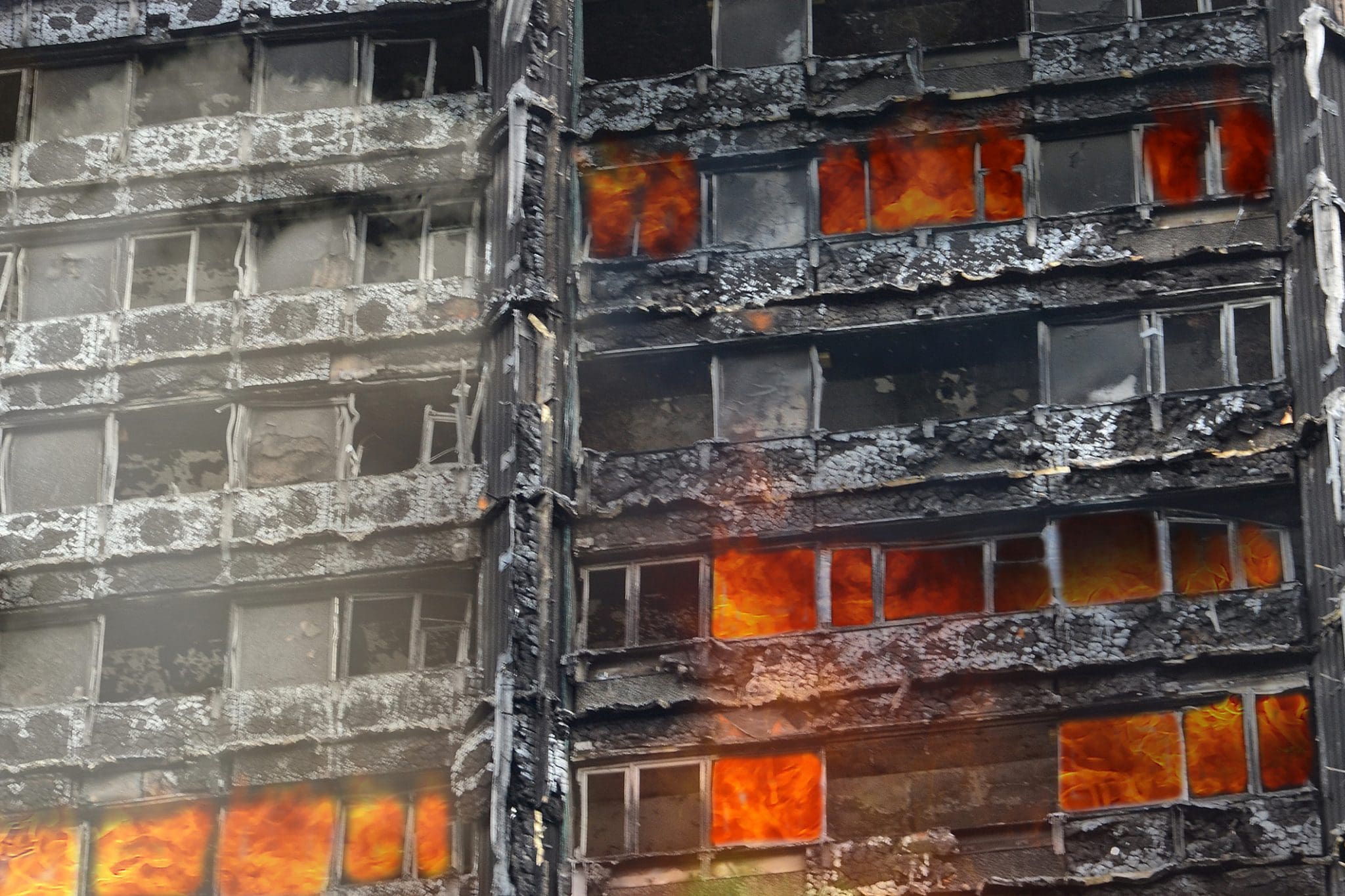
The Grenfell tragedy and subsequently identified sector-wide issues have exposed that “self-regulation” without robust external governance challenge is no longer sustainable or acceptable across the built environment, writes Graham Watts OBE, chief executive of the Construction Industry Council
Despite progress from the professional bodies, new, stricter rules coming in across the industry and the establishment of robust and industry co-created competence frameworks, collectively it is probably fair to say that we are not yet where we want or need to be on building safety.
This is essential when many public safety issues in existing buildings remain unresolved and we know that our building stock will need to play its part in order to provide a robust defence against overheating, flooding, wildfires and other climate-linked events.
The construction industry must be able to proceed with clarity and certainty on this journey to provide and maintain safer buildings and communities. This hasn’t been straightforward in recent years with the need to grapple with the Building Safety Act, a new regulator in the form of the Building Safety Regulator and the further critical reforms currently being worked through as a result of the findings of the Grenfell Tower Inquiry.
The future is as uncertain as ever. Even if we were to deviate from the path government has set via a future election the recent party conference season saw political parties outside government calling for further deregulation and upheaval of building safety regulations.
A competence-led approach
Back in December 2025, the government released the Single Construction Regulator prospectus and announced that it would publish a new strategy for the built environment professions, trades and occupations in 2027.
For CIC, this helped frame the challenge for professional bodies and in responding to the government’s May 2026 call for evidence on the new strategy, CIC urged government to work with the built environment professions to build competence and ensure the regulatory vision is both proportionate and dynamic enough to succeed.
CIC’s ongoing dialogue with government has for the most part focussed on what the professional bodies can do and how we can help it realise its aims through co-creating the
new strategy.
We have emphasised that those responsible for critical decisions in the delivery of buildings should possess the specific skills, competencies and professional judgement required for the task.
Design outputs delivered and used without professional oversight create unacceptable risks for the future, and we need to maintain a competence-led approach to regulating the built environment, underpinned by rigorous education, ethical practice and lifelong learning.
Professional bodies and sector groups like CIC play a critical role here in strengthening competence, leadership and operational professional standards nationally. Professional bodies set requirements and standards of work and behaviour that members must sign up to and follow, and this also extends to CPD opportunities and updates on industry changes.
They also have a critical role in convening employers and educators and helping government understand where technical skills shortages and policy outcomes create
delivery risk.
Robust strategy for those outside self-regulation
There are many individuals – an estimated 60% of the industry – who pursue professional activities across the built environment without being members of the relevant professional bodies and are therefore not subject to matters of governance, ethics and professional codes of conduct.
If government and industry are to meet their shared aims to protect the public, there needs to be a robust strategy to address those who choose to operate outside of the self-regulated system of professional institutes that supports the role of the professional bodies.
Institutions who are demonstrably following good practice, who have adopted good governance and are clearly acting for public benefit should be enabled to thrive for doing so, otherwise there is no realistic incentive for them to do so and no good reason to differentiate themselves from those bodies not delivering good outcomes.
CIC members have been transparent in sharing with the individual processes which they follow to monitor skills, knowledge, experience, behaviours through CPD auditing, as well as their processes for Professional Misconduct.
Charter of Standards
Clearly there is work to be done to improve perception of the professional sector, as well as fix the systemic problems the broader industry has faced. In order to strengthen the excellent work that the professional institutions within CIC membership are already doing, CIC is in the process of drawing up a Charter of Standards, embedding agreed principles of governance and competence for the professional institutions to adopt.
We have also drafted 17 Competence Principles for Professional Bodies and maintain a healthy dialogue and discussion with government.
Government must set example
Government itself has a huge role to play in both working with the professional bodies and bringing about broader behavioural change through procurement, prompt payment, enforcement of existing rules and engaging in a practical way beyond the role of legislator and regulator.
Figures from industry indicate that government is the client for approximately 40% of the industry’s workload and has a pipeline of projects providing £725bn of work over the next 10 years. As a substantial client, it must be enforcing its own standards and setting an example across the board.
In setting the regulatory environment, it can help reduce inconsistency and uncertainty by allowing new roles and responsibilities to establish themselves and delivering alignment between UK nations where possible.
CIC is enthusiastic about working with government to support a shared vision for a building system where buildings are safe, high-performing and sustainable; companies and individuals are enabled to thrive when they operate in the interests of current and future building users; and the building system is trusted.