
Dan Watt, director in Civic’s building services engineering team, discusses the urgent need to design urban spaces that remain liveable in an increasingly hot, urbanised world
Overheating in homes is no longer a seasonal inconvenience — it’s a growing public health risk, especially in dense urban areas.
The climate hazards we face should be treated as a national emergency, according to the UKGBC, following their recent report that found many homes, schools, care homes, and hospitals are not prepared for the worsening impacts of climate change.
It shows more than half of homes in England (55%) already overheat during relatively cool summers, and £10bn of climate adaptation investment is needed to improve the UK’s preparedness for climate change.
The figures are stark and will worsen as the frequency of heatwaves and flooding increases.
How do we create homes that remain liveable in an increasingly hot, urbanised world?
Part O of the Building Regulations, introduced in 2021 to address the growing issue of overheating in new residential buildings, marked a welcome shift in UK policy. For the first time, overheating is explicitly recognised in building standards, with clear requirements surrounding solar gain, ventilation strategies, and glazing thresholds. It’s a critical step forward — but only part of the solution.
Because here’s the truth: Part O tackles symptoms at the building scale, not the systemic causes at the city scale.
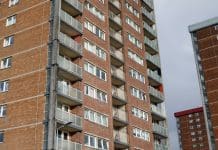
In our cities, we’re designing homes that comply with Part O, while placing them in neighbourhoods where:
- Green space is sparse
- Night-time temperatures don’t drop
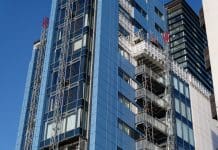
- Glass-heavy facades dominate
- Cooling strategies default to mechanical systems
We’re regulating buildings but not designing climates.
As climate change accelerates, this gap is widening.
The industry must approach overheating not as a technical compliance issue, but as a strategic design challenge. One that intersects with urban form, social equity, biodiversity, and long-term health outcomes. That means:
- Bringing overheating risk to the table at RIBA Stage 1, not as a checkbox at Stage 4. Understanding thermal risks early allows us to specify high-performance glazing; light-coloured, high-albedo external finishes to reflect solar radiation, and thermal strategies, as well as integrating shading solutions into architecture from the start
- Integrating thermal comfort, ventilation potential, and solar analysis into our BIM processes early
- Working with landscape and sustainability consultants to deliver nature-based cooling, not just shading devices – such as sustainable urban drainage systems, blue-green walls and roofs, and parks and wetlands
- Designing buildings that are future-ready for heatwaves we haven’t yet seen — not just today’s weather patterns. Buildings don’t sit in isolation; they contribute to and can mitigate the urban heat island effect. Better design would include more green-blue infrastructure like tree canopies, planted courtyards and water features to cool spaces; the use of materials with low thermal mass for the public realm to reduce heat retention overnight; and site layouts that allow for wind corridors to break up stagnant, humid air pockets
If we get this right, the rewards are immense. We need to consider the impact on people. At the individual resident level, we can create homes that are cool, comfortable, and healthier to live in, without dependence on expensive mechanical systems.
At the city scale, we reduce demand on energy grids, support biodiversity, and build streets, places and spaces that are not only more resilient but also more inviting to walk, cycle, and live in.
Put simply, good design in a warming world puts nature at the heart of system thinking. We must design homes with access to green space. Our streets and the spaces around buildings must be cooled by trees, green roofs and water, with sustainable urban drainage solutions throughout. Our public realm must be inviting for wildlife, people, and communities, and not be solely focused on through passage.
This is how we can design and build neighbourhoods not just to survive climate extremes, but to thrive through them.
We’ve seen firsthand how urban heat risk is disproportionately affecting certain communities. The most vulnerable — those in small, south-facing flats with little access to green space — are often the least able to act. It’s a design justice issue as much as an engineering one.
The climate crisis amplifies existing inequalities. As professionals, we have a duty to design for resilience that includes everyone. The industry needs to move from reactive compliance to proactive resilience. That requires local authorities embedding overheating strategy into spatial plans. We need to see stronger planning policies to enable the development of more climate-resilient homes, towns and cities.
It also means developers prioritising passive design over quick wins. Factors such as orientation, shading, natural ventilation, and Brise Soleil ‘fins’ to reflect and diffuse sunlight can be designed to work together effectively.
Delivering all this within budget and to the satisfaction of the planners is an immense challenge for developers to navigate. It takes problem-solving and systems-thinking to deliver the most sustainable design solutions, which are both commercially viable while putting people, place, and planet at the heart of development.
It means we need to urgently rethink what “good design” really means in a warming world.