
The next phase of Awaab’s Law is due to become legally enforceable from 30 November, extending mandatory investigation and repairs beyond mould to include a wider range of safety hazards – including fire. Ben Wallbank, digital strategy & partnerships manager at Trimble, explores why the compliance challenges remains just as much about data and evidence as it is about the maintenance delivery and how digital technology can help housing providers to stay ahead, ensuring safer living environments for residents
Born out of the tragic death of two-year-old Awaab Ishak in 2020, due to respiratory issues caused by prolonged exposure to mould in his home, the first phase of Awaab’s Law came into force at the end of October 2025.
Embedded in Clause 42 of the Social Housing (Regulation) Act 2023 and the Hazards in Social Housing (Prescribed Requirements) Act 2025, it represented a decided step change in how landlords evidence responsiveness, safety and care.
While Awaab’s Law applied directly to social housing landlords, including local authorities and housing associations, its impact cascaded across the supply chain.
Under the regulations, landlords are expected to prove compliance – not just that the work was done but that it was done correctly, on time and that every step was documented, dated and verified.
Phase Two: What is it?
Phase Two is the next stage of Awaab’s Law, expanding to cover seven additional hazard categories, with fire safety among them. Described by the UK government as “putting tenants first”, under the new regulations social landlords will be required to investigate hazards that present an immediate danger and make them safe within 24 hours.
Where a fire-related concern is considered serious but does not pose an immediate risk, landlords will still face legally binding deadlines, required to carry out investigations within 10 working days.
A written summary of the findings and proposed actions must then be sent to the tenant within three working days. Urgent safety works are to be carried out and completed within five working days of the investigation, while longer-term remedial works must commence within 12 weeks.
With recent research from Housemark revealing that only 4% of social landlords felt “very prepared” for Phase 2, highlighting a clear confidence gap in the sector, it once again raises questions over how landlords can prove compliance. Not just that the work was done but that it was done correctly, on time and that every step was documented and verified.
Standardising and digitising
For housing teams who are already managing ageing stock, limited budgets and multiple regulations, there’s no denying that Awaab’s Law adds further responsibility. However, it also presents an opportunity to modernise. Many still rely on paper-based inspections, spreadsheets and fragmented contractor systems. This can make it difficult to build a single view of compliance, particularly when you have different teams logging data in different ways or when records need to be retrieved months, even years later.
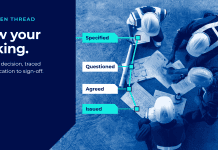
It’s clear that the new framework calls for a shift from reactive to more evidence-led maintenance. As part of this, data consistency and connected systems are essential in order to create a clear audit trail, across everyone involved in managing and maintaining homes. In many ways, this is an example of the ‘golden thread’ principle in action, ensuring that every inspection, decision and action is traceable.
What tech do I need?
As regulations evolve, paper-based systems, excel spreadsheets and generic cloudstorage increasingly fall short. These manual methods of recording information can require lengthy and time-consuming processes, as well as lacking the traceability and clear audit trail required for proof of compliance. With no clear sequence or workflow to follow, it can be easy for there to be gaps in the information collated or even for data to be lost entirely.
Digital information management platforms (like Trimble Field View and ProjectSight) are already being used extensively to manage quality, safety and handover processes across the wider built environment.
These same systems can be configured to support Awaab’s Law compliance, without introducing another layer of software or complexity. The goal should be to integrate and optimise what already works.
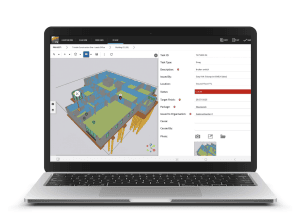
On-site usability is equally important. A good system should allow field teams to log details directly into digital forms, capturing and tagging issue types, its location and severity using a RAG status (Red-Amber-Green), the responsible contractor or work package, and photographic and GPS evidence.
The most effective tools will also enable issues to be linked to 2D plans, 3D models or 360-degree images, providing clear visual context. This protects both landlord and tenant by establishing what was observed and when. If a complaint later escalates, those time-stamped images form defensible evidence that the problem was properly addressed.
Another consideration should be data longevity. Compliance isn’t just about capturing today’s repair; it’s about being able to access and interpret that data years down the line. Housing providers will need systems that not only store files but also the associated decision-making history – for example, who made what call, when and on what evidence.
From compliance to confidence
Awaab’s Law may have been driven by tragedy, but its intent is to build a safer and more transparent housing system – one where residents’ concerns aren’t just listened to but acted upon, resulting in a more collaborative approach. For local authorities, housing associations and social landlords, that means a move beyond reactive repair towards measurable accountability, where every inspection, decision and repair is captured, evidenced and auditable.
Digital tools make that possible, transforming compliance from a disconnected system into a process of continuous assurance. Ultimately, this isn’t just about meeting statutory deadlines; it’s about creating homes that are safer, healthier and well-managed for tenants.
To learn more about Trimble Field View and ProjectSight, visit: www.trimble.com/en/products/viewpoint-field-view or www.trimble.com/en/products/projectsight-emea
*Please note, this is a commercial profile.