
With many places across the UK experiencing sub-zero temperatures in the past week, following a summer of multiple heatwaves, it’s vital to consider the type of insulation used on new builds and retrofits, says pan-European specialist Actis
The past few days have seen temperatures of minus 5C in some areas, as well as wind gusts of more than 50mph in Scotland.
“While traditionally the purpose of insulation has been to keep the heat in during this sort of weather, this approach can backfire when temperatures rise in the summer,” explained Actis UK and Ireland technical manager Harsha Mistry.
“An exceptional U-value is obviously on the wishlist for any insulation specifier, with our products well-known for their thermal performance, airtightness and ability to counteract thermal bridging.
“But unfortunately, while all forms of insulation are excellent at keeping the heat in during the winter, some make homes stiflingly hot in the summer. And with the five heatwaves we’ve had this year, that has meant a lot of very uncomfortable people.
“So it’s important that specifiers choose products which ensure the occupants are warm indoors during this unseasonably cold weather and into the depths of winter, while also helping them stay cool in the summer.
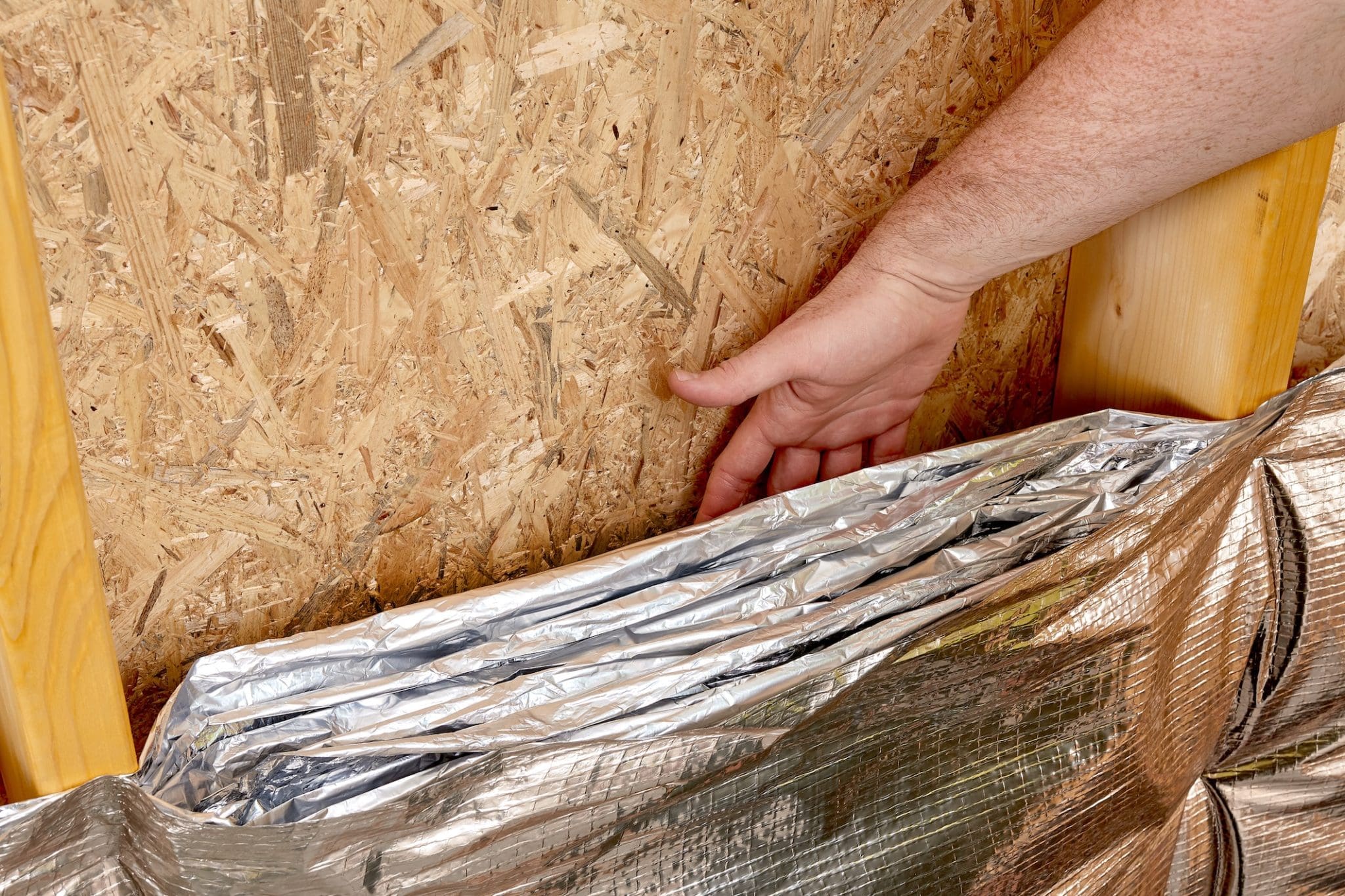
“Using Actis products, such as honeycomb-structured Hybris and two-in-one reflective insulation with integrated vapour barrier Eolis HC, which reflect at least 94% of infrared radiation, can help keep homes passively cool in summer, while also ensuring the warmth doesn’t escape when you want to be cosy,” she said.
Additionally, at this time of year it’s important to ensure the membranes used in roofs can withstand wind uplift. In particularly windy areas, such as Scotland, this requires more research to find products which will comply with BS5534:2014 slating and tiling for pitched roofs and vertical cladding code of practice.
While some membranes are appropriate for use in wind zones 1 to 3 of the UK, others, including Actis Boost R Hybrid Roof, have sufficient wind-lift resistance to be used in all five zones, ensuring compliance with the building standard, which states that the underlay mustn’t balloon more than 35mm.