
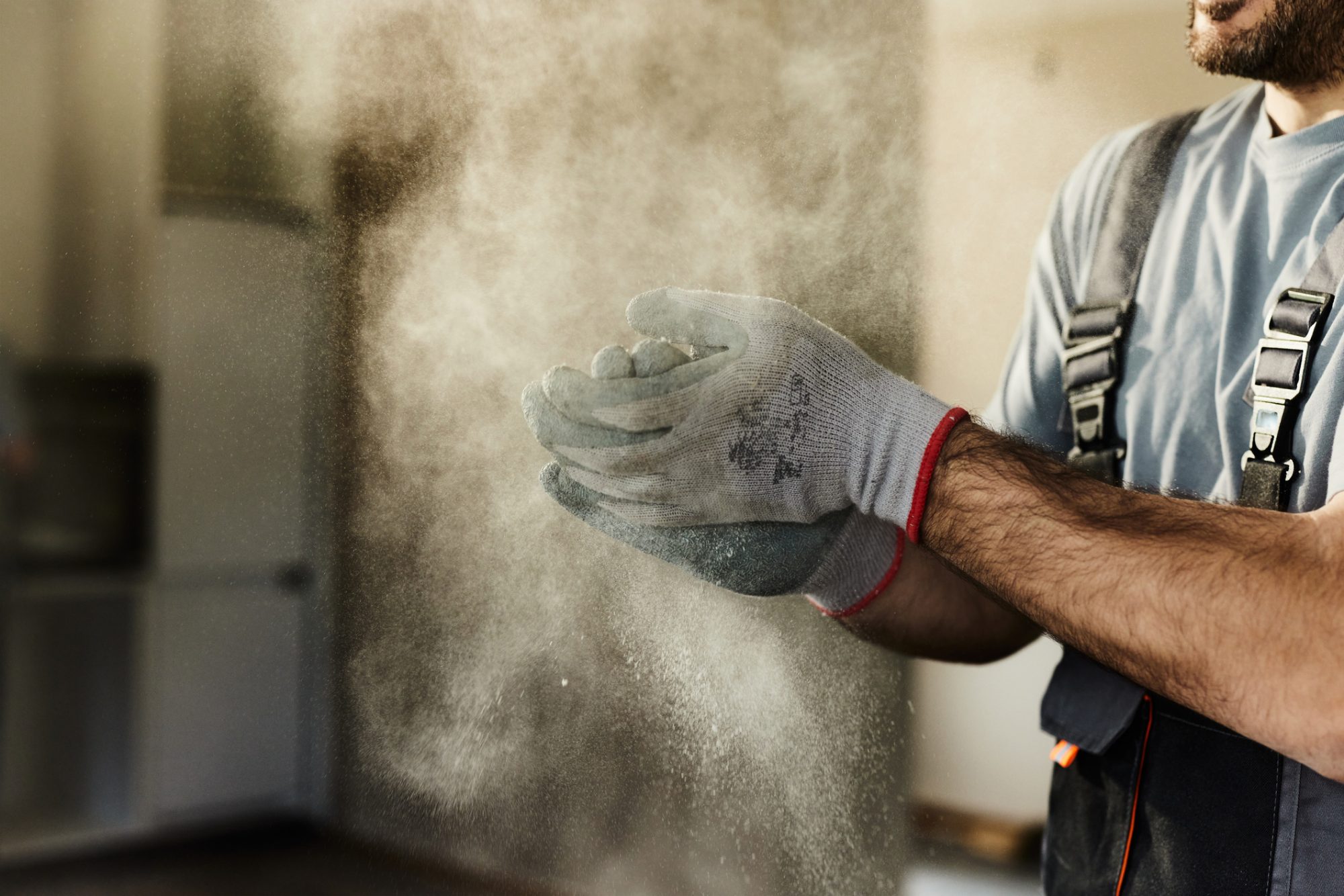
PBC Today sat down with Dr Scott McGibbon, FCIOB, and the subject of his case study, stonemason Athol Hill, to explore the dangers of silica dust in the built environment
The Chartered Institute of Building has awarded Dr McGibbon the CIOB Paul Dockerill Award, providing a £10,000 grant to support the creation of resources to inform workers of how to deal with silica dust. Scott now leads his own consultancy business in Scotland and is working to raise awareness of the dangers to health of silica dust in construction.
Athol Hill is a stonemason who was diagnosed with silicosis and then lung cancer due to silica dust.
We sat down with both to ask questions about silica dust and how best to handle it in the workplace.
What first made each of you aware of the seriousness of silica dust exposure, and how has that experience shaped your work or life today?
Scott
I became aware of the seriousness of silica dust after losing close colleagues and friends due to their exposure. Those losses really hit me hard, and now they drive me to push for safer practices and greater awareness.
Athol
It didn’t really hit home with me until I started hearing about older masons that I had worked with who were passing away from dust-related diseases. Earlier in my career, you knew small things about silica dust, but for me I wrongly thought it was just part of being a stonemason.
Now that I know much more about it, I’m always reminding the young apprentices to use their PPE at all times when there is dust around.
What contributes to the uneven understanding of silica dust risks across construction and housing?
Scott
Dust is often seen as a normal part of the job, and in my view, this culture means risks are overlooked. There is a serious lack of mandatory silica-specific training which needs to change, and we need better leadership from everyone, including the Government, construction managers and clients.
Athol
There is a massive misconception about silica dust and a void in appropriate training, especially for people working in the industry. I think some companies bury their heads in the sand a little bit and hope it won’t impact their workforce.
What factors are stopping organisations from treating silica with the same urgency as asbestos?
Scott
Health and safety is often cut during procurement, and I have noticed many believe silica controls harm profitability. There’s also a problem with weak reporting and regulation which means many cases are not tracked, while inconsistent enforcement allows poor practices to continue. Additionally, organisations rely on reactive rather proactive measures, so there is no single, clear source of guidance.
Athol
Personally, I think sometimes it comes down to cost pressures companies face, and there is also a massive lack of understanding around the danger which silica dust poses. This is why we’re calling for the Government to invest more money into helping companies protect their workforce.
What immediate, practical changes would make the biggest difference in protecting workers?
Scott
Designing out dust through off-site cutting, using real-time detection, and making training mandatory would help immediately. Embedding silica controls into procurement, improving risk assessments, and ensuring proper health surveillance would also make a major difference.
Athol
We need better respiratory equipment, better training, and on-site facilities for extracting the dust from your clothing before going home.
What are the most common misconceptions or mistakes around PPE, dust control, and awareness of RCS risks?
Scott
There is a misconception that if people can’t see the dust, it’s not there and it isn’t causing them any harm. People also underestimate the risks of silica dust by assuming small amounts will not affect them.
Athol
I think some people look at a task as being a simple, two-minute job, so they don’t bother with things like water suppression, dusk masks or other control methods. I have also noticed poor equipment maintenance and missing components from masks, which are not being replaced.
How do you hope your recommendations to the Government will change working practices and culture?
Scott
I hope they lead to meaningful, long-term improvements in safety, better skills and competency, and greater behavioural change. Each recommendation has been carefully thought out to boost best-practice adoption and encourage far better collaboration on tackling silica dust-related deaths across the industry.
Athol
I hope there will be better training put in place to keep dust at a minimum and more money is available for companies to get the help to put these measures in place.
What toolkit features or guidance will be most valuable to workers, managers, clients, and residents?
Scott
The toolkit will help everyone understand silica risks more clearly. It will offer practical tools, like checklists and assessment guides, to help leaders and managers check and improve their team’s silica safety training.
Athol
My best hope is it will highlight the dangers of silica dust and showcase some of the simple but effective control measures which can easily be put in place to reduce the risk to workers, residents and clients.
What main message should readers take away about silica dust and its risks?
Scott
We need collective action to move away from the idea that “it’s just dust.” The industry has a duty to stop silica from causing harm like asbestos still does. Protecting workers is essential – both for their wellbeing and for attracting the next generation of workers into the sector – something which we know is desperately needed.
Athol
I would like everyone to realise how serious silica dust is. Not just the workers, their family members are included when these people come home with their dusty clothes. Even if you don’t actually see the dust, it’s still incredibly dangerous.
CIOB will present recommendations in due course
Later this month, CIOB is expected to deliver a summary of its report and recommendations for fighting the dangers posed by silica dust to parliament.