

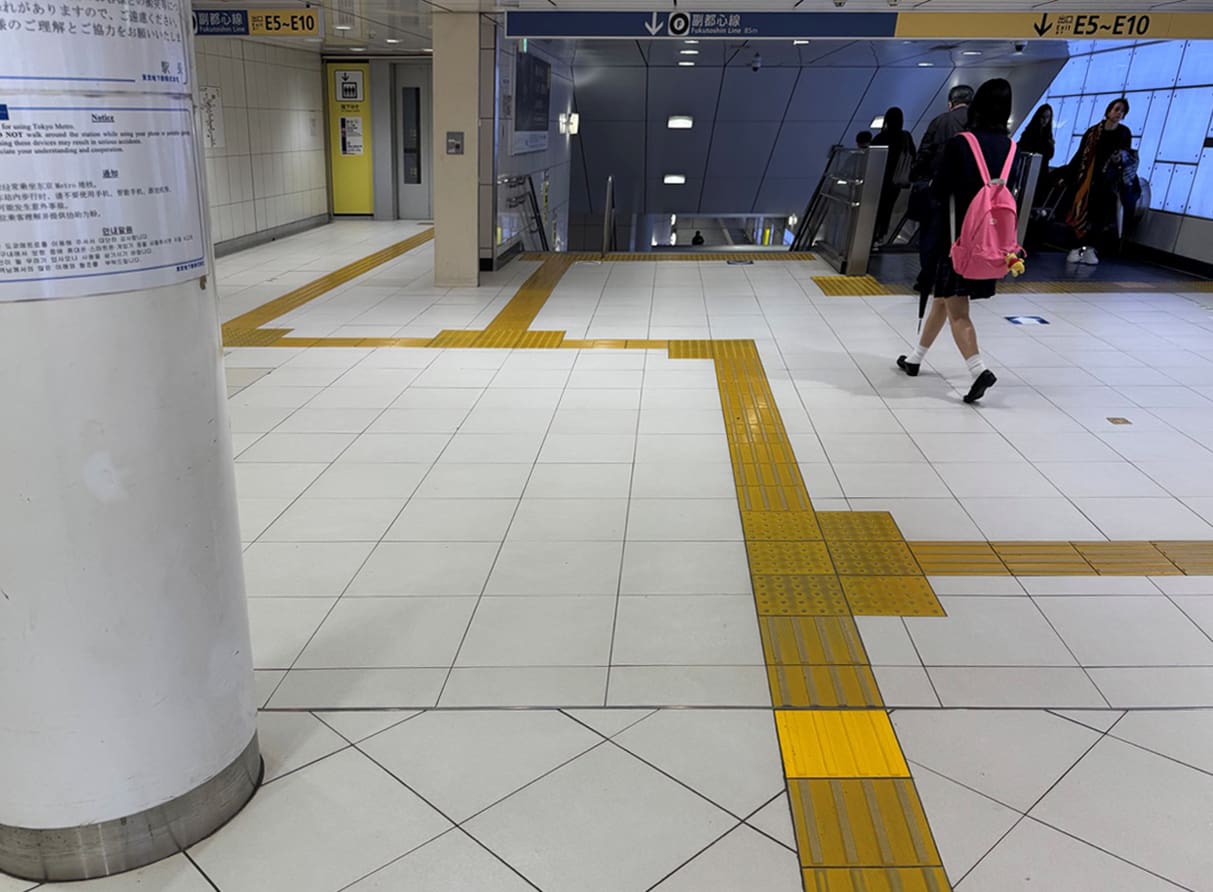
A trip to the most heavily populated city in the world might be an extreme way of demonstrating it, but the use of tactile paving isn’t always the right solution when it comes to aiding accessibility
The combination of blister and corduroy surfaces is intended to help people who have a visual impairment with finding their way, but we’re hearing from some blind people who would rather scrap tactile paving altogether.
Their preference for proposed accessibility improvements at the transport interchange in Hull is for the local authorities to invest in providing people to assist with wayfinding. There would be a cost to that but the users think it’s worth it – and we agree.
Supporters of installing tactile paving cite the system as an important aid that helps blind and partially sighted people by warning them of hazards they are approaching, such as kerbs, crossings, platform edges, steps and ramps.
Guidance from the Department of Transport notes that visually impaired people “will actively seek, and make use of, tactile information underfoot”. The document adds that such facilities should be considered from the earliest stages of development proposals for built environment improvement schemes, but it also says they should be part of a wider package of measures.

That broader view is important because something that improves accessibility for one user group may actually present an obstacle for another. The raised surfaces that are key to the effectiveness of tactile paving can be uncomfortable or even painful for some people. They can also be difficult for people using wheelchairs and other mobility aids.
And the original aim of using tactile paving to help visually impaired people navigate public spaces is lost completely if those spaces are too congested for users to even locate the blisters and corduroy.
According to the World Population Review, Tokyo has more people than any other city in the world with just over 37m. I spent four days there and have never seen a place with more Tactile Walking Surface Indicators (TWSI).
They are everywhere, and although I’ve believed for a long time that providing tactile warning on stairs and at crossing points is a good idea, the use of wayfinding tactiles is questionable.
First, a user needs to be given training to understand where the route is taking them and what the options are when a decision is required. Also, in a busy environment like the Tube, railway station or even on the high street, how can a person be expected to follow the wayfinding without bumping into other pedestrians?
Closer to home, London has a population of about nine million, lower than Tokyo but crammed into a smaller area. In the centre, it’s often so busy that you get the idea the rush hour now lasts all day.
Measured against such levels of congestion, Hull barely scratches the surface with its population of 275,000 but, by definition, public transport facilities bring together people from various towns, cities and villages. When stations get busy, tactile paving becomes more tricky to negotiate, and any suggestion that visually impaired people should restrict their travel to quieter periods of the day would just be plain wrong.
Another document from the Department of Transport referred to research carried out as part of its inclusive transport strategy of 2018, which identified the negative effects of tactile paving.
It highlighted the “general desirability of minimising the amount of tactile paving used” as a move towards ensuring that it does the job it was meant to do. The people of Hull who oppose its installation could be on to something