
From acoustic comfort to environmental responsibility, Helen Helm of Amtico explores the factors shaping flooring specification in multi-occupancy developments
The performance of a building is shaped by countless decisions made during its design and construction, from its structural elements to the materials used throughout its interior. Flooring is one of those decisions, influencing not only the appearance of a space but also how it is experienced, used and maintained over time.
In developments ranging from build-to-rent and student accommodation to later living, flooring must respond to a variety of requirements. These include the expectations of residents, whose needs and length of occupation can differ considerably, alongside those of the developers, specifiers and operators responsible for delivering and managing the buildings.
Acoustic comfort, durability and ease of maintenance all contribute to how a space performs in everyday use, while the condition of flooring over time can influence perceptions of quality and the care invested in a property. A considered approach therefore means looking beyond the surface, recognising flooring’s contribution to both the experience of those who live in a building and its long-term performance.
The sound of shared living
In multi-storey developments, the sounds of everyday life can travel between floors, making acoustic comfort an important part of the living experience. Footsteps and moving furniture can generate impact sound that travels through the floor construction into the rooms below.
Flooring can play a valuable role in reducing this transmission. Luxury vinyl tile (LVT) with integrated acoustic backing, for example, is designed to reduce impact sound, helping limit disturbance from activity on the floor above. However, the performance of the complete floor construction must also be considered, as subfloors and installation methods can influence the result.
Acoustic performance can be achieved through different flooring systems, including the use of separate acoustic underlays. However, specifying an integrated acoustic solution can simplify installation by removing the need for an additional underlay, which can save time and labour while reducing material waste.
For specifiers, acoustic performance is therefore about more than achieving a particular decibel rating. It is about understanding how flooring can contribute to a more comfortable living environment, while ensuring the chosen solution meets the technical and practical requirements of the development.
Different spaces, different expectations
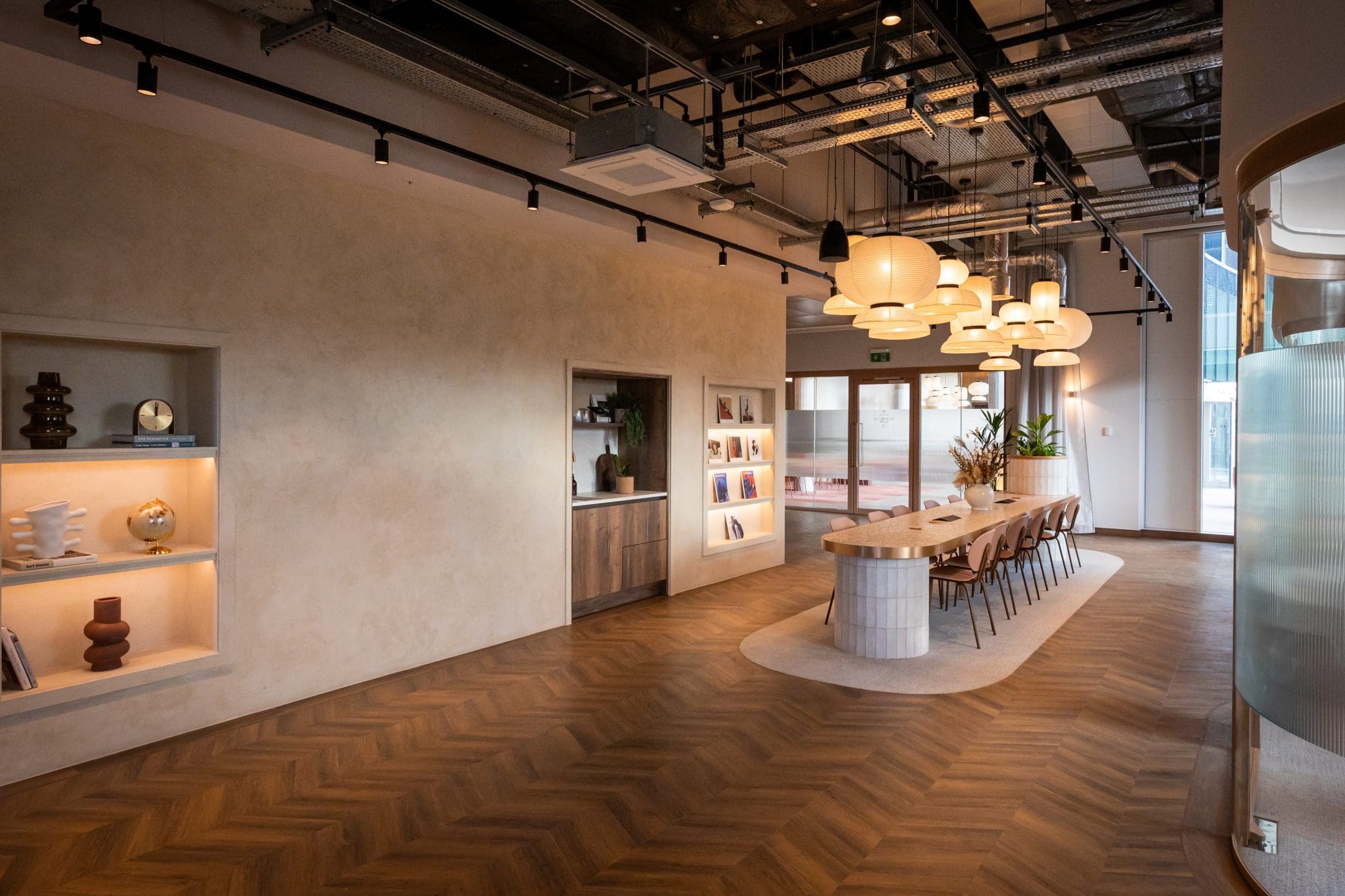
Today’s build-to-rent developments can offer far more than individual apartments, with communal amenities ranging from co-working spaces and private meeting rooms to residents’ lounges and dining areas. While flooring can help establish a distinct identity for each, its specification should also reflect how these spaces are used.
Light Reflectance Value (LRV), which measures the proportion of visible light reflected by a surface, is one consideration. In co-working environments, for example, flooring reflectance should be assessed alongside natural and artificial lighting, surface finishes and the visual demands of tasks being undertaken. A lounge or social space may call for a different lighting atmosphere, demonstrating why flooring and lighting decisions should be considered together.
Beyond these practical considerations, flooring colour and finish can also contribute to how a space is perceived and the atmosphere it creates. Considered alongside lighting and other interior finishes, these choices can help designers establish different environments, from co-working spaces intended to encourage concentration to communal lounges designed to feel calm and welcoming.
LRV also plays an important role in visual contrast and accessibility. Appropriate contrast between floors, walls and architectural features can help people identify their surroundings, particularly in later living environments. The aim is not simply to maximise reflectance or contrast but to select materials that respond to the activities, lighting conditions and people using each space.
Durability is only part of the picture
A floor may look impressive when a building first opens, but its real performance becomes apparent through years of everyday use. In purpose-built student accommodation, for example, a bedroom may welcome a new occupant each academic year, while a build-to-rent apartment could accommodate several different tenants over its lifetime. The challenge is ensuring that flooring continues to perform and retain its appearance, regardless of changes in occupancy.
For developers and housing providers, this has practical and financial implications. Durability, cleaning requirements and the ease of repairing localised damage can influence ongoing maintenance costs. Unlike sheet flooring, which may require the replacement of larger sections, individual LVT planks or tiles can often be replaced without disturbing the surrounding floor, helping to minimise unnecessary material replacement and disruption.
Equally, the condition of flooring can shape residents’ perceptions of the quality and upkeep of the property, making lasting appearance an important consideration alongside technical performance.
In multi-storey developments, the sounds of everyday life can travel between floors, making acoustic comfort an important part of the living experience. Footsteps and moving furniture can generate impact sound that travels through the floor construction into the rooms below.
LVT offers a combination of design flexibility, durability and relatively straightforward maintenance, but longevity depends on more than a product’s resistance to wear.
Understanding the demands of each application, supported by appropriate wear layers, maintenance guidance, commercial warranties and manufacturer expertise, can help ensure flooring continues to perform as intended throughout its working life.
Sustainability is about more than material choice
A product’s environmental credentials cannot be judged solely by its material composition or recycled content. How materials are sourced, how flooring is manufactured and the resources used throughout production all contribute to its environmental impact. The same applies to transportation, installation, maintenance and what happens to flooring at the end of its useful life.
For specifiers, understanding these factors means looking at the wider manufacturing process and product lifecycle. Environmental Product Declarations (EPDs) can provide valuable information about a product’s environmental impacts across defined lifecycle stages, helping to inform decisions when assessed on a consistent and comparable basis.
Equally, manufacturers’ approaches to responsible sourcing, production waste and material recovery can offer further insight into their environmental responsibilities. Ultimately, responsible specification relies on credible evidence rather than broad sustainability claims. Asking how a product is manufactured, what happens to waste and how its environmental performance is measured can be just as important as considering the materials used to make it.
Asking the right questions
From acoustic comfort and visual considerations to durability and environmental responsibility, flooring specification involves a range of interconnected decisions. Manufacturers can support this process through clear technical information, appropriate testing and practical guidance. Ultimately, perhaps we should be asking not just what we need flooring to do on the day it is installed but what we expect from it throughout its working life.
*Please note, this is a commercial profile.