

Kee Evans, partner at Foot Anstey, explores what NSIP biodiversity requirements mean for investors, planners and developers and the challenges of maintaining this over time
Biodiversity net gain (BNG) has been mandatory for most planning applications under the Town and Country Planning Act 1990 (TCPA) for more than two years. There is broad consensus around the principle, even if debate continues about how it should be implemented.
Why, then, has it taken so long to introduce mandatory BNG into the nationally significant infrastructure project (NSIP) regime? More importantly, will it make a meaningful difference, and can the system realistically deliver the biodiversity gains it promises?
NSIPs encompass a huge area – how much should be used for BNG calculations?
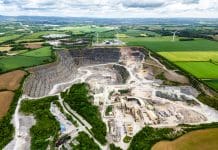
The first issue is scale. NSIPs typically encompass extensive geographical areas, involve multiple land interests and take many years to progress through development and construction. The government’s 2022 consultation on BNG was largely designed around TCPA development and did not adequately address the specific challenges posed by NSIPs.
Recognising this, the government launched a dedicated NSIP BNG consultation in May 2025. Responses revealed significant disagreement on several design issues, particularly the area of land that should be used for BNG calculations.
Following consultation, the government accepted that using entire Order Limits as the baseline would often produce distorted outcomes. Order Limits are frequently drawn widely to include mitigation land, utility diversions, access arrangements and environmental buffers. As a result, the final approach focuses on the area actually affected by the development, referred to as the BNG Boundary. This represents a more proportionate methodology.
NSIPs must deliver at least 10% biodiversity net gain
Other contentious issues included the treatment of temporary construction compounds and working areas, the role of off-site habitat creation, sector-specific considerations for energy, rail and water projects, and the practicalities of monitoring and enforcement.
Environmental groups argued that the proposed regime would not deliver sufficient nature recovery and called for higher gain requirements. The government ultimately declined to adopt those recommendations. However, the complexity of the issues contributed to the postponement of BNG for NSIPs from May 2026 to November 2026.
Despite extensive consultation, the regime’s core features remain unchanged. NSIPs will generally be required to deliver at least 10% biodiversity net gain, and there are no broad infrastructure-wide exemptions. The principal changes relate to implementation rather than policy.
Are developers and planners truly ready for BNG?
Developers have known for several years that mandatory BNG was coming, but that does not necessarily mean they are ready for it. Some organisations, including National Highways, National Grid and major utility providers, have already been pursuing voluntary BNG commitments. Nevertheless, even experienced promoters will need to consider carefully how compliance is demonstrated and maintained.
Projects that control significant environmental mitigation land or extensive agricultural holdings may find it easier to deliver on-site habitat creation. Others will need to rely more heavily on off-site provision. The government has sought to accommodate both approaches by maintaining flexibility within the regime.
For large linear projects, however, habitat creation requirements may be substantial. Securing legal agreements, management obligations and monitoring arrangements across large areas of land can be a lengthy and complex process. Many commentators regard this as one of the principal reasons for delaying the introduction.
This challenge is particularly acute for projects already well advanced in pre-application. It is not unusual for an NSIP to spend two to four years in development before the application for a Development Consent Order (DCO) is submitted. It will not be easy to incorporate significant new BNG requirements into established land and environmental strategies. Projects can also expect their BNG choices to be carefully scrutinised during examination.
Maintaining BNG over time remains a challenge
Yet understanding the rules is only the beginning.
DCO applicants may fully understand what the regime requires while still struggling to secure suitable land, management agreements and biodiversity units at the necessary scale. Delivering BNG is one challenge; maintaining it successfully over time is another.
Monitoring is likely to become one of the defining issues of NSIP BNG.
Even under the TCPA regime, monitoring biodiversity outcomes presents difficulties. For NSIPs, those challenges are amplified. A scheme may cross several local authority boundaries, cover hundreds of hectares and require the creation and management of habitat over many miles. Ecological expertise has often been identified as a potential constraint, but governance, reporting and compliance management may ultimately prove just as important.
In practice, monitoring an NSIP BNG scheme may resemble managing a substantial property portfolio more than a conventional planning obligation.
The timescales involved are significant. NSIP construction programmes commonly extend for three to ten years, yet BNG obligations must endure for at least 30 years. In many cases, the teams responsible for obtaining the DCO will have long since dispersed by the time monitoring obligations end. This creates risks around institutional knowledge, record keeping, organisational change and long-term accountability. Those risks may be even greater where projects are promoted through special purpose vehicles.
The involvement of multiple landowners and occupiers further complicates matters. Habitat management can be implemented exactly as intended yet still fail to deliver the predicted ecological outcomes. Species populations change, environmental conditions evolve, and ecological assumptions may prove inaccurate. Measuring habitat condition consistently over large areas and extended periods is unlikely to be straightforward. Changes in climate, rainfall patterns, land-use pressures and species distribution will only increase that uncertainty.
The introduction of mandatory BNG into the NSIP regime is a significant development and one that is broadly welcome. However, the real test of the policy will not be whether developers can secure biodiversity units or demonstrate compliance at examination. The greater challenge will be whether the system can monitor, manage and enforce biodiversity outcomes over decades. On that question, the regime is untested.
The objective is not just to require biodiversity plans. It must be to deliver genuine and lasting nature recovery at infrastructure scale. That means the more difficult work is only just beginning.