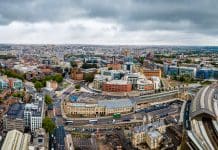


Sadiq Khan is “actively exploring” relaxing green belt building rules in the capital, claiming that current rules are “wrong, out-of-date and simply unsustainable”
Without changing the existing green belt building restrictions, London will not be able to deliver the new homes needed to achieve it’s targets. The city needs nearly a million new homes in the next decade to meet projected demand; roughly 88,000 a year.
The previous strategy of only building on brownfield will not be enough, according to Khan. The most recent GLA statistics show that in 2022/23 there were 25,658 affordable homes started in London with GLA support, and 13,954 completed.
Only 13% of London’s green belt constitutes parks and public access areas
Khan said: “We clearly face an extraordinary challenge. As Mayor, I’m determined to give it everything we’ve got – with a radical step-change in our approach.
“We’ll be working with councils and others to secure as many new homes as we can on brownfield sites, both large and small, but we have to be honest with Londoners that this alone will not be enough to meet our needs.
“That’s why I’m announcing that City Hall’s new position will be to actively explore the release of parts of London’s green belt for development.
“The perception many people have is that the green belt is all beautiful countryside, green and pleasant land, rich with wildlife. The reality is very different. The green belt can often be low-quality land, poorly maintained and rarely enjoyed by Londoners. Only around 13% is made up of parks and areas that the public can access.
“So given the quality of parts of the London’s green belt and the extent of the housing crisis, I believe the status quo is wrong, out-of-date and simply unsustainable.
“Development on carefully chosen parts of the green belt – done in the right way – would allow us to unlock hundreds of thousands of good quality new homes for Londoners. This would not only go a long way to ending the housing crisis but provide a huge boost to our economy.”
Existing infrastructure will be a key influence on green belt sites released for development, with those near railway stations prioritised. Developers will also need to combine their development with biodiversity net gain requirements, to appease environmental concerns.
A key part of achieving the government’s 1.5 million homes target
Deputy prime minister and housing secretary Angela Rayner also commented on the London green belt building announcement: “We cannot end the housing crisis and build the 1.5 million homes we need without London being ambitious in its approach.
“That’s why the government welcomes the bold proposal announced by the mayor today, which rises to the challenge of tackling London’s housing crisis. The mayor of London has our backing to deliver the housing this city needs, in line with our ambition nationally, to unlock the dream of a secure home for a generation.”
Philip Allin, director, Boyer (London) commented: “Today’s announcement by the Mayor really has the potential to result in a significant step change in housing delivery, aligning with the approach now being taken elsewhere in the country. There are numerous examples of under performing Green Belt in highly accessible locations that could now come forward for development as a result of this change, particularly in the outer London Boroughs.
“The key will be ensuring that the benefits of doing so are clearly articulated and delivered with buy-in from the London Boroughs, something that is no doubt easier said than done.”