
Richard Watson, education environment specialist at Net Zero Buildings, explains how offsite construction can help deliver low-carbon schools
Education providers are being asked to solve two problems at once. They must respond to immediate pressures, create additional classrooms, replace ageing buildings, and deliver high-quality environments for pupils and staff, while also progressing towards longer-term net zero goals.
The challenge is creating more education space while reducing the estate’s environmental impact over the long term. That means considering decarbonisation much earlier, from the materials used and how a building is manufactured to its efficiency and what happens when its original purpose changes.
The next generation of school buildings should therefore be designed with their whole life in mind, including the potential to be adapted, relocated or reused. Modular construction supports this approach by building efficiency, adaptability, and future reuse into the design from the outset.
Modular construction supports this whole-life approach by enabling greater consideration of efficiency, adaptability, and future reuse from the outset.
Decarbonisation starts before construction begins
For many organisations, “decarbonisation” can seem like a buzzword rather than something that translates easily into a construction project. In reality, some key decarbonisation decisions can be made before construction even starts.
Design plays a significant role in determining how much energy a building uses, and the carbon associated with its whole life. This means considering operational carbon, the emissions from running a building, alongside embodied carbon from the materials, manufacturing, and construction processes used to create it. An energy-efficient building can reduce emissions over its lifetime, but material and construction choices can affect its embodied carbon before the building is even occupied. The earlier these factors are understood, the greater the opportunity to make informed decisions across a building’s whole life.
However, education providers must balance sustainability with affordability. The construction industry’s challenge, therefore, is to show that decarbonisation can be built into construction costs from the start, rather than presented as an added cost or competing priority later.
Tools such as embodied carbon calculators can provide key information earlier in the design process, giving clients greater visibility into a building’s associated carbon while they still have an opportunity to influence its design and specification.
Modular construction as a low-carbon, practical consideration
The environmental performance of any building – including a modular building – depends on its design, materials, energy performance, manufacturing, transport, installation and eventual reuse or disposal. Modular construction can support these considerations while also addressing the practical demands of delivering and managing an estate.
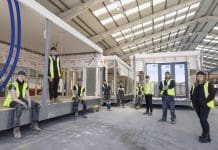
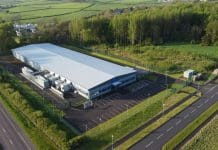
Offsite manufacture can provide greater control over construction and material use, while standardised processes can support efficient production and reduce waste. Modular buildings can also incorporate high levels of insulation, airtightness, renewable energy generation and efficient building services.
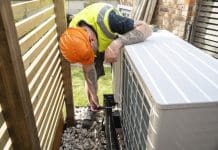
Modular buildings can also incorporate a range of low-carbon features to reduce energy use and running costs over time. These include green roofs, photovoltaic (PV) solar panels, air-source or ground-source heat pumps, rainwater harvesting, low-energy lighting, smart sockets, and waterless urinals. Intelligent energy management systems can help monitor and manage energy use, making it easier to identify inefficiencies and reduce waste.
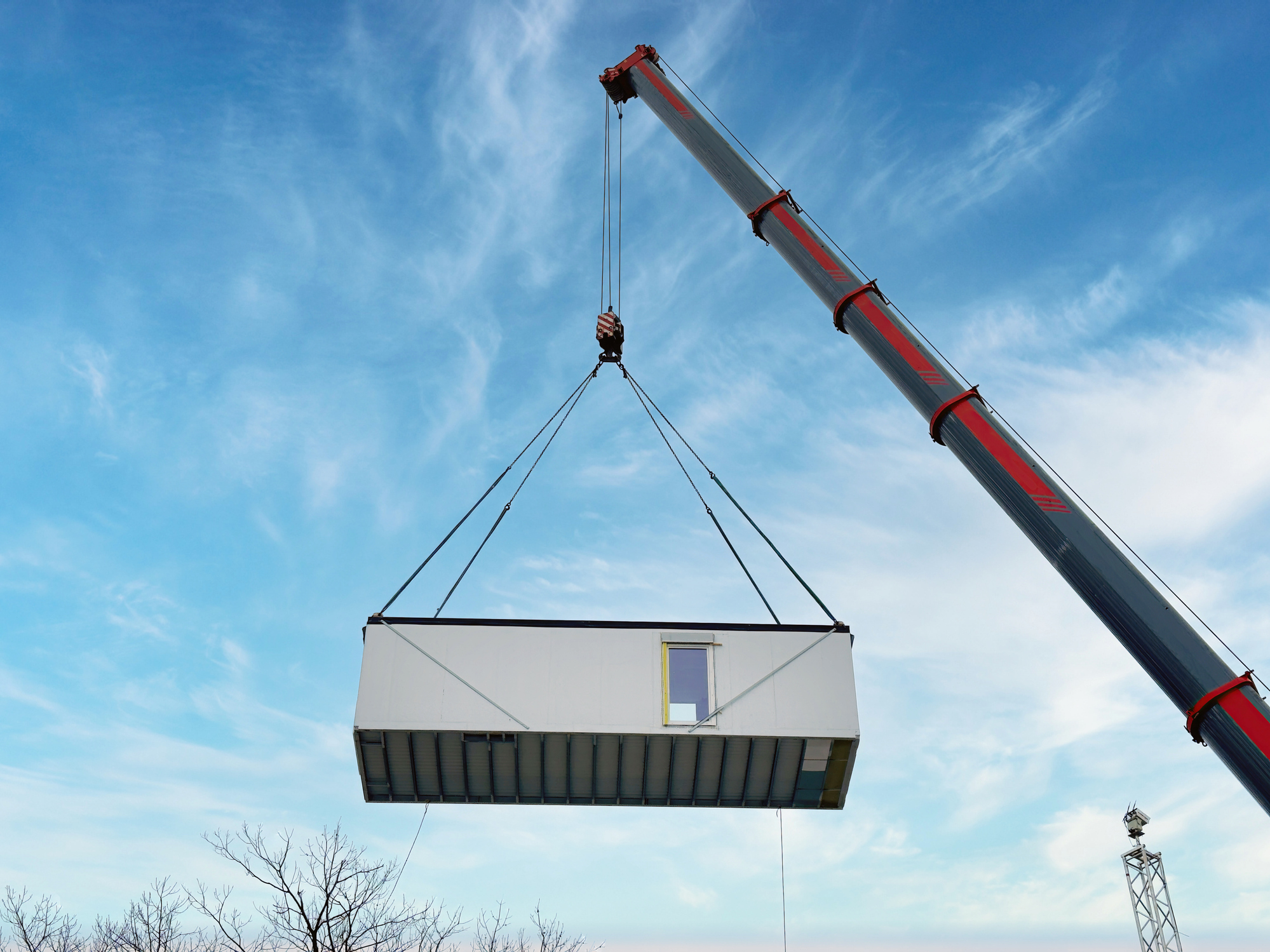
Flexibility is another key consideration over a building’s lifetime. Manufacturing buildings in sections creates opportunities for adaptation, relocation and reuse, helping estates respond to changing needs while potentially avoiding new construction.
What does this approach look like when applied to a real education project?
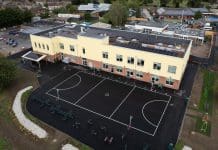
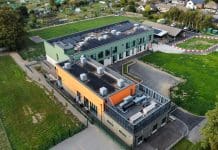
Modular construction is already helping schools take a more considered approach to decarbonisation. A good example is a Net Zero Buildings project at The Hart School in Rugeley, Staffordshire, where sustainability was woven into the design from the outset.
As pupil numbers grew, the secondary academy needed additional teaching space. A new modular teaching block replaced an existing 1960s single-storey building on the same site, providing five classrooms and additional facilities while connected to one of the school’s existing buildings.
The building was designed around energy efficiency from the start, targeting an EPC A+ rating and aiming to generate more energy than it uses. The building was estimated to reduce energy costs by around £30 per m² each year, with potential annual savings of approximately £11,500.
These savings are made possible by a highly insulated, airtight building envelope that reduces energy demand, along with roof-mounted photovoltaic solar panels that generate renewable electricity. Energy-efficient ventilation and lighting, combined with a design that makes the most of natural daylight, further reduce the building’s energy use.
Looking at the whole life of a building
Reducing operational energy is only part of the decarbonisation challenge. Whole-life carbon also considers materials, construction, maintenance, and the building’s eventual reuse or end of life.
Adaptability is key here, school buildings can become unsuitable as pupil numbers, teaching needs, and space requirements change. So, designing for reconfiguration, extension, or relocation can keep buildings in use longer and avoid some of the carbon cost of replacement.
Modular construction can support this approach by allowing buildings to be reconfigured, extended or adapted as requirements change, potentially extending their useful life and reducing the need for replacement.
The opportunity is to create education buildings that can evolve alongside the schools they serve, rather than becoming obsolete when requirements change. By looking beyond initial construction and considering carbon, energy, and adaptability across a building’s life, today’s investment can keep delivering value for years to come.