

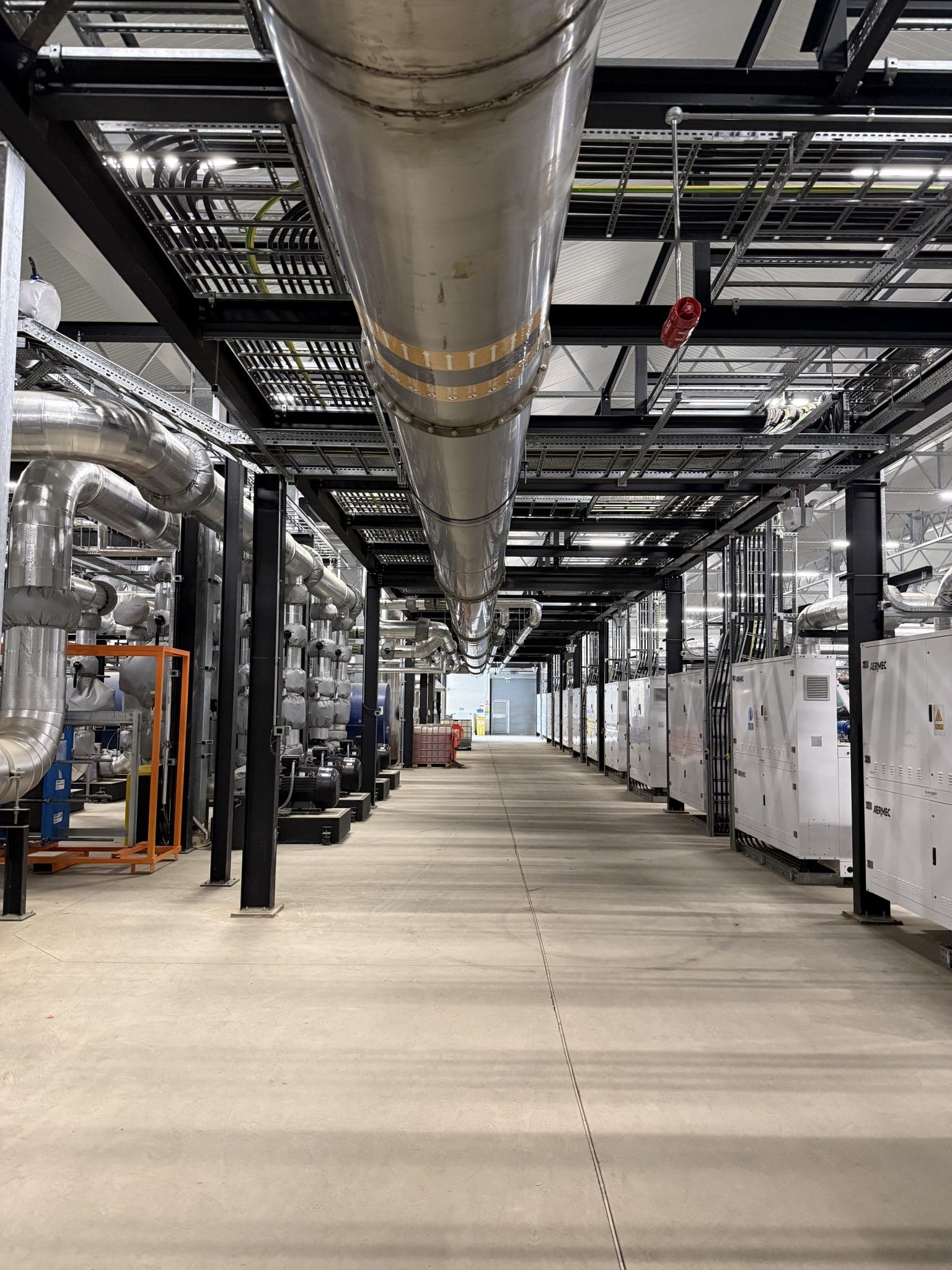
Heat pumps work. But achieving an efficient heat pump installation requires considerably more than selecting the right machine. GeoEnergy Design explains why the decisions made long before a heat pump is switched on can determine its performance for decades to come
The heat pump industry spends an extraordinary amount of time discussing equipment. Which manufacturer? What refrigerant? What capacity? What COP? They are all legitimate questions, but after decades of designing, installing, commissioning and troubleshooting heat pump systems, our experience suggests that the heat pump itself is rarely the most important decision.
A heat pump is one component within an energy system. Its eventual performance may have been largely determined months, sometimes years before it is first switched on.
1. Start with the problem, not the product
A successful project should begin with understanding the building or process and what it actually needs.
What are the real heating and cooling loads? At what temperatures? When do those loads occur? Are heating and cooling required simultaneously? What electrical capacity is available? Is domestic hot water significant? Are there useful sources or sinks of thermal energy nearby?
Only then should we ask which technology is appropriate.
Air, ground and water source heat pumps each have advantages and limitations. There may also be waste heat available from cooling, refrigeration, industrial processes or neighbouring buildings.
The objective of a feasibility study is not to prove that a predetermined technology works. It is to establish the most appropriate solution.
2. Temperature is everything
Heat pumps do not create heat in the way a boiler does. They move thermal energy from one temperature to another.
The greater that temperature lift, the harder the compressor must work and the more electricity it consumes.
That simple piece of physics makes system temperatures fundamental.
Reducing heating water temperatures, improving emitters, correctly sizing coils and understanding domestic hot water requirements can therefore have a greater influence on annual energy consumption than choosing between two heat pumps with slightly different catalogue efficiencies.
The same thinking applies at the source.
A good heat pump design works from both ends: obtaining the highest practical source temperature while delivering the lowest practical load temperature.
Every degree matters.
3. Integration matters more than components
Modern buildings increasingly contain multiple energy technologies: heat pumps, chillers, photovoltaic panels, batteries, thermal stores, ventilation systems and sophisticated controls.
Individually, each component can be highly efficient.
Collectively, they can still form a poor system.
One of the biggest opportunities is to stop treating heating and cooling as entirely separate disciplines. A building rejecting heat through cooling at the same time as another part of the building requires heat should immediately raise a question: can that energy be moved rather than discarded?
Heat recovery and simultaneous heating and cooling can transform system performance.
The same principle extends beyond an individual building. Ambient heat networks and shared energy systems can allow heat rejected by one user to become useful energy for another.
Integration, rather than equipment selection, is increasingly where the greatest efficiencies can be found.
4. Commissioning is engineering, not paperwork
Even an excellent design can perform badly if it is not commissioned properly.
Commissioning should not simply demonstrate that equipment switches on.
Flow rates need checking. Temperatures need measuring. Control sequences need proving. Sensors need verifying. Setpoints need challenging. Pumps should operate where intended and different systems need to communicate correctly.
Crucially, the system should be commissioned under representative operating conditions wherever possible.
A heat pump may be perfectly capable of achieving its design performance while the wider system prevents it from doing so.
This is why commissioning should be considered during design, not added to the programme shortly before practical completion.
5. Practical completion isn’t the finish line
One of the great advantages of modern building systems is the amount of operational data available.
Unfortunately, much of it is never meaningfully examined.
A properly metered heat pump installation can tell us what is happening: electricity consumed, thermal energy delivered, source and load temperatures, operating hours and seasonal performance.
Monitoring allows engineers to move from assumption to evidence.
Buildings also change. Occupancy changes. Setpoints are adjusted. Controls are overridden. Equipment is replaced.
Optimisation should therefore be regarded as part of the life of an energy system rather than something completed on handover day.
Small operational changes can sometimes deliver significant improvements without changing any major equipment.
Designing performance
Heat pumps are proven technology. The challenge facing our industry is no longer simply demonstrating that they work.
It is ensuring that the systems surrounding them allow them to work well.
That requires engineering throughout the project: understanding the problem before selecting the technology; designing around temperature; integrating heating and cooling; commissioning properly; and measuring what happens afterwards.
The question we should be asking is not simply: “Which heat pump should we install?”
It is: “What energy system are we trying to create?”
Answer that question properly and choosing the heat pump becomes considerably easier.
GeoEnergy Design is an independent specialist in the design, commissioning, optimisation and troubleshooting of commercial heat pump and low-carbon heating and cooling systems.
*Please note, this is a commercial profile.