
Dr. Jyotirmoy Mishra, MSCA Postdoctoral Fellow in the Department of Mechanical and Construction Engineering at Northumbria University, discusses the potential of 3D printed concrete
Following the COVID-19 pandemic, the European construction industry is facing rapid changes and challenges. At the same time, the European Commission’s EU 2050 strategy and the European Green Deal1 have already emphasised that the construction sector will be one of the most effective means to address environmental and climate change issues, ultimately leading to climate neutrality.
However, Europe’s commitment to a low-carbon economy by 2050 can only be attained by employing sustainable construction practices. In the view that Europe stands in a critical juncture with respect to sustainable housing, the advent of additive manufacturing (AM) techniques, such as 3D-printed construction, might be a solution that paves the way for a transformative shift towards a greener future2. But why do we need 3D printed construction in the first place?
Undoubtedly, traditional construction methods continue to dominate globally. However, traditional construction requires huge human labour, formwork, construction equipment and, above all, time. The issue of labour shortages in the construction sector has been a primary concern for most EU member states. Labour shortages will continue to rise in the future, becoming more expensive, owing to an ageing population across Europe3.
Apart from this, reliance on traditional construction materials, particularly cement, whose manufacturing accounts for nearly 8-10%4 of total carbon footprints, is another concern for Europe from the viewpoint of environmental sustainability.
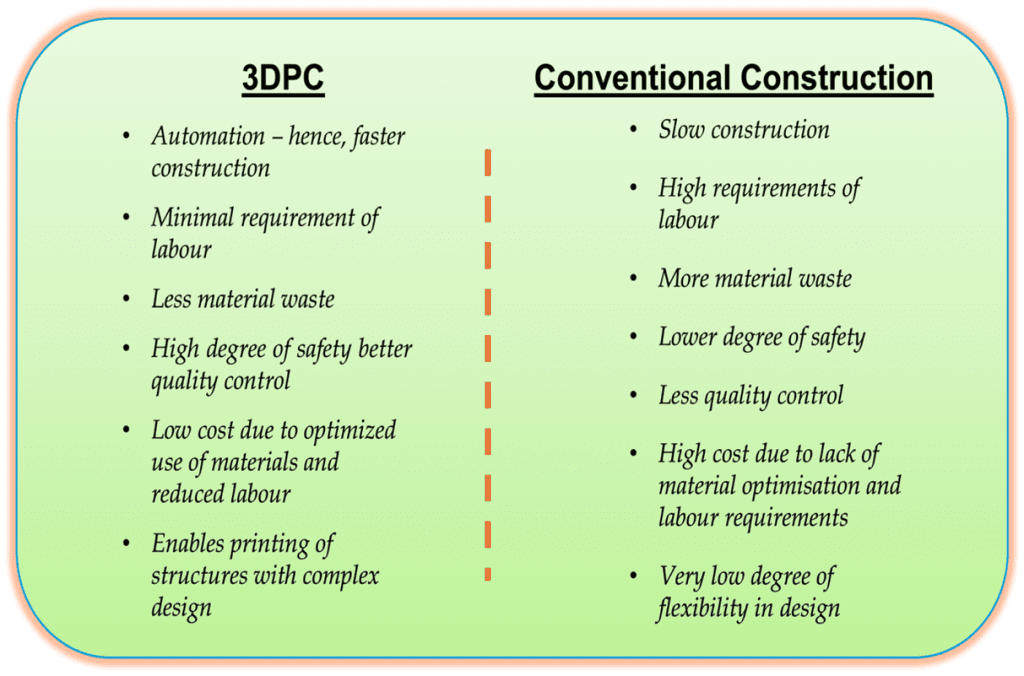
To address these pressing needs, revolutionary AM techniques such as 3D printing will certainly be beneficial in achieving a cleaner and greener production process in the European construction industry. Employing 3D printing technology in the construction sector would lead to a reduction of waste, physical labour costs, and time by 30–60%, 50–80%, and 50–70%, respectively5. This will boost productivity, thereby reducing energy consumption and carbon emissions. Figure 1 presents a comparative chart highlighting the differences between 3DPC and conventional construction.
Europe, with its significant influence on the world order, could lead in this regard by adopting the most promising construction technology, such as 3D printing, that aligns well with global sustainability goals related to climate change. Although 3D printing of concrete (3DPC) has primarily utilised traditional cement so far, there is a need for novel low-carbon binders such as geopolymers to enhance the sustainability prospects and cost-effectiveness of 3DPC.
Geopolymer binders, which are cement-less, typically use industrial by-products such as fly ash and slag, along with a sodium-based alkaline solution6. This binder, when mixed with aggregates, produces geopolymer concrete.
Therefore, the amalgamation of 3D printing and geopolymers holds tremendous potential at the moment, which will revolutionise the entire construction sector in Europe while reducing dependence upon labourers as well as traditional cement, thereby promoting the circular economy.
3D-printed concrete: A substantial step towards sustainability
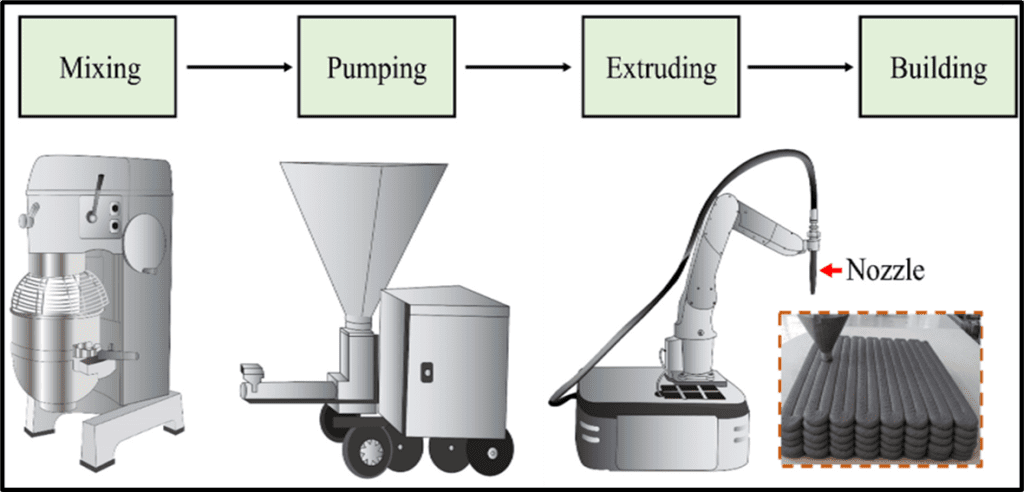
3DPC can broadly be categorised into powder-based and extrusion-based printing techniques7. Out of these two, extrusion-based 3D printing is most commonly used in printing. In extrusion-based 3D printing, the material is extruded from a nozzle to print 3D prototypes in a layered sequence using a digital model8. Figure 2 presents the extrusion-based printing technique, which has its own merits and demerits at present, but is evolving.
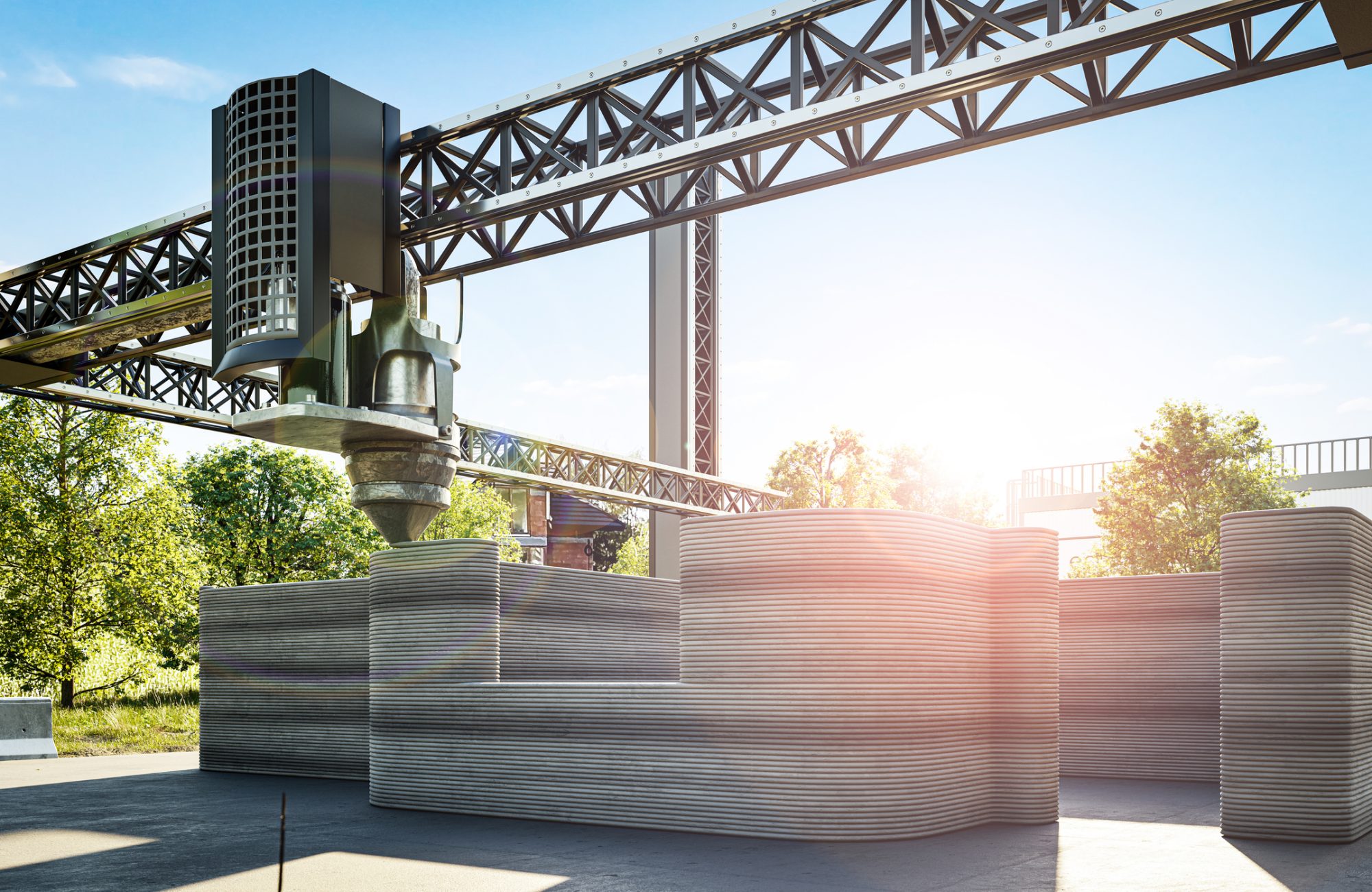
Currently, the 3DPC technology has been rapidly progressing from lab-scale innovation to a feasible onsite construction technique, allowing engineers to build structural housing applications with complex designs and geometries, with minimal material waste, and in less time.
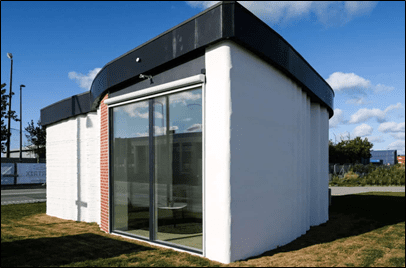
In Europe, the first 3D-printed building project (as shown in Figure 3) was completed in 2017 in Copenhagen, Denmark, in collaboration with the modular 3D construction printer company COBOD and Saga Space Architects. As such, some recent on-field demonstrations in Denmark, Germany, and the UK — office and residential buildings, as well as pedestrian bridges — have been pivotal to public awareness regarding this transformative digital technology.
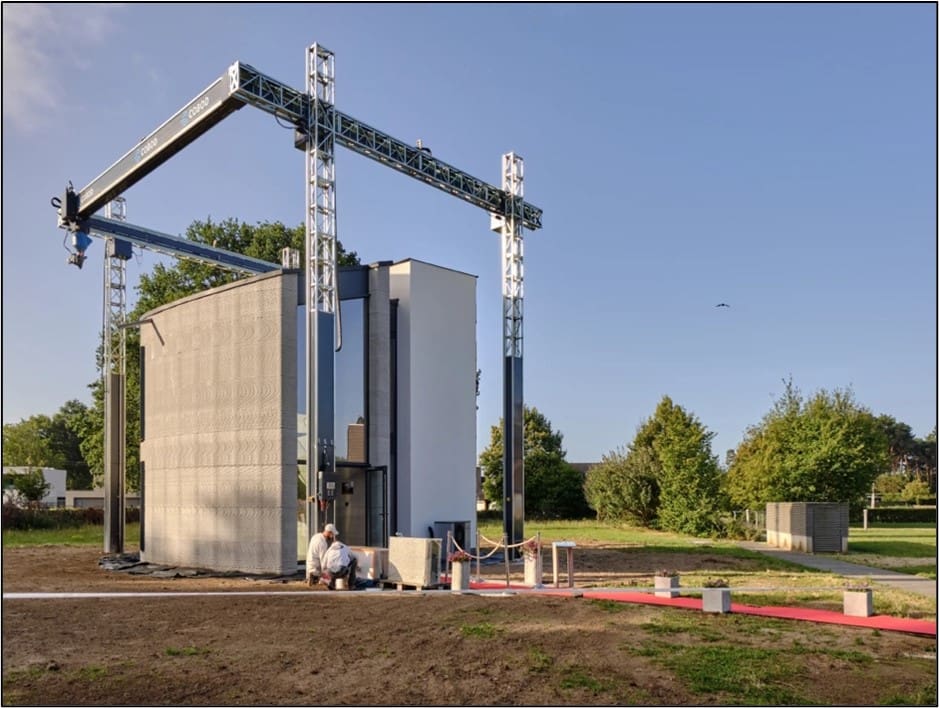
One such example is shown in Figure 4, which is Europe’s first 3D-printed two-storey house in Belgium. This technology not only facilitates automation but also reduces our dependency on physical labour across Europe. Moreover, the elimination of formwork, which is a necessary part of the traditional construction method, reduces the overall production cost.
However, 3DPC requires fusion of skills, not just from structural engineers. The expertise from architectural engineering, robotics and material science is highly crucial as the integration of these fields of knowledge will ensure customisation and better stability of the printed structures. Additionally, the concrete material mix should be designed to ensure sufficient fluidity during the printing process.
It would not be an exaggeration to say that the choice of material is critical to successful printing. This is where the role of geopolymer concrete mix comes into play. As traditional cement is no longer sustainable, the future of concrete lies in the evolution and adoption of geopolymer concrete, which has the potential to contribute to a low-carbon built environment.
Geopolymer concrete: A revolutionary building material?
Geopolymer concrete is one such building material that, when introduced into the 3DPC technology, has the potential to reduce carbon emissions, costs, and lead to the valorisation of industrial waste. Geopolymer concrete has been one of the most sought-after research areas in the past decade. It is rapidly emerging as a low-carbon alternative to the traditional cement-based concrete systems .
The solutions of industrial waste mixed with alkaline develop a green binder, which can cut down carbon emissions by 80% depending on the raw materials used, as reported in many studies. Geopolymer concrete systems have been reported to have excellent strength and durability when compared to traditional cement-based concrete systems12. Figure 4 presents some merits of geopolymer concrete.
How does geopolymer concrete technology fit into the European construction sector?
The implementation of geopolymer concrete could be a potential pathway that aligns well with Europe’s ambitious goals to achieve a circular economy and decarbonise the construction industry. In this way, geopolymer concrete fits naturally into the EU’s sustainability policies.
To date, several European countries, including Germany and Belgium, have already implemented pilot-scale projects using geopolymer concrete. However, due to issues such as the lack of supply chain and standardisation, domination of traditional cement, in addition to reliance on commercial alkaline solutions, geopolymer concrete has not been able to penetrate deeply into the construction sector – but the situation is slowly changing as public awareness and trust is increasing in the context of a low-carbon future.
Is it possible to make greener, low-cost geopolymers?
While geopolymer concrete is more sustainable than traditional cement-based concrete, one important issue that needs immediate attention is the reliance of geopolymer concrete on commercial alkaline solutions, which are typically made up of sodium hydroxide and silicate. Out of these chemicals, sodium silicate solution is expensive, and its production emits high carbon emissions13. This is a matter of research priority.
So, how can we make geopolymers greener and cost-effective? The answer to this question lies in exploring alternative low-carbon silicate solutions. In this regard, utilising silica-rich wastes (agricultural, biomass, or industrial) to synthesise a silicate solution would be a promising idea to replace the commercially available high-cost sodium silicate solution14. In this way, the carbon footprint of geopolymer concrete can be effectively reduced along with the overall costs. Utilising these waste-derived alkaline solutions enhances the economic feasibility of wide-scale adoption of geopolymer concrete and further aids in leveraging the full scope of the circular economy.
3D-printed geopolymer concrete: A transformative shift towards sustainable construction
The aforementioned discussion regarding 3DPC and geopolymer concrete converges at this point, indicating that the fusion of 3DPC technology with geopolymer concrete, specifically 3D-printed geopolymer concrete (3DPGC), would be a truly transformative strategy.
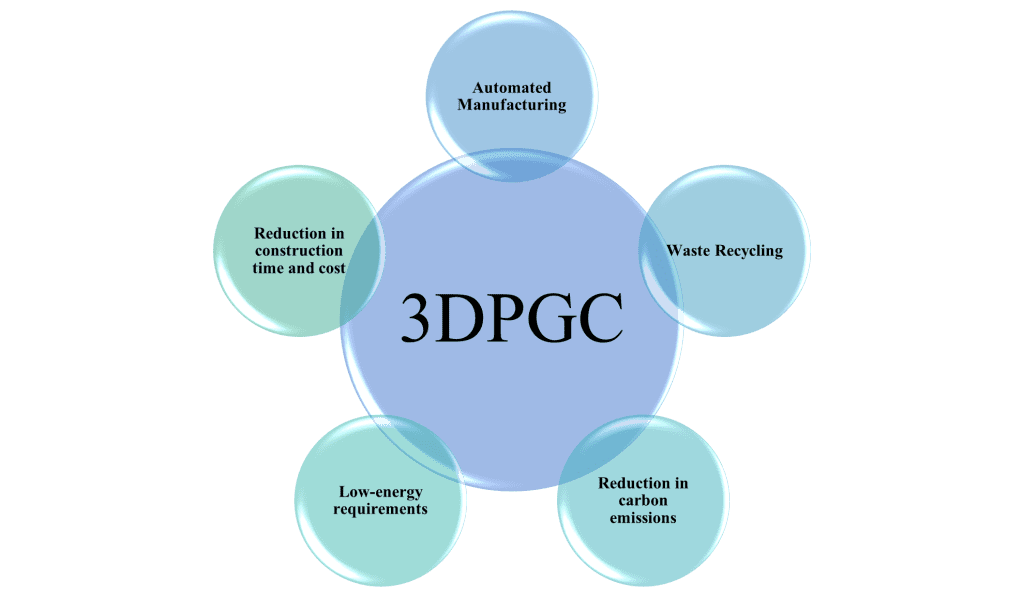
The automated construction process, coupled with low-carbon concrete, is a promising pathway towards sustainable construction practices. With a focus on low-cost housing, reduced reliance on manual labour, and low carbon emissions, 3DPGC is the need of the hour. This construction technology holds high relevance in the context of the European construction sector, and although the topic is relatively new, it is believed to have a significant impact on the future of Europe’s circular economy goals.
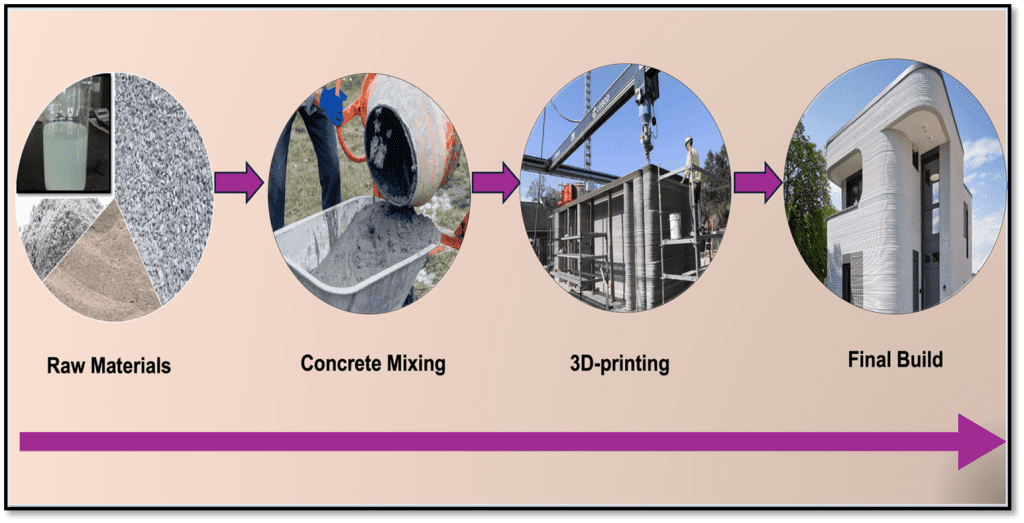
The merits of 3DPGC are presented in Figure 5, and a workflow infographic is presented in Figure 6.
3DPGC certainly provides several benefits in the context of environmental sustainability. However, it is still in the early stages of development, and many limitations exist at present. Therefore, it requires further research and development for its wide-scale adoption, which will then lead to increased public awareness and acceptance.
Technical limitations of 3DPGC
Having discussed the merits of 3DPGC, it is worthwhile to mention that 3DPGC carries certain limitations which hinder its widespread adoption in the construction industry. Firstly, geopolymer concrete lacks a uniform European code, which makes it an application-oriented material. This limitation naturally translates into the 3DPGC technique, and thus, there is a lack of standardisation in 3DPGC as well. Hence, there is a necessity for standards tailored particularly for 3DGPC.
Secondly, geopolymer concrete requires appropriate curing methods; otherwise, the strength development will be low, depending on the industrial waste used. Precast industries mostly use the heat-curing method for geopolymer concrete members. It is essential to reflect on the question: How will 3DPGC-based structural members be cured on-site? This issue, therefore, is a cause of concern, as curing in the open air might not be effective.
It has also been recognised that there is performance variability, specifically in terms of fresh properties, across different waste types. Since the geopolymer concrete is highly sensitive to temperature and humidity conditions, the performance varies across seasonal fluctuations. This poses a risk of performance variability in the case of 3DPGC as well. Thus, repeatability and quality control are also key limitations in 3DPGC, which need to be addressed to be adopted by the construction industry15.
Why is collaboration among universities, government, and industry important?
Academia is known for its small-scale transformative ideas that aid in new research and innovation that can be upscaled as a relevant industrial (commercial) product. At the later stages, the product no longer belongs to academia; rather, it holds the ability to transform society with its promising implications.
This is where the government and industry play an important role. Without collaboration and synergistic efforts, it is difficult to realise the potential of any innovation. In this context, the potential of 3DPGC is largely dependent on strong collaborative efforts.
Universities will lead from the front, and in partnership with local governments, EU initiatives, and research groups across Europe, the 3D-printing workflows and standardised mix designs can be developed. Industries, particularly the private sector, can create the supply chain and frameworks to implement projects on a pilot scale, thereby boosting the adoption of 3DPGC at local levels and validating emerging standards and research methods.
The UK’s Future Homes Standard, essentially building regulations with the primary purpose of improving the energy consumption of new homes and reducing their carbon footprint, is planned to be implemented in 202516. These standards, when updated with the regulations of 3DPGC in future, will be more beneficial and will directly contribute to the goals of the UK’s Future Homes Standard.
Further, resource conservation, waste minimisation and material recycling have been key objectives in the EU’s Circular Economy Action Plan (CEAP)17. In this regard, 3DPGC offers a way to effectively manage waste while digital fabrication could aid in optimised material usage, thereby leading to a more sustainable built environment. In this way, 3DPGC not only aligns with the EU’s regulatory goals but also uniquely positions itself as a pathway to sustainable construction practices across the EU. While this may take some time, these are new directions that fall under the scope of research priorities in a European context.
Europe’s research priorities – the way forward
European construction companies should invest in the research and development of 3DPGC by strategic collaboration with local governments and academia. To upscale digital fabrication methods across Europe, more pilot 3D-printed housing projects should be implemented, particularly using geopolymer concrete. The value of such collaborations and the success of the projects are of utmost importance in solving climate issues and waste management.
Therefore, it is essential that Europe embrace this unique opportunity to revolutionise construction techniques and, at the same time, decarbonise the construction industry. Having said that, following the aforementioned strategies alone is not enough; policymakers should act simultaneously to incentivise sustainability in construction and thereby work towards standardisation.
The construction industry must adapt to these changes to make Europe a world-leader in digital fabrication and low-carbon construction. With coordination across different domains, the time for action is now, setting an example for many countries to follow for future generations.
Europe’s future outlook
This article highlights the need for Europe to take prompt action in transitioning towards a low-carbon built environment. Currently, translating laboratory-scale developments into real-world applications is crucial. This requires Europe to fund initiatives such as the Marie Skłodowska-Curie Actions (MSCA) fellowship and other Horizon Europe funding mechanisms, which would draw talent from across the world.
These early-career researchers would then introduce new ideas, particularly to make Europe a global leader in scientific developments and foster innovative and impactful collaborations, alongside skill development. A special focus on driving research in low-carbon building materials, such as geopolymer concrete, will lay a solid foundation upon which the EU’s sustainability targets can be attained.
Likewise, when combined with 3D printing technology, geopolymer concrete will truly revolutionise the European construction industry by boosting productivity at a lower cost. However, as pointed out in this article, this issue requires attention from local governments and industries, which will in turn influence societal attitudes and trust towards these new-age construction methodologies.
As there is rapid progress in 3DPC construction in Europe, it is foreseeable that many start-ups will emerge, which, in collaboration with established construction firms, can bring about a change in public mindset.
The takeaway from this article is that, at present, Europe can lead the transformation in the construction industry by adopting the technologies/innovations discussed here. With rigorous funding mechanisms, such as Horizon Europe, it is anticipated that all stakeholders – academia, policymakers, and the private sector – would greatly benefit.
What is now required is to accelerate the pace of this transition and to strengthen mutual commitment and willpower. In this way, by realising the full potential of emerging technologies — 3D printing and geopolymer concrete — Europe can decarbonise its construction industry and inspire other nations.
References
- Sandi Knez et al., “Climate Change in the Western Balkans and EU Green Deal: Status, Mitigation and Challenges,” Energy, Sustainability and Society 12, no. 1 (2022): 1, https://doi.org/10.1186/s13705-021-00328-y.
- Toiba Tabassum and Ajaz Ahmad Mir, “A Review of 3d Printing Technology-the Future of Sustainable Construction,” Materials Today: Proceedings, UKIERI Concrete Congress – ‘Sustainable Concrete Infrastructure,’ vol. 93 (January 2023): 408–14, https://doi.org/10.1016/j.matpr.2023.08.013.
- Belinda Brucker Juricic et al., “Review of the Construction Labour Demand and Shortages in the EU,” Buildings 11, no. 1 (2021): 1, https://doi.org/10.3390/buildings11010017.
- J. H. A. Rocha et al., “Sustainable Alternatives to CO2 Reduction in the Cement Industry: A Short Review,” Materials Today: Proceedings, Third International Conference on Aspects of Materials Science and Engineering, vol. 57 (January 2022): 436–39, https://doi.org/10.1016/j.matpr.2021.12.565.
- Jingchuan Zhang et al., “A Review of the Current Progress and Application of 3D Printed Concrete,” Composites Part A: Applied Science and Manufacturing 125 (October 2019): 105533, https://doi.org/10.1016/j.compositesa.2019.105533.
- Ramamohana Reddy Bellum et al., “Effect of Slag on Strength, Durability and Microstructural Characteristics of Fly Ash-Based Geopolymer Concrete,” Journal of Building Pathology and Rehabilitation 7, no. 1 (2022): 25, https://doi.org/10.1007/s41024-022-00163-4.
- Max Strohle et al., “Prospect and Barrier of 3D Concrete: A Systematic Review,” Innovative Infrastructure Solutions 8, no. 1 (2022): 21, https://doi.org/10.1007/s41062-022-00975-w.
- Andrei Jipa and Benjamin Dillenburger, “3D Printed Formwork for Concrete: State-of-the-Art, Opportunities, Challenges, and Applications,” 3D Printing and Additive Manufacturing 9, no. 2 (2022): 84–107, https://doi.org/10.1089/3dp.2021.0024.
- Hui Zhong and Mingzhong Zhang, “3D Printing Geopolymers: A Review,” Cement and Concrete Composites 128 (April 2022): 104455, https://doi.org/10.1016/j.cemconcomp.2022.104455.
- S. Pessoa et al., “3D Printing in the Construction Industry – A Systematic Review of the Thermal Performance in Buildings,” Renewable and Sustainable Energy Reviews 141 (May 2021): 110794, https://doi.org/10.1016/j.rser.2021.110794.
- Juliana Neira, Europe’s Largest 3D-Printer Prints an Entire Two-Story House, August 17, 2020, https://www.designboom.com/architecture/kamp-c-3d-prints-two-story-house-08-17-2020/.
- Salim Barbhuiya et al., “Low Carbon Concrete: Advancements, Challenges and Future Directions in Sustainable Construction,” Discover Concrete and Cement 1, no. 1 (2025): 3, https://doi.org/10.1007/s44416-025-00002-y.
- Bharadwaj Nanda et al., “Synthesis of Rice Husk Ash Based Alkaline Activators for Geopolymer Binder Systems: A Review,” Journal of Building Engineering 91 (August 2024): 109694, https://doi.org/10.1016/j.jobe.2024.109694.
- Jyotirmoy Mishra et al., “Compressive Strength and Microstructural Properties of Geopolymer Binder Manufactured with Rice Husk Ash-Based Alkaline Activator at Room Temperature,” Waste and Biomass Valorization, ahead of print, June 26, 2025, https://doi.org/10.1007/s12649-025-03193-4.
- Jyotirmoy Mishra et al., “Limitations and Research Priorities in 3D-Printed Geopolymer Concrete: A Perspective Contribution,” Ceramics 8, no. 2 (2025): 2, https://doi.org/10.3390/ceramics8020047.
- Annabelle Earps, “What Is the Future Homes Standard 2025?,” LKAB Minerals, February 7, 2025, https://www.lkabminerals.com/news/what-is-future-homes-standard/.
- “Circular Economy Action Plan – European Commission,” accessed July 25, 2025, https://environment.ec.europa.eu/strategy/circular-economy-action-plan_en.