
Professor Robert Hairstans, founding director of the Centre for Advanced Timber Technology, NMITE and head of the Centre for Offsite Construction and Innovative Structures at Edinburgh Napier University, explains why timber works as a renewable resource for sustainable housebuilding
The UK faces a significant housing challenge: delivering the UK Government target of 1.5 million homes while simultaneously improving affordability, increasing productivity and meeting ambitious net-zero targets. Too often these priorities are presented as competing objectives. In reality, timber construction provides a practical opportunity to address them together.
The question is no longer whether timber can play a major role in UK housing delivery. The technology exists, the evidence is growing, and successful projects are demonstrating what can be achieved. The challenge is creating the conditions that enable wider adoption.
A material aligned with modern housebuilding
Housing delivery today requires greater speed, predictability and quality than traditional construction methods alone can offer. Timber is particularly well suited to modern methods of construction (MMC) because it adds substantial value before materials arrive on site.
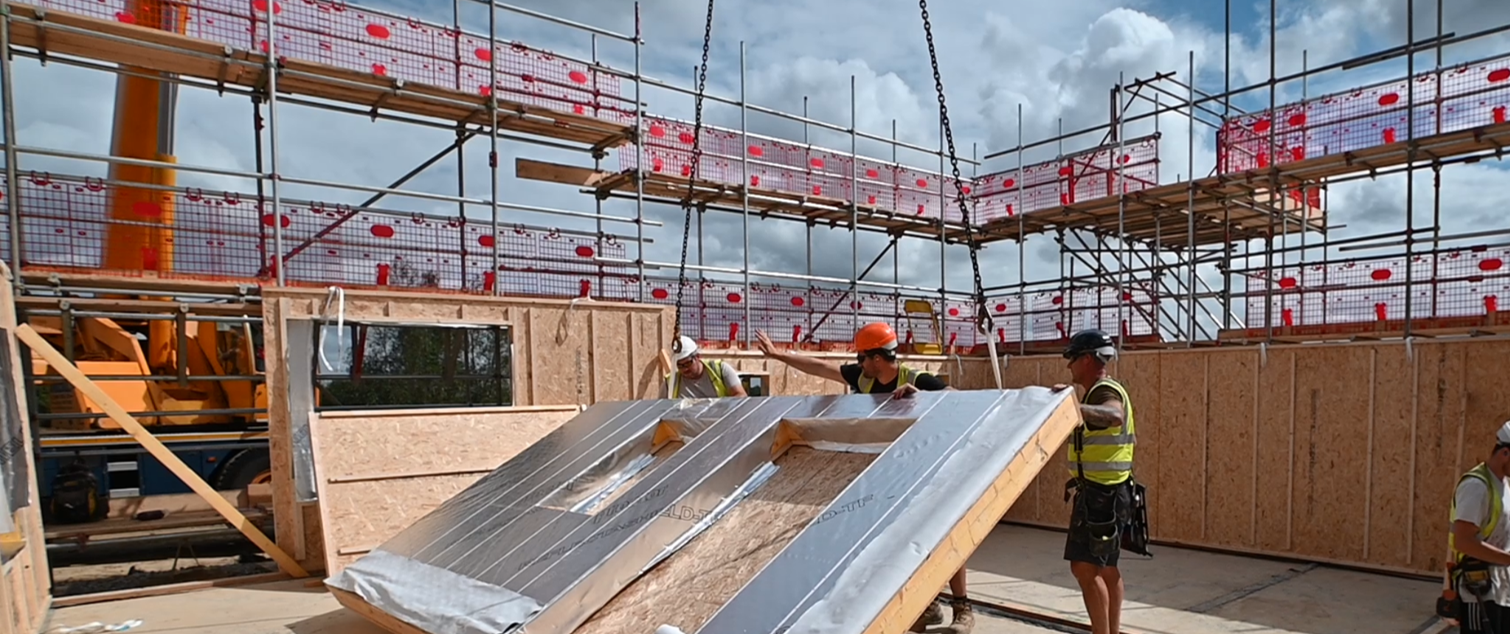
Wall panels, floor cassettes, roof systems, volumetric modules and mass timber components can all be manufactured in controlled factory environments. This improves quality assurance, reduces waste and shortens build programmes while creating more productive and attractive working environments.
Factory-based production also offers a partial solution to the industry’s ongoing labour shortages. By shifting work away from site and into manufacturing environments, the sector can attract a more diverse workforce, improve career pathways, and improve consistency and productivity.
Timber should therefore be viewed not simply as a building material but as an enabler of industrialised construction and more efficient housing delivery.
Supporting net-zero ambitions
Timber’s sustainability credentials are well known and equally compelling.
As a renewable material, timber stores carbon absorbed during tree growth and retains it within buildings throughout their service life. In addition, timber products typically require less energy-intensive processing than many conventional structural materials, helping reduce embodied carbon impacts. Designed for disassembly, these systems can also be reused, retaining value as part of a regenerative construction cycle.
Operational benefits are equally important. Timber-based construction systems can deliver high levels of thermal performance through precision manufacturing and highly insulated building envelopes, helping reduce energy demand and improve long-term affordability for occupants.
As the industry seeks to reduce both embodied and operational emissions, timber offers an opportunity to address both simultaneously whilst playing a key role in a circular economy.
A system challenge, not a technology challenge
Despite the growing evidence base, timber remains underutilised across much of the UK housing sector. Importantly, this is not because the technology is unproven.
We know how to design timber buildings. We know how to manufacture them. We know how to build them safely and effectively.
The real challenge is systemic. Expanding timber construction requires alignment between policy, procurement, regulation, education, finance and industry investment. Success depends on collaboration across the entire value chain.
This thinking is reflected in the UK Government’s Timber in Construction Roadmap, which recognises the need for joined-up approaches that support sustainable forestry, manufacturing capacity, skills development and supply chain resilience.
A key element of this agenda is making better use of domestic timber resources. While imported timber will remain an important component of UK construction, there is significant opportunity to strengthen homegrown supply chains and capture greater economic value within the UK.
Unlocking the value of homegrown timber
Research at Edinburgh Napier University has shown that UK-grown timber can be used in increasingly sophisticated structural applications.
This work has progressed beyond research and into commercial reality. Through initiatives such as BE-ST’s Mass Timber Centre of Excellence, companies including EcoSystems Technologies have successfully commercialised homegrown mass timber products, showing that Scottish-grown timber can support high-performance construction systems.
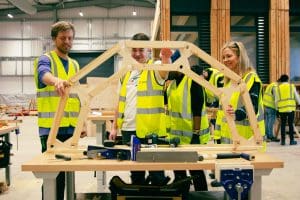
The benefits extend well beyond housing delivery. Developing domestic timber supply chains creates jobs across forestry, manufacturing, design and engineering while strengthening regional economies. At the same time, greater use of timber in long-life building applications supports carbon storage and contributes to wider environmental objectives.
Lessons from the Edinburgh Homes Demonstrator
One of the strongest examples of what a joined-up approach can achieve is the Edinburgh Homes Demonstrator project. EHD was delivered through a collaborative partnership between City of Edinburgh Council, Offsite Solutions Scotland, Scottish Futures Trust, Edinburgh Napier University, the University of Edinburgh and BE-ST, bringing together expertise in affordable housing, offsite manufacturing, research and innovation to demonstrate how timber-based modern methods of construction can support the delivery of high-quality, low-carbon homes at scale.
The project explored how collaborative procurement models focused on whole-life value, offsite manufacturing, and modern timber systems could accelerate social and affordable housing delivery.
The NMITE case study analysis of this project highlighted six reasons why local authorities and developers should increasingly consider a timber-first approach:
- Faster housing delivery through offsite manufacture
- Lower embodied carbon
- Improved operational energy performance
- Enhanced quality through factory production
- Greater support for domestic manufacturing and economic growth
- Stronger social and environmental outcomes through whole-life thinking.
Perhaps most importantly, the project demonstrated the value of collaboration and aggregated demand. Better integration between clients, designers, manufacturers and contractors can significantly improve outcomes while reducing inefficiencies throughout the project lifecycle.
These lessons are especially relevant as government investment in affordable and social housing increases, and pressure grows to deliver more homes at pace.
Skills will determine success
No housing strategy can succeed without the workforce capable of delivering it.
A transition towards greater use of timber and offsite construction requires investment in skills at all levels. Installers, supervisors, construction managers, architects, engineers, and quantity surveyors all need the knowledge to specify, procure, and deliver timber systems confidently and competently.
Encouragingly, progress is already being made. The NHBC Timber Frame Apprenticeship Programme and CITB Timber in Construction Skills Project are helping develop workforce capacity. Alongside this, NMITE, Edinburgh Napier University, BE-ST, Timber Development UK, the Structural Timber Association and Donaldson Timber Systems are collaborating to create educational resources that can be embedded within formal curricula or delivered as professional development programmes.
The objective is simple: establish a clear pathway from installer through to construction manager and built environment professional, ensuring the sector has the competence needed to deliver safe, durable and compliant timber buildings at scale. With the methodology established, the ongoing objective should be to build on this programme of work to keep pace with the sector and continually improve the educational system.
Building confidence through demonstration
Research in isolation won’t have an impact, and innovation alone is not enough. Clients, communities and homebuyers need to see what is possible.
The Forestry Commission England-funded Build from England’s Woodlands programme provides a strong example. Delivered by NMITE alongside Edinburgh Napier University, BE-ST, dRMM and EcoSystems Technologies, the project explored how homegrown softwoods and hardwoods can be combined to create innovative, high-performance construction solutions.
The resulting Building from Forests exhibition at the V&A showcased the potential of UK-grown timber while stimulating discussion around forestry, manufacturing, design and housing delivery. Projects such as these help translate technical innovation into market confidence and public understanding. Importantly, the findings from it should be embedded in educational skills content alongside current practice to keep the system moving forward in a positive direction.
A global opportunity
The need for joined-up thinking is not unique to the UK. Research undertaken by Edinburgh Napier University for Forest Industries Ireland has shown that countries worldwide face similar challenges related to housing affordability, construction productivity, climate resilience, and skills shortages.
These shared challenges are driving new international partnerships. Through the Royal Anniversary Trust-supported Transforming Timber Systems initiative, organisations including Edinburgh Napier University, NMITE, BE-ST, the University of Arkansas and MOD X are collaborating to explore how timber systems and industrialised construction can accelerate affordable housing delivery on both sides of the Atlantic.
The principle is straightforward: no single organisation, sector or nation can solve the housing and climate challenges alone.
By aligning housing policy, sustainable forestry, industrialised construction, education and skills development, timber can become a cornerstone of future housing delivery. The housing crisis demands urgency and the climate crisis demands responsibility. Timber offers a pathway to address both, but only if we take the joined-up approach necessary to unlock its full potential.