
Tom Butler, policy and places adviser at the UK Green Building Council, discusses its new Regenerative Places Framework for Housing
Our homes are far more than a collection of physical assets. They’re where many of society’s biggest and interconnected challenges are most deeply felt, whether it’s the 6.5m households in fuel poverty, the £1.4bn spent by the NHS on health issues linked to poor housing or the one in four people who lack access to green space.
The impact on our climate is also substantial, with 48% of UK built environment emissions coming from our homes and nearly all of the UK’s 29m properties in need of retrofitting.
It doesn’t have to be this way. Our Regenerative Places Framework for Housing, developed with input from across the built environment sector and civil society, shows that housing can and should be a catalyst for thriving places.
It starts with place
More than just “products” to be delivered, investment in homes can set in motion positive and long-term change across communities, local economies and natural systems.
We argue that this requires a place-based, systems-led way of working, guided by the understanding that every place is unique, with its own history, ecosystems, skills, relationships, needs and aspirations. These are systems that are best understood locally, and which should shape how change happens.
Good sustainable practice is the foundation for this approach: reducing carbon and resource use, avoiding ecological harm and improving the performance of homes and places.
But regenerative approaches go further, focusing on the continuing health and adaptive capacity of the wider place. That capacity lives in functioning ecosystems, strong community networks, local knowledge and skills, resilient infrastructure, and the institutions and stewardship arrangements that let a place adapt over time.
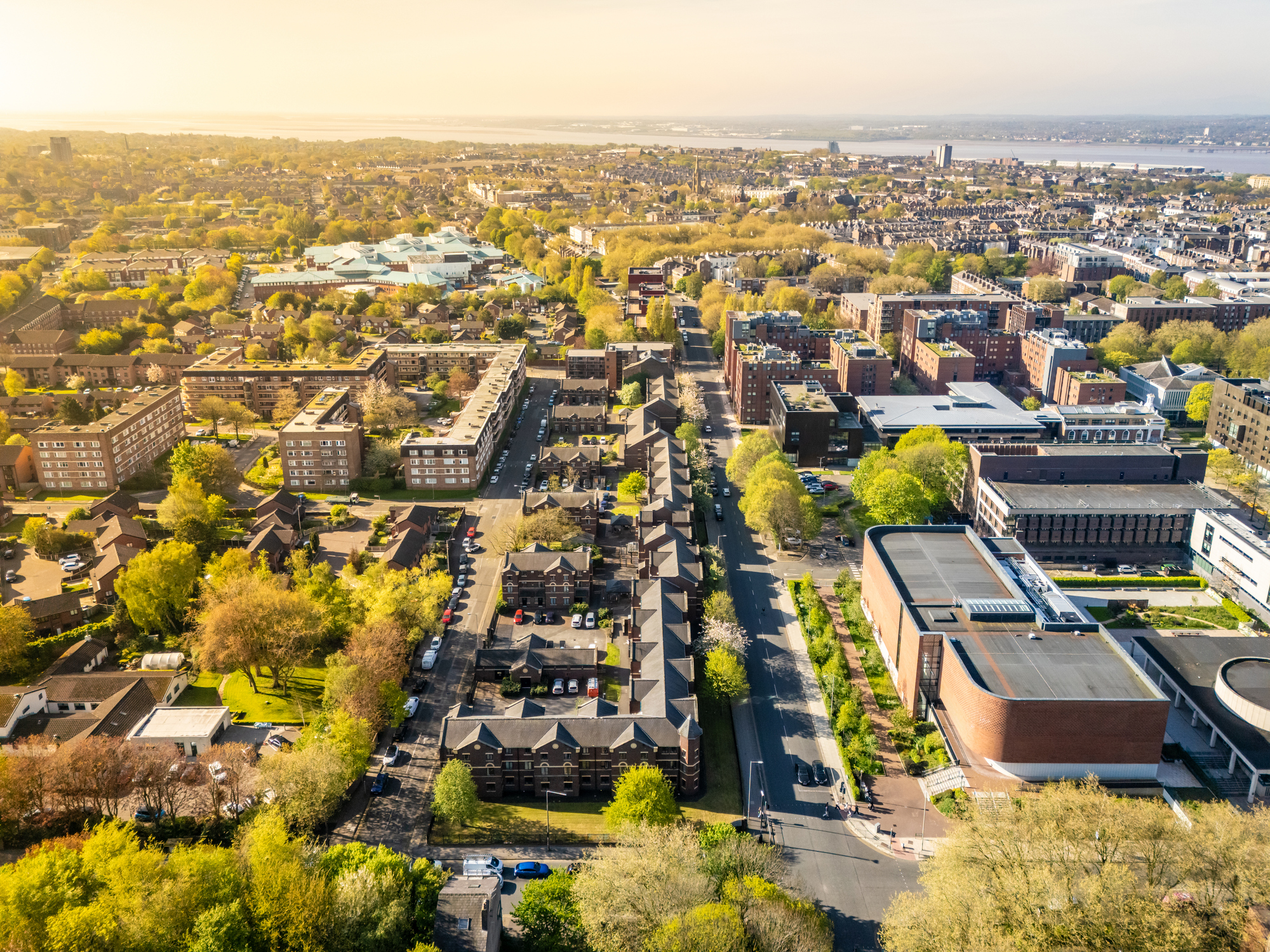
A regenerative vision for housing
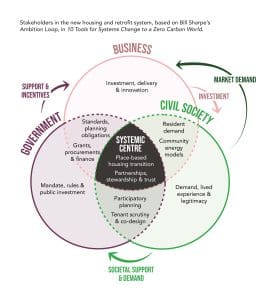
The built environment industry can’t do this alone. It depends on business, government and civil society all working together, recognising the different forms of knowledge, influence and responsibility that each brings. That means a more inclusive model of decision-making; one that brings in more voices and recognises different forms of expertise, power and accountability.
Likewise, how we approach value and viability also needs to adapt. Our framework takes a broader view of value, bringing social, environmental and financial considerations together. We set out nine Dimensions of Place, including the value in living systems (such as water, materials and resources), the value for people (including livelihoods, health and wellbeing, and community agency), and value for the climate (in energy systems, biodiversity and reduced carbon emissions).
These aren’t a new checklist or set of targets. Instead, they offer a direction of travel, supported by governance, stewardship and learning, towards positive outcomes that we can experience locally over time.
Starting from where we are
Bridging the gap between current realities and future aspirations won’t be easy, but it is necessary. We’ve identified six key transitions to get us there.
The first is moving from narrow ideas of value to recognising “whole place value” before viability assumptions are fixed. Another is looking beyond the goal of project completion to “enabling stewardship”, planning for long-term care, adaptation and learning from the outset.
And a third is moving from delivery capacity to “place capability”, using projects to strengthen local skills, relationships, institutions and the ability of places to adapt.
These aren’t abstract ideas or distant aspirations but ways of working that are already being put into practice across the UK. From a whole-neighbourhood retrofit programme in Balsall Heath that has created skills pathways for underrepresented groups to planned new walkable neighbourhoods near Colchester, shaped by local groups and existing landscapes.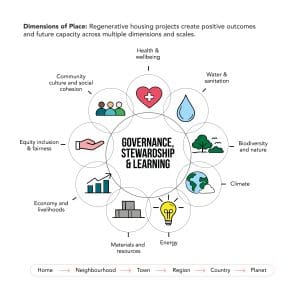
Building momentum
The policy context is fundamental to enabling these approaches. And there is room for optimism here. At the Labour Party Conference last month, the focus was squarely on housing and the need to improve the quality of homes for the benefit of communities and the economy.
There was also a strong focus on devolution. The government increasingly frames regional mayors and strategic authorities as the primary engines of growth. For the built environment, this offers a massive opportunity to align targets with genuine local need, if – and it’s a big if – local and regional authorities are supported with funding to ensure they have the capacity to deliver.
That means better aligning policy, funding and investment around places, with local leaders given the capacity, authority and long-term certainty to act as stewards. It also means broadening how success is understood, looking beyond delivery numbers and short-term viability to the wider value housing can create, and enabling lasting collaboration between government, industry, communities and civil society.
From cost to long-term value
The benefits of better housing aren’t “nice to haves” but part of the true value of what we build and invest in. Too often, our current models don’t account for the longer-term costs of poor health, environmental degradation and weakened communities, as well as the wider benefits that good housing can create.
Our Regenerative Places Framework for Housing offers a shared structure for making these costs and benefits visible. Once we can see them, we can start building and retrofitting homes that give back to people, place and nature, not just for now, but for the long term.
To download the Regenerative Places Framework for Housing please click here.