
Alexandra Lyons, partner, policyholder disputes at Stewarts, questions whether existing insurance arrangements will be able to cope with the pace at which the UK’s clean energy industry is being constructed
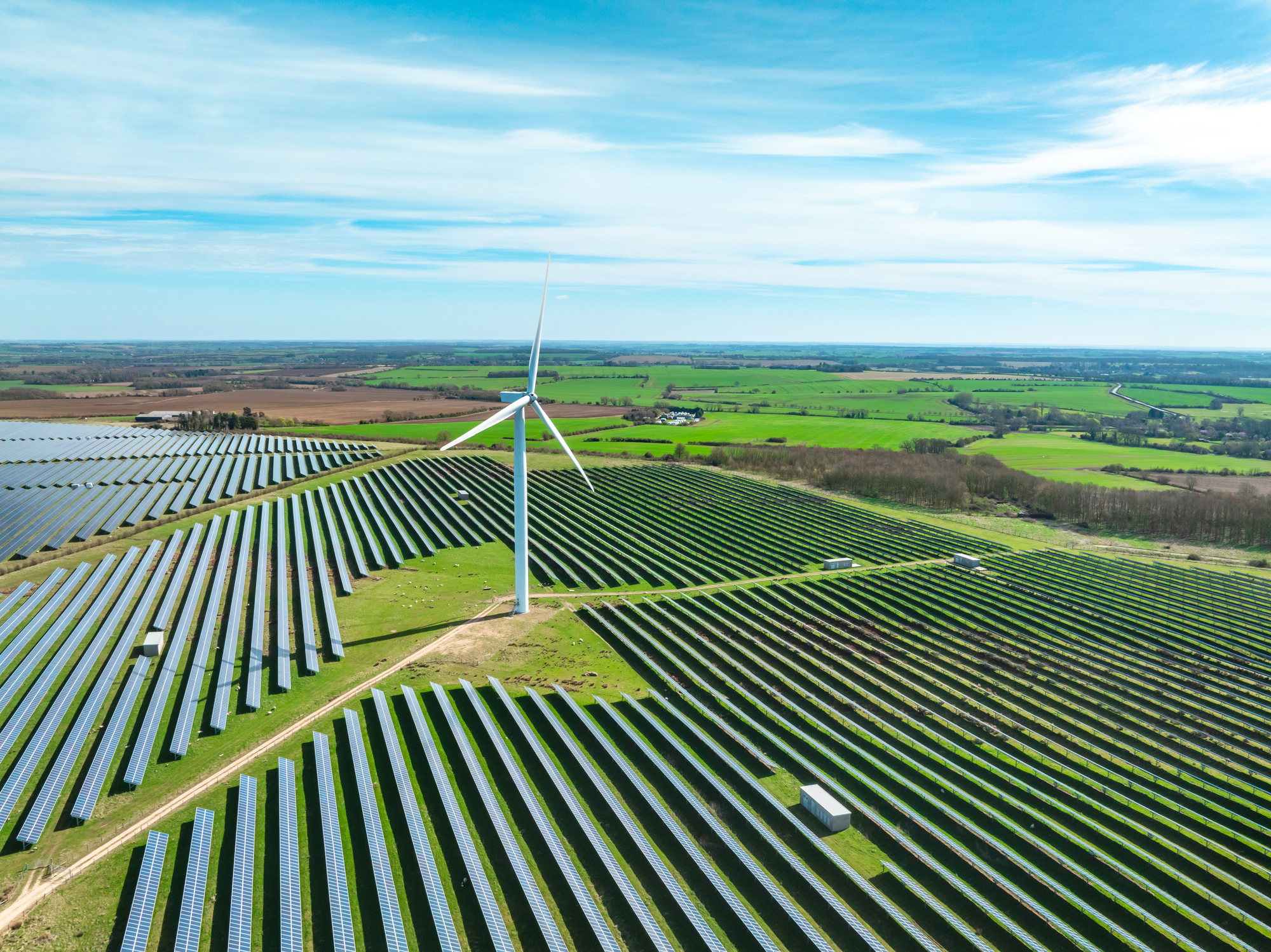
The UK’s clean energy transition is no longer simply a policy ambition; it is a full-scale construction programme. Over the next decade, Britain will reshape how it generates, stores, and transports electricity, requiring major investment in renewable generation, battery storage, grid infrastructure, and the wider supply chains needed to deliver and maintain those assets.
The transition represents one of the largest concentrations of construction activity, capital investment and project risk currently underway in the UK economy. Yet amid the focus on planning reform, grid connections and investment capital, one critical question receives far less attention: is the insurance market ready for the UK’s clean energy construction boom?
Insurers have extensive knowledge of the clean energy market
The good news is that the insurance market is not starting from scratch. Insurers have been underwriting renewable energy projects for decades, supporting the development of wind, solar and other clean energy assets across Europe, North America, Asia and beyond. The industry therefore has considerable experience of the technologies, loss trends and project structures that underpin much of the UK’s clean energy construction programme.
The market’s appetite is clear. The scale of planned investment represents a significant commercial opportunity for insurers, brokers and new market entrants. As demand for insurance grows alongside investment in new infrastructure, capacity and specialist underwriting expertise will likely continue to expand. At the same time, insurance is a critical enabler of infrastructure investment. Developers, lenders and investors need confidence that major project risks can be identified, managed and transferred before capital is committed. Without insurance, many projects simply would not achieve financial close.
The key question, however, is not simply whether capacity will be available, but how it will be priced. The economics of the energy transition could look very different if significant losses begin to emerge. A market willing to provide cover is one thing; a market willing to provide it at a cost that projects can absorb is another.
How does construction insurance work?
There is a large suite of insurance products available to respond to many of the risks associated with clean energy infrastructure. Construction, marine, liability, delay, cyber and operational covers can all play an important role in protecting projects throughout their lifecycle. However, many people mistakenly believe insurance can remove every risk from a project. In reality, the clean energy transition will generate exposures that sit uncomfortably within traditional insurance models or fall into gaps between different forms of cover.
Traditional construction insurance is generally designed to respond to physical damage, not simply the discovery of a defect. In renewable energy projects, however, a defect in a turbine, cable system or battery module can affect large numbers of identical components before any obvious damage occurs, raising difficult questions about aggregation, preventative replacement and the division between warranty and insurance protection.
Potential disruptions for contractors
Delay presents another challenge. While insurance can often protect against financial losses resulting from insured physical damage, many of the issues most likely to affect the UK’s clean energy ambitions have little to do with physical loss. Grid connection bottlenecks, planning delays, regulatory change, contractor insolvency and supply chain disruption can all have a material financial impact without necessarily triggering traditional delay cover.
The transition’s increasing reliance on new technologies also creates uncertainty. Larger offshore turbines, floating wind projects, battery storage systems, hydrogen infrastructure and carbon capture facilities introduce technical and operational considerations that are still evolving. Increasing digitalisation and connectivity means a single design, software or operational failure could affect multiple assets simultaneously.
Further complexity arises from the number of parties involved. Developers, lenders, contractors, manufacturers and operators often have different commercial interests, contractual responsibilities and insurance arrangements. When losses occur, disputes can arise not only about what happened but also about who bears responsibility, and which policy should respond.
None of these issues means the insurance market is unprepared for the clean energy transition. Rather, they illustrate a more fundamental point. Insurance will be essential to delivering the UK’s clean energy ambitions, but it cannot be viewed in isolation. Successful projects will depend on careful contractual risk allocation, robust supply-chain management, appropriate warranties, thorough due diligence and a clear understanding of where insurance protection begins and ends.
Construction and insurance go hand in hand from the very beginning
The lesson for developers, contractors and lenders is that insurance should not be treated as a procurement exercise to be completed shortly before construction begins. Too often, insurance provisions are negotiated at a high level during contract discussions, with attention focused on limits of indemnity rather than the detail of the cover being purchased.
As a result, years later, when a major loss occurs, parties may discover that the insurance in place differs from what the project documents contemplated or find themselves arguing about what cover was required in the first place. By then, the dispute is no longer theoretical. A substantial limit of indemnity offers little comfort if the loss falls within an exclusion or outside the scope of cover.
In practice, the most successful projects consider insurance and contractual risk allocation together from the outset. Pay particular attention to issues such as serial defects, interface risks between contractors, and the assumptions underpinning delay in start-up cover. If a defect affects hundreds of identical turbine blades, battery modules or cable components, who bears the cost of inspection, replacement and consequential losses? If commissioning is delayed, does the insured revenue, indemnity period and critical path analysis reflect the reality of replacement lead times, vessel availability and grid connection dependencies? These are questions that are far easier to address before financial close than after a loss.
Early engagement between developers, lenders, contractors, brokers and insurers can therefore be invaluable. The more transparency there is around the policies being relied upon, the easier it is to identify gaps between contractual risk allocation and insurance protection. For larger and more complex projects, coordinated project-wide insurance programmes will often provide greater certainty than a patchwork of individual policies, reducing the scope for gaps, overlaps and disputes. As the UK’s clean energy programme accelerates, that joined-up approach to risk management may prove just as important as the availability of insurance capacity itself.