
Respiratory protective equipment has a crucial role in safeguarding construction workers from chronic or even fatal health conditions. Ensuring its effectiveness goes far beyond simply supplying compliant masks, writes Ian Kelsall, RPE technical specialist at Draeger Safety UK
Few occupational health risks in construction are as significant, yet as difficult to see, as exposure to airborne contaminants such as silica dust, wood dust and welding fumes. Unlike other workplace hazards, the effects may not be immediate but long-term exposure can lead to serious and life-changing respiratory disease.
Respiratory protective equipment (RPE) plays a critical role in controlling these risks. However, effective protection depends on far more than simply providing compliant
masks. RPE will only provide the intended level of protection when properly selected, fitted, used, maintained and managed throughout its lifecycle.
Taking a structured approach to RPE management enables construction organisations to improve compliance, increase wearer acceptance and better protect their workforce.
The 8 key steps of an effective RPE management programme
1. Select: More than just specification
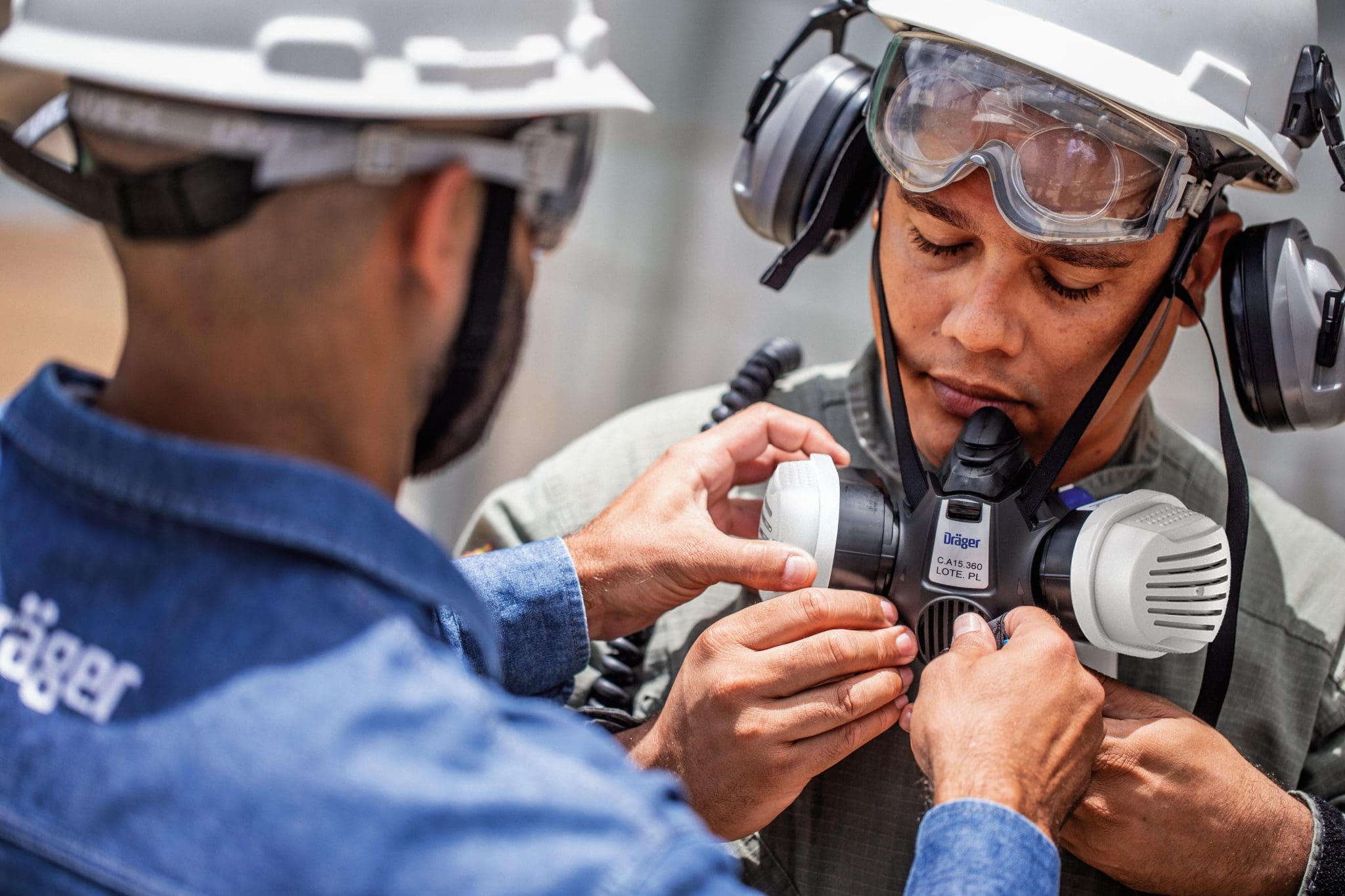
Selecting RPE for construction work requires more than choosing a compliant product. Equipment must be both adequate to protect against the specific hazard, and suitable for the wearer, task and environment.
Understanding the nature and level of exposure is therefore the starting point for selecting appropriate protection.
There are also practical considerations such as fit, comfort and compatibility with other personal protective equipment (PPE), and the duration and intensity of the task being undertaken.
Failure to consider suitability often leads to poor adoption, misuse or even an individual not wearing the device. Crucially, tight-fitting RPE must fit the individual wearer. Without fit testing and ongoing reassessment, even technically ‘adequate’ equipment can fail to protect the user.
2. Train: Turning equipment into protection
Even the most appropriate RPE will only offer protection if it is used properly.
Users must understand not only how to wear and use their RPE equipment but also why it is needed, how it functions, its limitations and what to do if it is damaged or not working correctly.
Regular and effective training covers the full lifecycle of use, from the correct way to put on and fit check through to cleaning, storage and disposal.
Without proper training, bad habits can quickly develop and once embedded, they can be extremely difficult to change.
3. Supervise: Maintaining standards in practice
Policies and procedures are only effective when consistently applied on site. Supervision plays a critical role in ensuring standards are maintained and that workers continue to use equipment correctly.
Typically, the most effective supervision is often proactive and supportive rather than punitive, and by focusing on key moments, such as the beginning and end of shifts, organisations can monitor and reinforce critical behaviours.
4. Check: Empowering the user
While supervision focuses on employer oversight, regular checks are the responsibility of the wearer. Pre-use inspections and fit checks are essential to confirm that equipment is clean, intact and functioning correctly and should be performed every time RPE is used, not just at the start of the day.
5. Maintain: Protecting the equipment
Construction sites are often demanding and dynamic environment where RPE may be exposed to dust, chemicals and moisture, and rough handling. As a result, cleaning and maintenance are crucial to ensuring equipment continues to function, as well as extending its life.
Many maintenance functions can be carried out by workers on a day-to-day basis (charging batteries, replacing clogged or saturated filters, rough cleaning). However, for more involved steps, having people trained in the correct procedures is necessary to eliminate the potential for damaged or missing components in RPE.
6. Record: Demonstrating compliance
Construction projects can involve multiple contractors, transient workforces and large amounts of equipment, making accurate recordkeeping essential for effective management and regulatory compliance.
Fit testing, training and maintenance records provide evidence that systems are in place and working effectively.
They also support continuous improvement, helping organisations identify trends, gaps and opportunities for refinement.
7. Store: The overlooked link
Even regularly cleaned and maintained equipment can be compromised by poor storage, and construction sites can often pose a particular challenge. Guidance on storage should be provided by the manufacturer and typically advises on how to prevent exposure to environments where there is extreme temperatures, UV light or excess humidity.
Appropriate storage helps to prevent damage or deterioration, prevent contamination and cross-contamination, and ensures easy access to the RPE between shifts and after breaks.
8. Dispose: Managing the end of life
This applies not only to the RPE itself but also to individual replaceable components such as filters, which do not simply become ordinary waste at the end of life. In many cases, they may contain hazardous substances and must be disposed of accordingly.
Reputable manufacturers of RPE equipment such as Powered Air Purifying Respirators (PAPRs) may design with end-of-life in mind, for example, the need to disassemble equipment to separate plastics from electronics. In some cases, manufacturers may also offer return schemes for responsible recycling to fulfil their regulatory obligations.
A shift in thinking
For health and safety professionals in construction, RPE should never be viewed as merely a procurement exercise but as an ongoing process.
RPE has a crucial role in safeguarding workers from chronic and even fatal respiratory conditions. However, if the equipment is to be effective, it is essential that it is managed and maintained throughout its lifetime.