
Héléne Watson, safety, health, environment and quality (SHEQ) manager at Watson, argues that construction needs to broaden its definition of safety, moving beyond immediate incidents to consider what repeated exposure to risk could mean for someone’s health years from now
Some of the biggest health risks on a construction site are also the easiest to overlook.
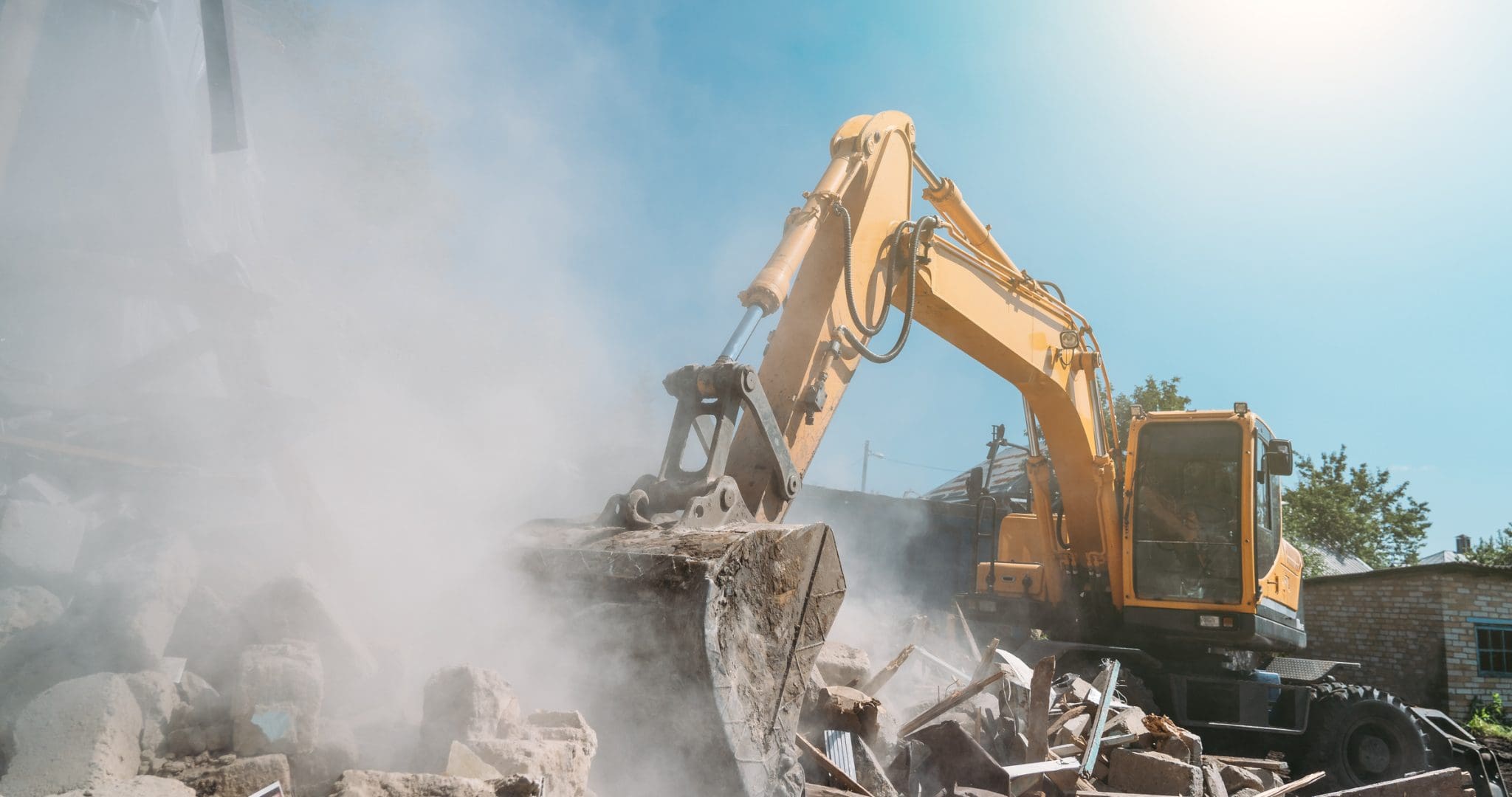
Dust, noise, vibration and repetitive tasks are part of everyday working life for a lot of people in the industry. There isn’t necessarily an accident, an alarm or an obvious moment where something has gone wrong. The real concern is what repeated exposure could mean over time.
That is what makes occupational health more difficult. We are naturally very good at responding to risks where the consequences are immediate. Working at height, for example, has very obvious consequences if controls fail. The effect of breathing in dust day after day, or being exposed to excessive noise for years, can feel much further away. But that doesn’t make those risks any less important.
We spend a huge amount of time talking about how somebody gets through today’s shift safely, but I think we also need to think about how much the work people do today could affect them in 10, 20 or 30 years’ time.
When everyday risks start to feel normal
Familiarity can be one of the biggest barriers to fully recognising risk.
If you do something every day and nothing visibly goes wrong, it inevitably starts to feel harmless. People might know what the safety procedures are, but familiarity can make it easier to think that it’s okay to cut a corner occasionally. Not wearing a face mask “just this once” or going without goggles for a few minutes might not feel like a significant decision at the time.
The problem is that occupational health risks do not always work that way.
If somebody understands what prolonged exposure to silica dust can do to their lungs, or why hearing protection matters even when the noise does not feel unbearable at the time, the control suddenly means something different. They are more likely to recognise when something is not right, more likely to challenge poor practice and, importantly, more likely to protect themselves without somebody standing over them telling them to do it.
That’s the culture we need to be aiming for.
Occupational health should come up in toolbox talks, briefings and everyday conversations on site. It shouldn’t be something we cover once during an induction and then assume is dealt with.
Looking at what the data is telling us
Construction has traditionally been very focused on incidents and accident statistics, and that’s understandable. They give us something tangible to look at and help us understand where things have gone wrong.
At Watson, we use our own data to understand where particular risks are emerging and where we might need to put more attention, including through targeted health and safety campaigns. I think occupational health needs that same curiosity.
Just because there hasn’t been an accident, that doesn’t necessarily mean everything is working as it should.
We need to look more closely at patterns of exposure, behaviours on site, whether training is landing properly and whether the controls we put in place are being used as intended. It is critical to recognise that warning signs might not show up on an incident report.
It might be noticing that the same task is repeatedly creating high levels of dust or that people are finding a particular control impractical and working around it. Those things are telling us something.
We shouldn’t be waiting until somebody develops a health problem before we take those warning signs seriously.
The supply chain needs to be part of the conversation
The people working alongside our own teams are often exposed to exactly the same site conditions. In many cases, they are carrying out some of the tasks where occupational health risks are greatest. We can’t have one standard for employees and then treat everybody else as somebody else’s problem.
At Watson, we’re fortunate to work with a relatively close-knit supply chain, and we see many of the same subcontractors from project to project. That gives us a real opportunity to build relationships, understand where people might need support and share some of the knowledge and training we have internally.
We already provide things like in-house first aid training, and we are looking at where else we can extend that support. Larger contractors often have access to expertise, systems and resources that smaller businesses do not have. Sharing some of that can help raise standards for everybody working on the project.
There is also a practical benefit to this approach. The closer the relationships are between contractors, subcontractors and site teams, the easier it becomes to have honest conversations about what is and is not working.
It is in everybody’s interest. Health risks do not stop at the edge of a company payroll.
Thinking about the person, not just the incident
Of course, we should keep driving down accidents. Nobody is suggesting that the fundamentals around working at height, plant movements, lifting operations or other immediate site risks become less important. But I don’t think our job ends there.
If somebody spends their career in construction, they should be able to come out of it without their health being damaged by things we knew how to prevent. That could be hearing loss, respiratory illness or problems caused by years of vibration or repetitive work.
Some of these consequences take years to appear, which makes them easy to push into the background when there are so many immediate things happening on a live site. But that’s why we need to keep talking about them.
The industry is already good at controlling immediate risks. The challenge is giving the same attention to risks whose consequences may not be visible for years. Good planning, proper controls, training, supervision and review are not new ideas. We do not need a whole new set of complicated systems.
It’s about applying the same seriousness to someone’s long-term health that we already apply to getting them home safely at the end of the day.